

 InfoSearched
Before tattoos were fashion, one San Francisco printmaker made them art.
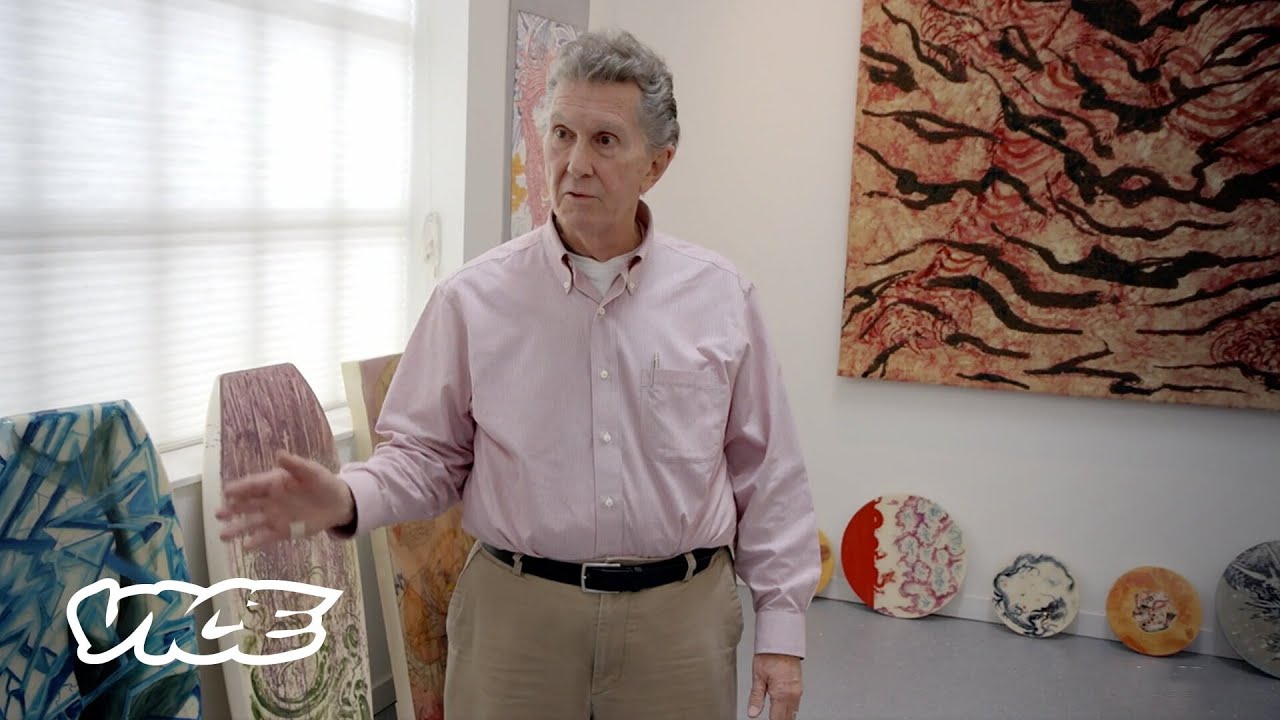
Don Ed Hardy spent five decades turning a boardwalk sideshow craft into something museums now hang on their walls. The VICE “Tattoo Age” profile “Meet Ed Hardy: The Godfather of Modern Tattooing” traces that arc — from a kid sketching fake tattoos on his friends to the man who trained under Japan’s tattoo masters and rewired how Western artists thought about the medium. He’s retired from the needle now, but the studios, books, and design language he built are still the industry’s backbone.
- Hardy earned a printmaking degree from the San Francisco Art Institute in 1967 before apprenticing under tattoo mentors Phil Sparrow (Samuel Steward) and Sailor Jerry Collins.
- In 1973, Sailor Jerry’s connections sent Hardy to Gifu, Japan, to train under master tattooist Horihide — making him one of the first Westerners schooled in classical Japanese tattoo technique.
- He opened Realistic Tattoo in San Francisco in 1974 under the motto “Wear Your Dreams,” then founded Tattoo City in 1977, pioneering the appointment-only, custom-design studio model.
A Boardwalk Obsession That Started at Age 10
Hardy’s fascination with tattoos didn’t come from a family tradition — it came from the Long Beach Pike. As a 10-year-old, he was already drawing toy tattoo designs on the arms of neighborhood kids, and he made a point of visiting Bert Grimm’s studio at the Pike, then one of the most famous street-shop tattoo parlors in the country. That early exposure to flash art and boardwalk tattoo culture stuck with him even as he went a very different academic route, studying the Old Masters at the San Francisco Art Institute and graduating with a printmaking degree in 1967.
It was that fine-arts background layered onto street-shop instincts that made Hardy such an odd fit for the tattoo world of the era — and exactly why he ended up changing it. He sought out two of the most respected figures in American tattooing at the time, Phil Sparrow (the pen name of writer and scholar Samuel Steward) and Sailor Jerry Collins, treating tattooing less like a trade to pick up and more like a discipline to be studied seriously.
The Trip to Gifu That Changed Western Tattooing
The turning point came in 1973. Through Sailor Jerry’s contacts in Japan, Hardy relocated to Gifu to study directly under Horihide, one of the country’s leading master tattooists. He became one of the first Westerners trained in the classical Japanese approach — the composition rules, the bodysuit logic, the way a dragon or a koi has to flow with the muscle rather than sit flat on top of it.
That apprenticeship is the hinge of Hardy’s whole career. American tattooing before Hardy was mostly flash off the wall — pick a design, get it stamped on. What he brought back from Japan was a philosophy: tattoos as a designed, custom, full-body composition planned around a specific person.
Wear Your Dreams.
Realistic Tattoo, Tattoo City, and the Custom-Design Model
Back in San Francisco, Hardy put that philosophy into practice. He opened Realistic Tattoo in 1974, running it as an appointment-only shop built around custom work rather than walk-in flash — a genuine break from how nearly every tattoo shop in America operated at the time. He followed it in 1977 with Tattoo City, which became one of the defining custom studios of the era and a training ground for artists who’d go on to shape the industry themselves.
Hardy’s design sensibility — bold Japanese-influenced linework, roses, koi, dragons, skulls rendered with a printmaker’s precision — became the visual vocabulary a huge chunk of American tattooing still draws from, whether or not the artist using it has ever heard his name.
Hardy Marks Publications and the 2019 Retrospective
In 1982, Hardy and his wife, Francesca Passalacqua, launched Hardy Marks Publications specifically to document tattoo history that nobody else was bothering to preserve — interviews, archival flash, technique breakdowns. Over the years that imprint put out more than 25 books, effectively building the reference library the tattoo world didn’t have before him.
Most casual fans know the Ed Hardy name from the 2000s licensed fashion boom — the rhinestone tigers and roses on T-shirts and trucker hats that turned up everywhere from mall kiosks to red carpets, a wave that briefly made his imagery as recognizable as any streetwear logo of that decade. But Hardy himself had already stepped back from tattooing to focus on painting and curating well before that merchandise wave peaked. That larger body of work got its full institutional due in 2019, when the de Young Museum in San Francisco mounted “Ed Hardy: Deeper than Skin,” a retrospective that put his paintings, tattoo flash, and archival material in the same rooms museums usually reserve for painters, not tattoo artists.
Hardy hasn’t picked up a tattoo machine professionally in years, and he doesn’t need to — Tattoo City is still running in San Francisco, Hardy Marks’ back catalog is still the closest thing the industry has to a textbook, and every custom-only shop that makes you book a consultation before it’ll touch your skin is, whether they credit him or not, running Hardy’s 1974 playbook.








Why Dubai’s Man-Made Islands Are Still Empty
The Blind Assassin of the Desert
GIANT MANTIS SHRIMP – CATCH, CLEAN, COOK
Gorgeous Three Bedroom Tiny Home
How a Master Sushi Chef Creates the Perfect Japanese Omelette: Tamago — Omakase