

 InfoSearched
There’s a place on Earth so far from anything else that the nearest neighbors are 1,500 miles away, and fewer than 300 people call it home.
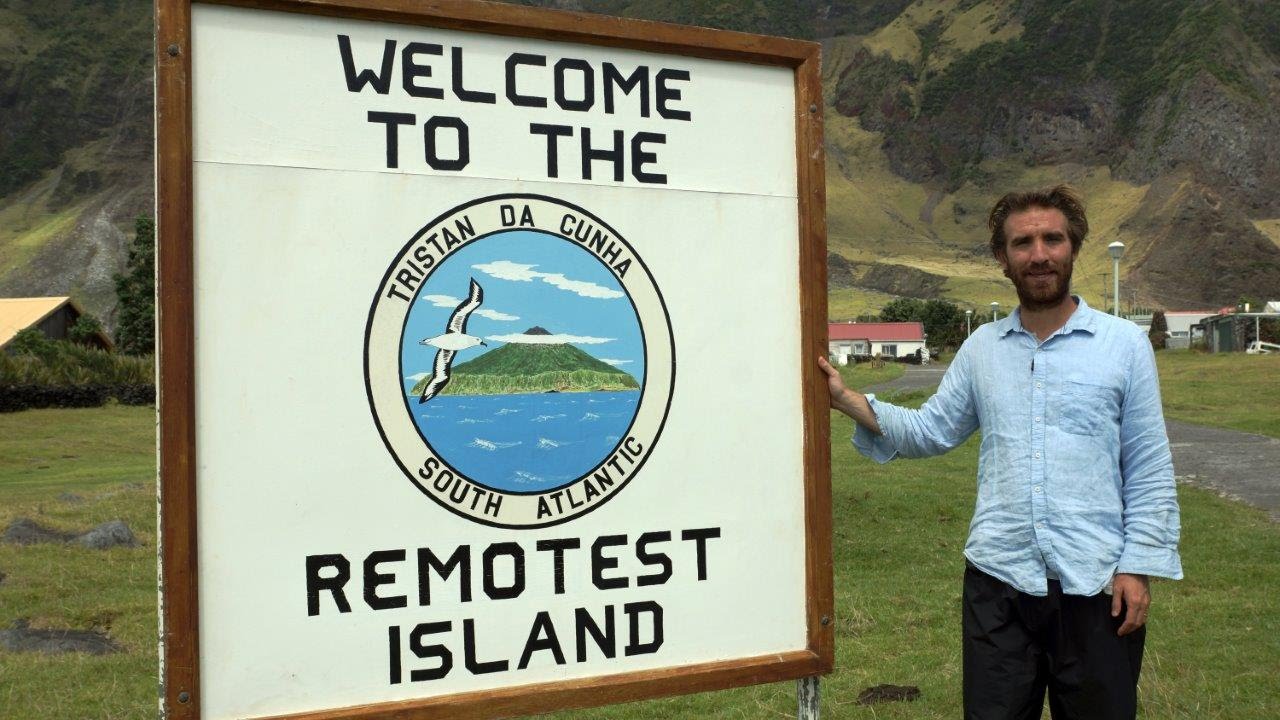
Stewart McPherson’s mini-documentary “Life on Tristan da Cunha – the World’s Most Remote Inhabited Island,” produced by Redfern Natural History Productions, travels to the one settlement on Tristan da Cunha, a volcanic outpost in the South Atlantic that has no airport and can only be reached by a sea voyage lasting days. McPherson sits down with Harold Green, the island’s former Chief Islander, to walk through how a community with just seven surnames has sustained itself in total physical isolation for over two centuries. The film is less a travelogue than a portrait of self-sufficiency — fishing, farming, and a governance system built for a place where the next supply ship might not arrive for weeks.
- Tristan da Cunha sits roughly 2,400 kilometers (1,500 miles) west of South Africa and more than 3,360 kilometers east of South America, making it the most remote inhabited island on the planet.
- The island’s population of under 300 residents traces back to a British military garrison stationed there in 1816, later joined by whalers and shipwrecked sailors of American, English, Scottish, Dutch, and Italian origin who consolidated into a community sharing just seven surnames.
- Former Chief Islander Harold Green gives McPherson a firsthand account of local governance and communal subsistence in the settlement of Edinburgh of the Seven Seas, the island’s only town.
A Garrison That Never Left
Tristan da Cunha’s story starts with a military decision that outlived its original purpose. Britain posted a garrison on the island in 1816, largely to keep an eye on the South Atlantic during the Napoleonic era. When the soldiers were meant to move on, some stayed — and over the following decades they were joined by whalers passing through and sailors from wrecked ships who had nowhere else to go. Those arrivals, pulling from American, English, Scottish, Dutch, and Italian backgrounds, eventually folded into a single settlement that today still carries only seven family surnames among its residents.
McPherson’s documentary treats that lineage as the key to understanding everything else about the island: a population this small, this isolated, doesn’t survive on infrastructure — it survives on kinship and repetition of the same names, the same jobs, the same roles passed down through generations in Edinburgh of the Seven Seas.
Life Without an Airstrip
There is no airport on Tristan da Cunha, and the rocky, volcanic terrain rules one out. Getting there means a sea crossing that can take the better part of a week, and getting supplies means waiting for cargo and fishing vessels to make their periodic calls. That single fact shapes almost everything McPherson documents — what the islanders eat, how they plan, and why self-sufficiency isn’t a lifestyle choice on Tristan da Cunha, it’s the only option.
Under 300 people, seven surnames, and a supply boat that might not show up for weeks — that’s the entire operating system of the world’s most remote inhabited island.
Harold Green on Governing an Island of 300
The centerpiece of McPherson’s film is his on-camera conversation with Harold Green, the former Chief Islander, who lays out how a community this size actually runs itself. Green’s account covers the practical mechanics of local governance and communal subsistence — how decisions get made when there’s no larger bureaucracy to defer to, and how the settlement organizes labor around fishing, farming, and waiting out the isolation between supply calls. It’s the kind of detail that only comes from someone who has actually held the job, and it’s what separates this documentary from a simple scenic postcard of a remote island.
Readers drawn to this kind of extreme-isolation storytelling might also find Survival on the smallest island in the Caribbean worth a look, or, for a different angle on life at the edge of the map, The remote visa-free island at the top of the world.
What comes through most in McPherson’s footage isn’t hardship — it’s routine. Edinburgh of the Seven Seas runs on the same rhythm it always has: work the land, work the water, and wait for the boat.






8 Family Travel Tips | Family Living the Buslife
Raw Run || 70 mph in Switzerland
Back Country House | Ltd Architectural Design Studio
Plant for a Year’s Worth of Food
Plant this once and have FOOD for 30 YEARS!