

 InfoSearched
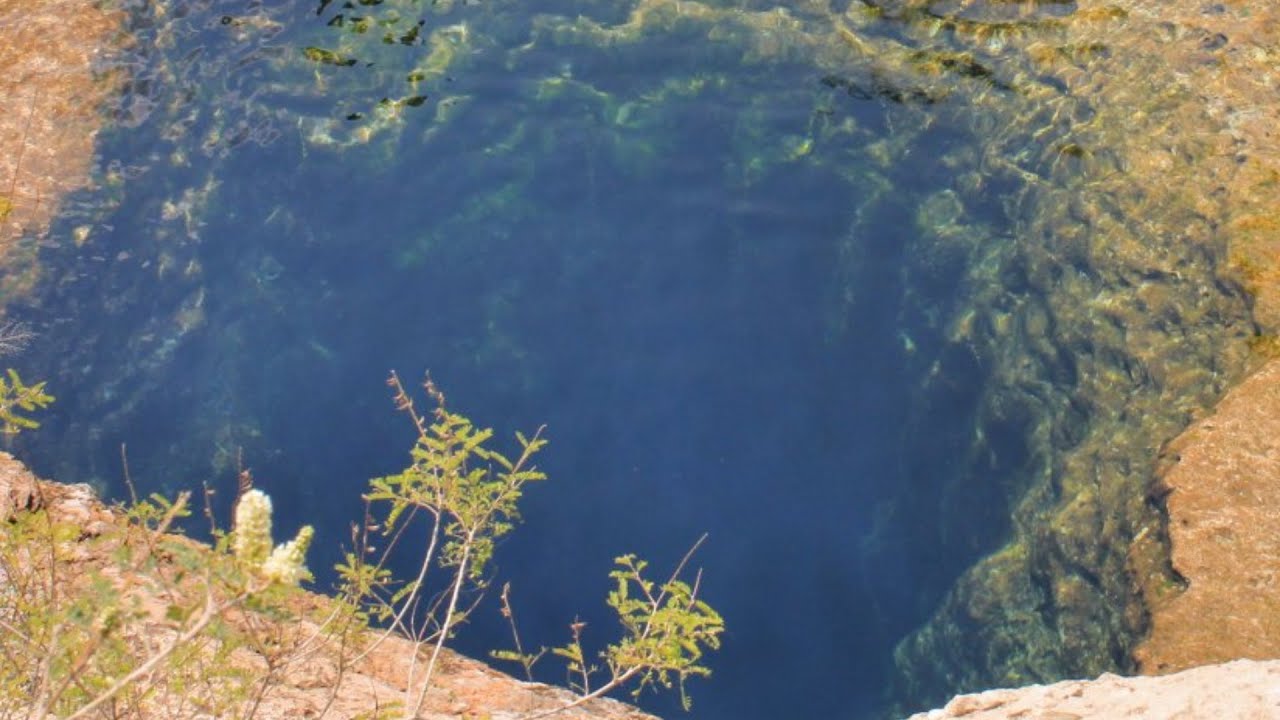
Beneath a placid, 68-degree swimming hole in the Texas Hill Country lies one of the deadliest dive sites in the United States.
Jacob’s Well sits on Cypress Creek in Wimberley, Hays County, about an hour outside Austin — an artesian spring fed by the Trinity Aquifer that looks, from the surface, like nothing more than a clear, cold swimming hole with a 13-foot-wide mouth. Drop below that mouth, though, and the well opens into a submerged limestone cave system that plunges as deep as 140 feet, a maze of four descending chambers that has swallowed at least eight to nine documented divers between 1964 and 1984.
- The cave system’s four chambers feature zero visibility, blinding silt banks, false exits, and a two-foot-square bottleneck known as the “Birth Canal” leading into the unstable fourth chamber.
- On September 9, 1979, Kent Maupin, 20, and Mark Brashier, 21, both of Pasadena, Texas, drowned after pushing into the cave’s deep recesses without cave certification.
- Local dive shop owner Don Dibble nearly died during the recovery effort, getting trapped past his waist in shifting gravel in the third chamber before rupturing his stomach on an emergency ascent.
A Cave System Built to Kill
What makes Jacob’s Well so lethal isn’t the swimming hole itself — it’s what waits past the entrance. The four major chambers descend in stages, each one narrower and darker than the last, with silt floors that turn to zero-visibility soup the moment a fin kicks through them. Divers who lose their bearings in that blackness have no natural light and no easy way to retrace their path, and the geometry of the cave doesn’t help: what looks like a way out can be a dead-end pocket, a phenomenon divers call a false exit.
The worst chokepoint is the “Birth Canal,” a two-foot-square opening that forces a diver to squeeze through, sometimes removing gear, just to reach the fourth chamber — a chamber that’s structurally unstable to begin with. It’s the kind of obstacle that separates trained cave divers, who use certification, backup lights, and a continuous guideline, from open-water divers chasing a thrill they aren’t equipped to survive.
The Night Kent Maupin and Mark Brashier Never Surfaced
On September 9, 1979, Kent Maupin, 20, and Mark Brashier, 21, both from Pasadena, Texas, went into Jacob’s Well without adequate cave certification and never came back out. Maupin had been diving since he was 12 and held a dive instructor certification, proof that experience in open water counts for little once a diver is squeezed into total darkness 100-plus feet down a limestone throat.
Divers on-site that night watched the two men descend into the well’s deepest reaches and pass through the tight opening toward the cave’s lower chamber. Neither surfaced. Recovery efforts stretched on for weeks as searchers tried to reach bodies trapped in a passage that had already proven it could hold onto anyone who entered it unprepared.
Don Dibble’s Near-Fatal Recovery Attempt
Don Dibble, a local dive shop owner who took part in the Maupin-Brashier recovery, came close to becoming a third casualty. Working the third chamber, Dibble got trapped past his waist in shifting gravel, burned through his air supply, and suffered a ruptured stomach during a frantic emergency ascent to the surface. He survived. Not every recovery diver sent into Jacob’s Well over the decades has been so fortunate.
“It was the forbidden fruit, the allure of doing something dangerous.”
That’s how Dibble described the pull Jacob’s Well has on divers who know exactly how many people it has killed and go in anyway. It’s the same instinct that led authorities to weld a steel grate across the cave entrance at a depth of 70 feet in an attempt to physically stop unauthorized dives — an attempt that failed. Rogue divers eventually pried the grate loose and left behind a note reading, “You can’t keep us out.”
Mapping a Labyrinth Too Dangerous to Explore Freely
Serious scientific study of the cave didn’t happen until researchers treated it less like a swimming hole and more like an active hazard site. Under the Jacob’s Well Exploration Project, specialists mapped roughly 6,000 feet of submerged passage across two main tunnels by 2000, cataloging the chambers, chokepoints, and silt traps that had claimed lives for decades. Access today is restricted to permit-holding researchers under JWEP — nobody dives the deep chambers on a whim anymore, at least not with anyone’s blessing.
For a broader sense of how dangerous flooded cave systems compare across the map, the sinkhole networks explored by cave divers in South Australia carry their own version of this reputation, detailed in this look at the sinkholes drawing divers to South Australian farms. Jacob’s Well itself sits inside the same Hill Country river network that draws paddlers to spots like the one covered in this Frio River kayak camping trip, a reminder that the same Texas waterways offering a relaxing float can also hide something far less forgiving underneath.
The grate is still there, 70 feet down, guarding an entrance that has already cost at least eight or nine lives on record. JWEP’s permit system is the only thing standing between that mapped 6,000 feet of tunnel and the next diver who decides the forbidden fruit is worth the risk.








Hydrofoil Surf Heaven in Hawaii
Camping In The Multi-Purpose Tracked Crawler
SIMPE LIFE HACKS SMART INVENTIONS
5 Survival Shelters Everyone Should Know
Single Mother Builds Scandinavian Inspired Tiny House To Escape