

Experience the Underwater World Through the Eyes of a Free Diver | Short Film Showcase
 InfoSearched
One free diver, one breath, and every ocean on Earth.
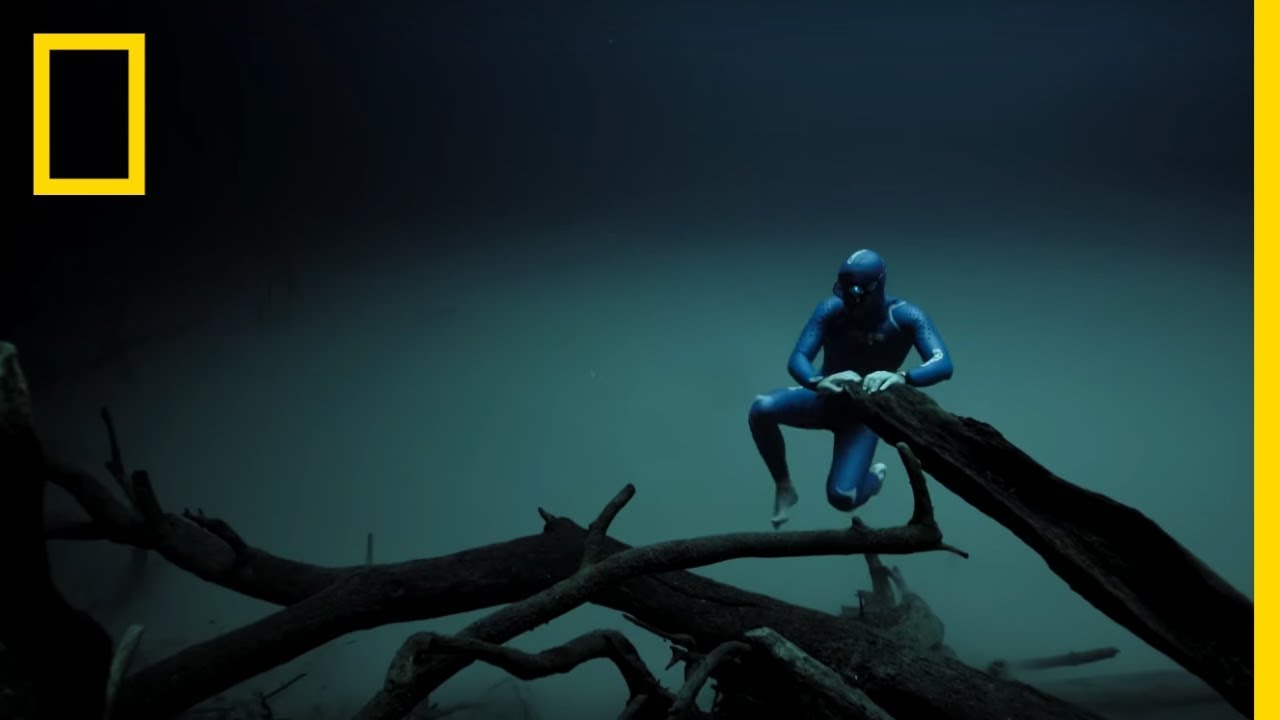
Guillaume Néry has spent his career redefining what the human body can do underwater without a tank on his back. In “One Breath Around the World,” the French freediving world champion turns that discipline into something closer to dance, gliding through caves, ice, and sunken ruins on nothing but a single lungful of air. His wife, freediver Julie Gautier, directs and shoots the entire film — matching him breath-hold for breath-hold behind the camera.
- Néry, a French freediving world champion, dives without scuba gear through underwater caves, beneath sea ice, and across submerged ruins including Japan’s Yonaguni Monument.
- Director and cinematographer Julie Gautier, also a freediver, filmed every underwater sequence on her own breath-hold, syncing her movement to Néry’s throughout the shoot.
- The film is scored with an original composition by Guillaume Ferran, blended with real ocean sound — cracking ice, whale calls — and edited by Ben Nardini.
A Journey Told Between Two Breaths
The concept behind “One Breath Around the World” is deceptively simple: the whole film is framed as happening in the space between Néry’s first dive and his final resurfacing, as if the entire globe-spanning trip takes place in one held breath. Structurally, that means no cuts back to the surface, no gasping for air between locations — just Néry moving from one underwater world into the next as though they were connected rooms in the same house.
That approach forces a different kind of storytelling than most extreme-sports footage. Instead of clocking depth numbers or dive times, the film leans on movement — Néry running along a sunken plateau, drifting through a cave mouth, tracing the stone terraces of Yonaguni. It plays more like underwater choreography than a record attempt, which tracks with how Néry has always talked about the sport: less conquest, more conversation with the water.
The Wildlife Encounters
What separates this film from a typical dive reel is what Néry swims past. He moves through schools of reef sharks, alongside humpback whales, and past sleeping pods of sperm whales off Mauritius — animals that, notably, don’t scatter the way they often do around scuba divers exhaling bubbles and engine noise. Freediving’s silence is the whole point; Néry can drift within touching distance of a resting sperm whale pod precisely because he isn’t dragging tank noise and bubble trails behind him.
He also swims with the Bajau, the Southeast Asian seafaring people famous for free-diving to spearfish on breath-holds their entire lives, sharing frame time with divers who never needed a short film to prove the ocean could be moved through this way. It’s a quiet nod from Néry — a champion competitor sharing water with people who’ve practiced the same skill as a way of life for generations.
Every location was designed to feel like one continuous dive — from ice to coral to sunken stone, on a single breath.
Gautier’s Half of the Feat
It’s easy to focus entirely on Néry, but Gautier’s contribution is the harder one to appreciate on screen because it’s invisible by design. She’s not just holding a camera at the surface — she’s freediving alongside him for every shot, matching his depth and pace on her own held breath, then surfacing on the same clock he does. That’s the difference between filming a free diver and actually filming like one.
Gautier’s freediving background isn’t a side note here; it’s the reason the film moves the way it does. A scuba cameraman trailing bubbles would break the mood Néry is built around, and a surface drone shot can’t follow him into a cave. The film only works because two elite breath-holders were solving the same physical problem at the same time, from opposite sides of the lens.
Freediving Without the Competitive Edge
Néry built his name on competitive freediving, the kind measured in meters of depth and seconds without air — the sport that has, at its most extreme, pushed athletes past 100 meters on a single breath in disciplines like constant weight and no-limits diving. “One Breath Around the World” deliberately steps away from that framing. There’s no scoreboard, no depth plate to touch, no judges. The film is built around ease and harmony instead, using Néry’s competitive-level lung capacity and comfort in the water to explore rather than to set records.
That’s part of why the project reads differently than most freediving content, which tends to fixate on risk — blackouts, depth records, the danger of the sport. This one is closer in spirit to the kind of ocean-obsessed storytelling found in pieces like Fishpeople | Lives Transformed by the Sea, where the water is less an obstacle than a second home. Néry’s comfort at depth is treated the same way a surfer’s comfort in a barrel would be — a skill in service of being present, not just performing.
For anyone who wants to see how freediving culture extends beyond ocean expeditions into training and terrain closer to home, the sport’s crossover into places like South Australian sinkholes shows the same discipline scaled down to landlocked water — proof breath-hold diving isn’t confined to reef systems and open ocean.
Néry and Gautier didn’t shoot this as a stunt reel with a stopwatch running — there’s no depth record claimed anywhere in the credits, and that’s the point. The film’s built to be rewatched for the sperm whale pod off Mauritius and the Yonaguni ruins, not for a number on a dive computer.

Top 5 Amazing Aircraft Carrier Landings
Deadliest Journeys – Papua New Guinea
Japan’s Master Inventor Has Over 3,500 Patents
I Only Ate Food That I Grew Or Foraged For One Year
Compilation of Best Hydro Dipping Videos