

 InfoSearched
A backyard fabricator just proved you don’t need $300 to bounce like a powerbock pro.
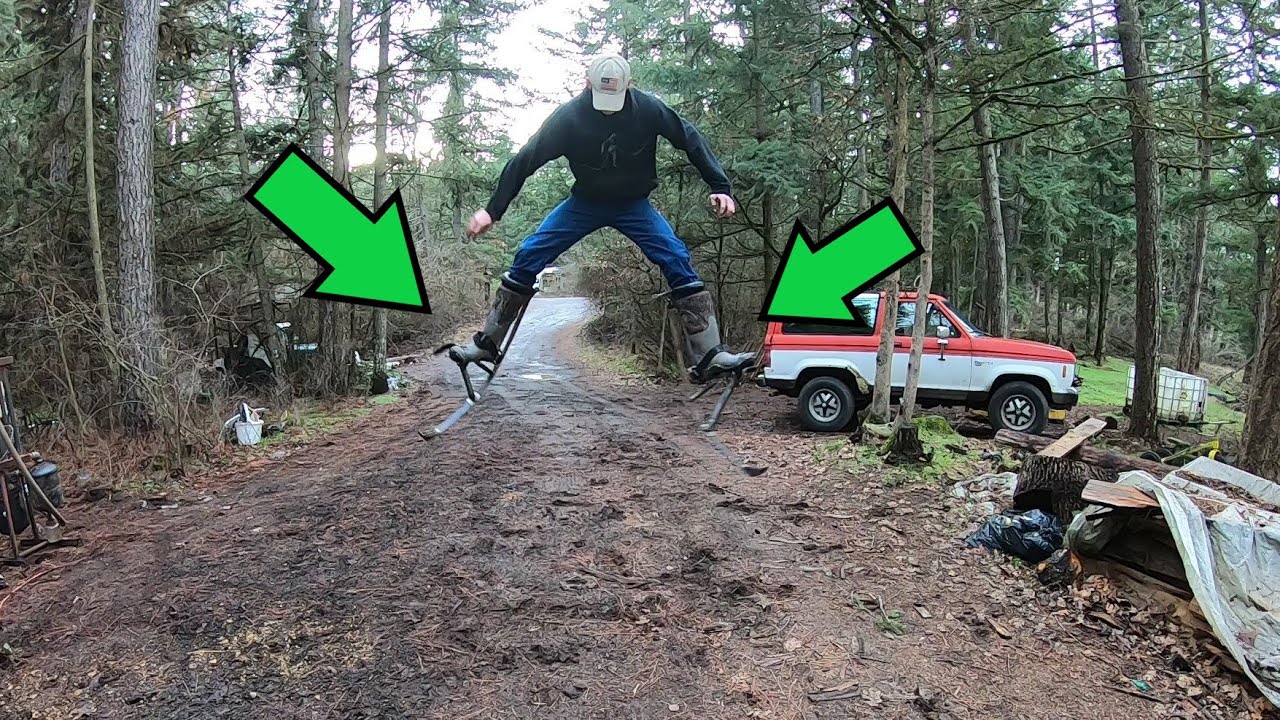
In a build video titled “How to Build Real Fully-Functional Jump Stilts From Scratch!”, a maker going by Randomn walks through cutting, drilling, and welding a working pair of jumping stilts entirely from scrap metal and hardware-store stock. The total cost lands under $50 — a fraction of what commercial powerbock or spring-stilt units typically run. The goal wasn’t just a novelty prop; it was a genuine proof-of-concept that these things could flex, absorb impact, and actually launch a rider off the ground.
- The frame is built from 1 1/2-inch by 1 1/2-inch square tubing (1/8-inch wall thickness), 2-inch by 1/8-inch flat bar, and 3/8-inch threaded rods.
- Total build cost came in under $50, using leftover hardware pulled from older projects rather than new-bought parts.
- The pair uses functional mechanical suspension springs, not rigid pegs, so they store and return kinetic energy for actual jumping and running.
Purpose of the Current Build
Randomn’s stated motivation for the project was simple: a search for tutorials on building real jump stilts kept turning up nothing usable. Plenty of DIY guides online show static, rigid stilts made from wooden blocks strapped to the legs — fine for standing tall, useless for bouncing. What was missing was a documented path to something closer to a genuine powerbock, the spring-loaded stilts used for parkour-style jumping and running.
So the video sets out to fill that gap, treating the build as a proof-of-concept rather than a polished commercial product. The framing throughout is budget-first: could a home fabricator with basic tools replicate the mechanics of a manufactured spring stilt without spending the hundreds of dollars retailers typically charge for one.
The Metal Stock That Makes It Work
The structural backbone comes from 1 1/2-inch square tubing at 1/8-inch wall thickness, chosen for its strength-to-weight balance under repeated impact loading. Flat bar measuring 2 inches by 1/8-inch reinforces the joints and mounting points, while 3/8-inch threaded rod handles the adjustable connections that let the springs compress and rebound. None of it is exotic — it’s the kind of stock sitting in most home metal shops or scrap bins, which is precisely the point of the build.
Hardware salvaged from earlier projects fills in the rest: bolts, brackets, and fasteners repurposed rather than bought new. That scavenging is a big part of how the final tally stayed under $50 despite the stilts functioning as genuine spring-loaded units rather than static pegs.
Springs Instead of Static Pegs
The defining difference between this build and a typical homemade wooden stilt is mechanical suspension. Traditional DIY stilts are just rigid blocks — you stand on them, you walk stiffly, that’s it. Randomn’s design incorporates actual springs engineered to compress under body weight and snap back, returning energy the way a commercial powerbock does, which is what allows a rider to jump and run rather than just stand elevated.
The whole build stayed under $50 by repurposing square tubing, flat bar, threaded rod, and hardware pulled from older projects instead of buying anything new.
That mechanical detail is also why this build sits closer in spirit to genuine engineering experiments than to a typical craft project — for anyone into home fabrication under real-world constraints, it pairs naturally with builds like this concrete curb project, where scrap materials and a tight budget shape the whole design.
A Cheaper Path to a Real Powerbock
Commercial jumping stilts routinely run into the hundreds of dollars, which puts them out of reach for a lot of people who just want to try the sport before committing. By documenting every measurement and joint, Randomn’s video gives other home fabricators a template to replicate the same spring mechanics for a fraction of the price — closer in spirit to the DIY resourcefulness seen in builds like this from-scratch pine needle basket project, where the whole point is proving something can be made well without buying it ready-made.
Randomn is upfront that this is a first attempt, not a finished commercial-grade product — the video flags that plenty of improvements are still possible in the joinery and spring tuning. But for under $50 in scrap tubing, flat bar, and salvaged hardware, it’s a working pair of spring stilts that actually jump, which is more than most of the wooden-peg tutorials already floating around ever managed.








Infiltrating Scientology Ep 1: Sunday Church Service
BIG SWORDFISH HEARTBREAK AND TRIUMPH -YouFishTV
How to Make a DIY Greenhouse
Locked Bucks Freed with Chainsaw
We Built Our Dream Home, FROM A KIT!