

 InfoSearched
Two peoples, one line on the studio floor, and the hardest question Jubilee has ever staged.
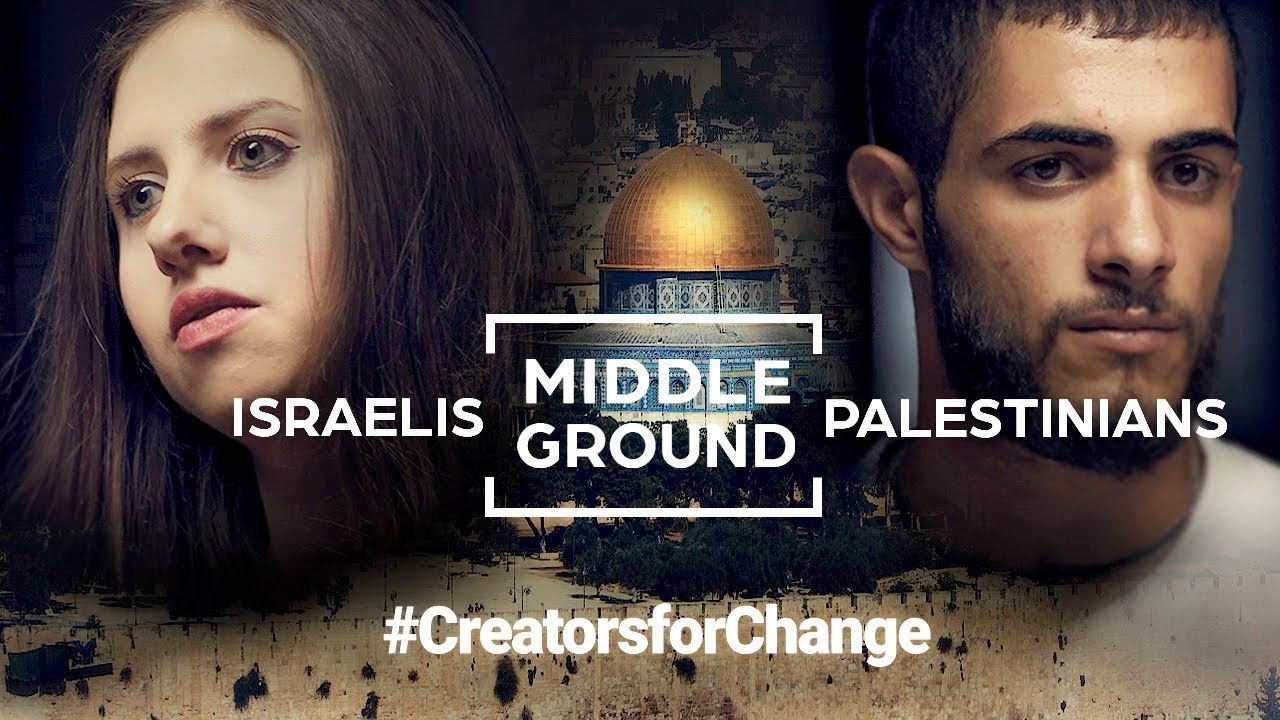
In November 2018, Jubilee Media brought a small group of Israelis and Palestinians into a single room, drew a line on the floor, and asked them to walk toward it if they agreed with a statement about land, grief, or the possibility of peace. There were no ambassadors, no professors, no talking points from Washington or Ramallah — just people describing what the conflict has actually cost them. The result, “Can Israelis and Palestinians See Eye to Eye?”, became one of the flagship episodes of Jubilee’s Middle Ground series, produced in partnership with YouTube’s Creators for Change initiative.
- The roughly 23-minute episode, published November 12, 2018, pairs ordinary Israelis and Palestinians in Jubilee’s “step-to-the-line” format rather than relying on political officials or academic analysts.
- Participants respond to prompts on national identity, territorial claims, personal loss, and coexistence, then sit down in pairs to explain and defend their positions face to face.
- By December 2019, the video had established itself as one of Jubilee’s most-watched entries on international conflict resolution, built entirely around personal storytelling rather than geopolitical argument.
The Format Behind the Confrontation
Middle Ground runs on a simple mechanic that Jubilee has used across dozens of episodes on race, gender, and religion: a statement is read aloud, and anyone who agrees steps to a taped line in the middle of the studio. For this episode, the statements cut straight into the rawest parts of the conflict — whether Israel has a right to exist as a Jewish state, whether the West Bank settlements are legitimate, whether either side’s suffering outweighs the other’s. Nobody on camera is a diplomat or a scholar; they’re people who grew up inside the conflict, describing it in first person.
That grassroots framing is the point. Jubilee’s producers strip away the podium and the moderator’s neutral summary, leaving two people who disagree on almost everything to sit knee-to-knee and work it out — or fail to — in real time.
Identity, Land, and Grief on Camera
The prompts move from abstract history into personal territory fast. Participants are asked to weigh in on where they consider “home,” whether they’ve lost family or friends to the conflict, and whether they believe the other side’s pain is comparable to their own. Some of the panelists step to the line together on shared premises — a desire for their children to grow up without checkpoints or rocket sirens — before splitting apart entirely over who bears responsibility for the status quo.
Step to the line if you believe your side has suffered more.
That single prompt, drawn straight from the episode’s format, produces the most visibly uncomfortable moment in the room — nobody wants to claim a monopoly on suffering in front of someone who just described losing someone to the same conflict.
Common Ground Without Political Cover
What separates the episode from a typical cable-news debate segment is the absence of any scripted resolution. Nobody “wins” the exchange, and Jubilee doesn’t cut to a pundit summarizing who made the better argument. Some pairs find genuine agreement on the human cost of the conflict; others leave the conversation with their positions unchanged but their understanding of the other side’s grief sharpened. That ambiguity is deliberate — the series has applied the same unresolved format to other entrenched disputes, letting viewers sit with the discomfort rather than handing them a tidy conclusion.
For viewers looking for more traditional context on the region’s geopolitics, InfoSearched has covered the broader power struggle in pieces like Inside the US-Iran Shadow War for Control of the Middle East and Inside the US-Led Coalition’s Fight Against ISIS, both of which lay out the state-level forces surrounding the personal stories Jubilee’s panel describes.
Jubilee Highlights Ordinary Public Voices
Creators for Change, the YouTube initiative backing the episode, was built around the idea that firsthand testimony travels further with young audiences than think-tank analysis does. Jubilee leaned into that by casting panelists with no political title to defend — a choice that let the conversation swing between friendly curiosity and open hostility without either side needing to protect an official position. It’s a format built for empathy, not policy, and the episode never pretends otherwise.
Jubilee has kept running the same line-in-the-sand format on new flashpoints since this episode aired, and the Israeli-Palestinian installment remains the one people point to first when arguing whether the format can handle a conflict this old and this personal — proof, for better or worse, that putting two ordinary people on a taped line doesn’t settle a hundred years of history, but it does make both of them say the hard part out loud.





100 Years of Controversial Fashion | Glamour
5 Tiny Manufactured Homes You Can Buy On Amazon For Under $40k
Centipedes: The Ultimate Nopes
BioLite CampStove 2
Amazing Indoor-Outdoor Architecture Near Venice Beach