

 InfoSearched
Inside the wilderness rave where security checks your MDMA instead of confiscating it.
Every August, more than 15,000 people trek into the Salmo River Valley in British Columbia for Shambhala Music Festival, a five-day electronic music gathering held on a family-owned ranch outside the tiny town of Salmo. Alcohol is banned outright. Illicit drugs — MDMA, LSD, ketamine, cannabis — are not, and organizers have stopped pretending otherwise. Harm-reduction YouTuber Adam Rathfk, who runs the channel Psyched Substance, spent August 2017 on-site documenting how the festival actually handles that reality.
- Shambhala partners with ANKORS (AIDS Network Kootenay Outreach and Support Society), which has run a free, anonymous, legal-risk-free drug-checking tent on-site since the early 2000s.
- ANKORS data shows roughly 60% of substances checked at the festival were bought on-site, with MDMA the single most-checked drug — and testing frequently turns up mislabeled product cut with methamphetamine or synthetic cathinones.
- Despite those unexpected results, on-site discard rates stay low, around 2 to 3%, while the festival backs the tent with a 24-hour medical hub called ShambhaCares and dedicated spaces for attendees in crisis.
A Festival Built Around a Different Bet
Shambhala’s organizers made a calculated decision decades ago: attendees are going to use drugs regardless of policy, so the festival’s job is to make that use less lethal rather than pretend it isn’t happening. That’s a sharp departure from the search-and-seize model used at most North American mass gatherings, where enforcement is the entire strategy and anyone caught with pills gets ejected or arrested. Alcohol still gets confiscated at the gate. Everything else is handled through information, not interdiction.
Rathfk’s video walks through why that distinction matters. Punitive models push people to hide their stash, dose in secret, and avoid medical staff out of fear of legal consequences — exactly the behavior that turns a bad reaction into a fatal one. Shambhala’s approach removes that fear from the equation entirely.
Inside the ANKORS Tent Operations
The centerpiece of the operation is the ANKORS harm-reduction booth, staffed by volunteers running chemical reagent test kits alongside more advanced tools like FTIR spectrometers and fentanyl test strips. A festival-goer hands over a sample, no questions asked about where it came from or who they are, and walks away minutes later knowing whether what they bought is actually what they think it is.
The answer, often, is no. With MDMA the most frequently submitted substance for testing, ANKORS’ data repeatedly shows product cut with non-standard adulterants or swapped out for methamphetamine or synthetic cathinones entirely. The tent doesn’t just hand back a result — it pairs testing with dosing guides, safe-use supplies, condoms, and naloxone training, treating the whole exchange as an education stop rather than a pass/fail check.
Roughly 60% of drugs checked at the festival were purchased on-site — and testing routinely finds them mislabeled or cut with substances the buyer never asked for.
Low Discard Rates, Fewer Emergencies
Here’s the counterintuitive part: even when someone learns their MDMA is actually a synthetic cathinone, they usually don’t throw it out. Discard rates hover around just 2 to 3%. What changes is how they use it — smaller doses, more caution, more willingness to seek help early if something feels wrong. According to the data ANKORS has gathered over its years on-site, that shift in behavior tracks with fewer emergency medical interventions overall, even though drug use itself hasn’t gone away.
That’s the harm-reduction thesis in practice: you’re not going to eliminate use at a festival built around all-night sets and psychedelics, but you can dramatically cut the number of people who end up in a medical tent because they had no idea what they’d actually taken. Documentaries on the drug economy elsewhere — from cartel production lines covered in how Mexican drug cartels make billions to the adulteration problems chronicled in Cocaine White Gold — make the same point from the supply side: what’s sold on the street rarely matches what’s advertised, and festivals are no exception.
ShambhaCares and the Safety Net Around It
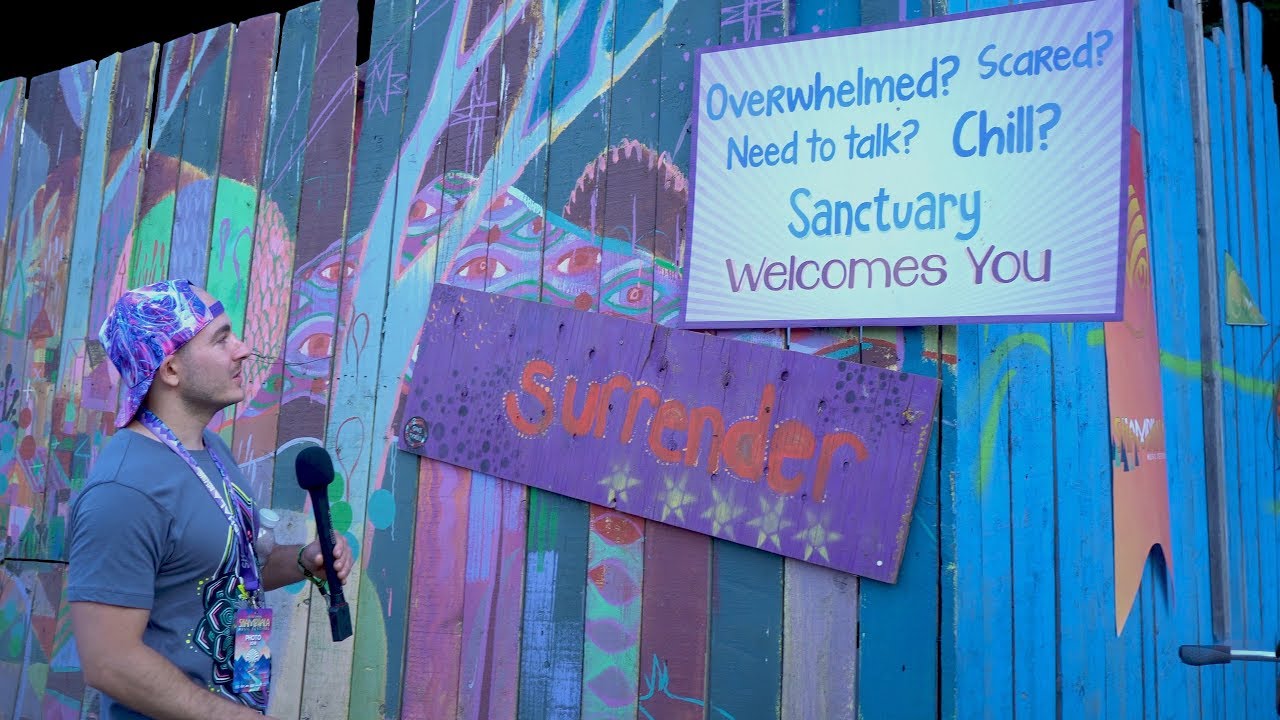
Testing is only half the infrastructure. Shambhala also runs ShambhaCares, a 24-hour on-site medical hub, plus dedicated calm-down spaces for attendees dealing with sensory overload or a difficult psychedelic experience — the kind of bad trip that used to mean either quietly suffering through it alone or risking a police encounter by asking for help. Combined with the ANKORS tent, that support network is what’s turned Shambhala into a reference point that other festivals now study when building their own harm-reduction programs.
Rathfk’s video doesn’t argue Shambhala solved drug use at festivals — it argues the festival found a way to stop treating every attendee like a criminal and started treating them like someone who might need accurate information at 2 a.m. With MDMA still the top substance coming through the ANKORS tent every August, that tent’s reagent kits and FTIR readouts remain the closest thing the festival has to a front line.





Lion cub annoys his dad. Cubs are taught a lesson
Caterpillars Feeding on Exploding Touch-Me-Not Seed Pods
What Navy SEAL Trevor Thompson Thinks of Women Entering the Program
Gorgeous Three Bedroom Tiny Home
Slow motion of 50 cal sniper shot