

 InfoSearched
Off the coast of Dubai sits a $12 billion map of the planet — and after more than a decade, almost none of it has a single building on it.
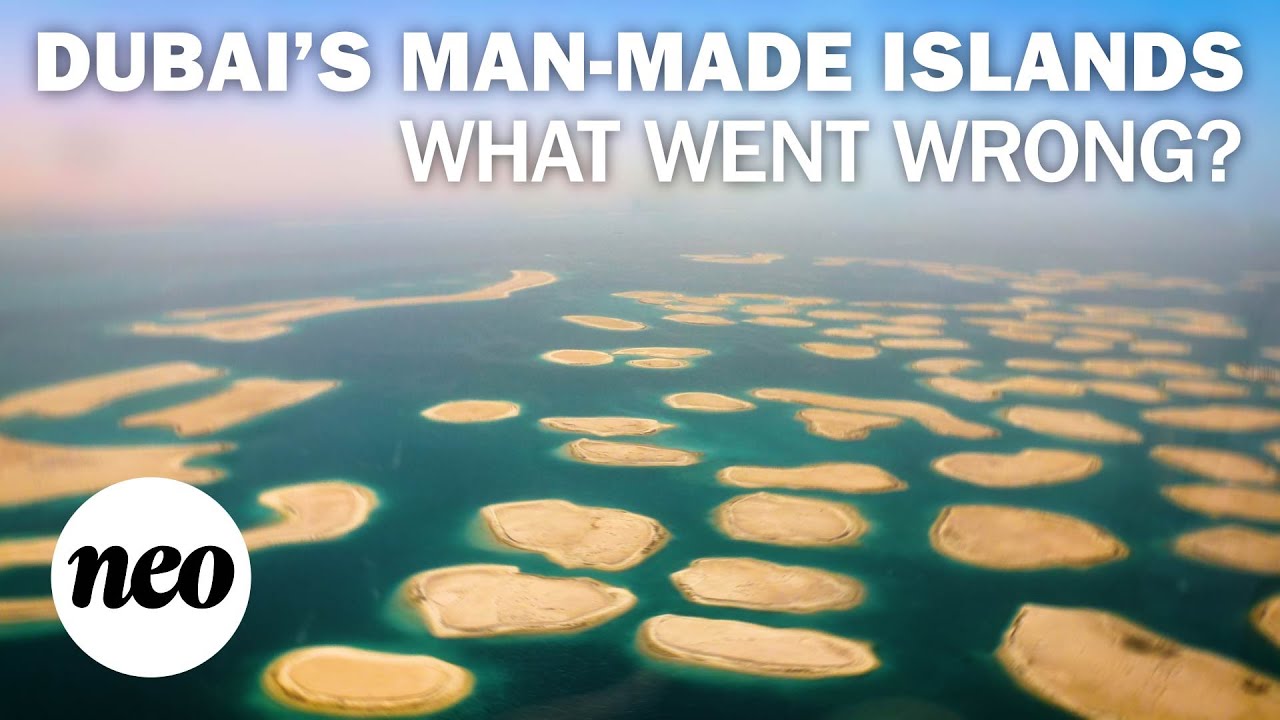
In May 2003, state-backed developer Nakheel Properties unveiled “The World,” a plan for roughly 300 artificial islands arranged to form a map of the globe, sitting 2.5 miles off Dubai’s Jumeirah coastline. The pitch was pure Dubai: private islands for the super-rich, a diversified economy beyond oil, and another headline-grabbing engineering feat to put the emirate on the map — literally. More than 17 years later, satellite images still show mostly bare sand.
- Nakheel announced The World in May 2003 as a $12 billion-plus project of roughly 300 islands shaped like a world map, positioned 2.5 miles off Dubai’s Jumeirah coast.
- Dutch dredging contractors Van Oord and Boskalis moved 321 million cubic meters of marine sand and 386 million tons of rock to build the archipelago, expanding Dubai’s coastline by roughly 232 kilometers before reclamation wrapped up around 2008.
- About 60% of the islands were pre-sold to private investors, but the 2008 financial crisis froze development, and by June 2020 only isolated pockets like Lebanon Island and the slow-moving “Heart of Europe” project showed any real activity.
The Blueprint for a World Map at Sea
Nakheel’s concept was ambitious even by Dubai’s standards: build an entire archipelago in the shape of Earth’s continents, then sell off individual “countries” to private buyers, celebrities, and sovereign investors looking for their own slice of coastline. Each island would function as a private estate, accessible only by boat, with buyers free to build custom villas, resorts, or entire developments on their own patch of reclaimed land. The project was framed as the natural sequel to Palm Jumeirah, pushing Dubai’s land-reclamation ambitions from a single palm-shaped peninsula to an entire globe floating in the Persian Gulf.
The Dredging Numbers Behind the Sand
Turning open water into 300 islands required one of the largest dredging operations ever attempted in the Gulf. Van Oord and Boskalis, the same Dutch firms behind much of Dubai’s earlier reclamation work, pumped 321 million cubic meters of marine sand and placed 386 million tons of rock to form the archipelago’s outline and breakwaters. The goal was to extend Dubai’s natural coastline by roughly 232 kilometers, giving the emirate far more waterfront property to sell than its geography would otherwise allow. Reclamation work was largely finished around 2008 — right as the global economy was falling apart.
The Crash That Stopped Construction Cold
The 2008 financial crisis hit Dubai’s property sector especially hard. Nakheel and its fellow state-backed developers were carrying enormous debt loads built on the assumption that luxury real estate demand would keep climbing indefinitely. Instead, property values collapsed, buyers walked away from deposits, and financing for individual island villas simply dried up. Even with roughly 60% of The World’s islands already under private contract, there was no money left to build the seawalls, jetties, and structures those buyers had signed up for.
Sand, Silt, and the Missing Infrastructure
Money wasn’t the only obstacle. The islands sat miles from Dubai’s mainland with no power lines, no freshwater pipes, and no sewage systems — anyone wanting to build would have had to ship in every basic utility by boat. Marine logistics operators and independent surveyors, including Penguin Marine in legal disputes around 2010, raised alarms about erosion and navigational silting between the islands, fueling persistent reports that sections of the archipelago were quietly eroding back into the Gulf.
321 million cubic meters of sand. 386 million tons of rock. And by 2020, most of “The World” was still just empty sandbanks.
Current State of Existing Technology
Drive — or rather, sail — out to the archipelago today and the picture is stark. The vast majority of the roughly 300 islands remain undeveloped sandbanks, reachable only by private boat and stripped of any infrastructure to support permanent construction. Lebanon Island is one of the rare exceptions, operating as a commercial beach club that ferries visitors out from the mainland. The “Heart of Europe” cluster, a smaller sub-development modeled on European cities, has continued inching forward, but it remains a tiny fraction of the original 300-island vision Nakheel sold to the world back in 2003.
For now, the only regular traffic out to most of these islands is the boats running tours and beach-club shuttles — the same kind of marine access that makes any Dubai island project, from Palm Jumeirah’s luxury villa developments to The World, dependent on private yachts and water taxis just to get people there. Whether Nakheel ever builds out the rest of its map, or leaves it to erode a little further into the Gulf, the archipelago sits exactly where it was left in 2008 — reclaimed, mapped, sold, and almost entirely empty.







How to Start a Fire With Your Bare Hands in the Wilderness | Basic Instincts
WOMAN Builds Breathtaking SUSTAINABLE DOME HOMES
GoPro Awards: Million Dollar Challenge Highlight in 4K
This woman lives every day like it’s 1958
In Residence: Jim Olson – inside the architect’s treetop house