

 InfoSearched
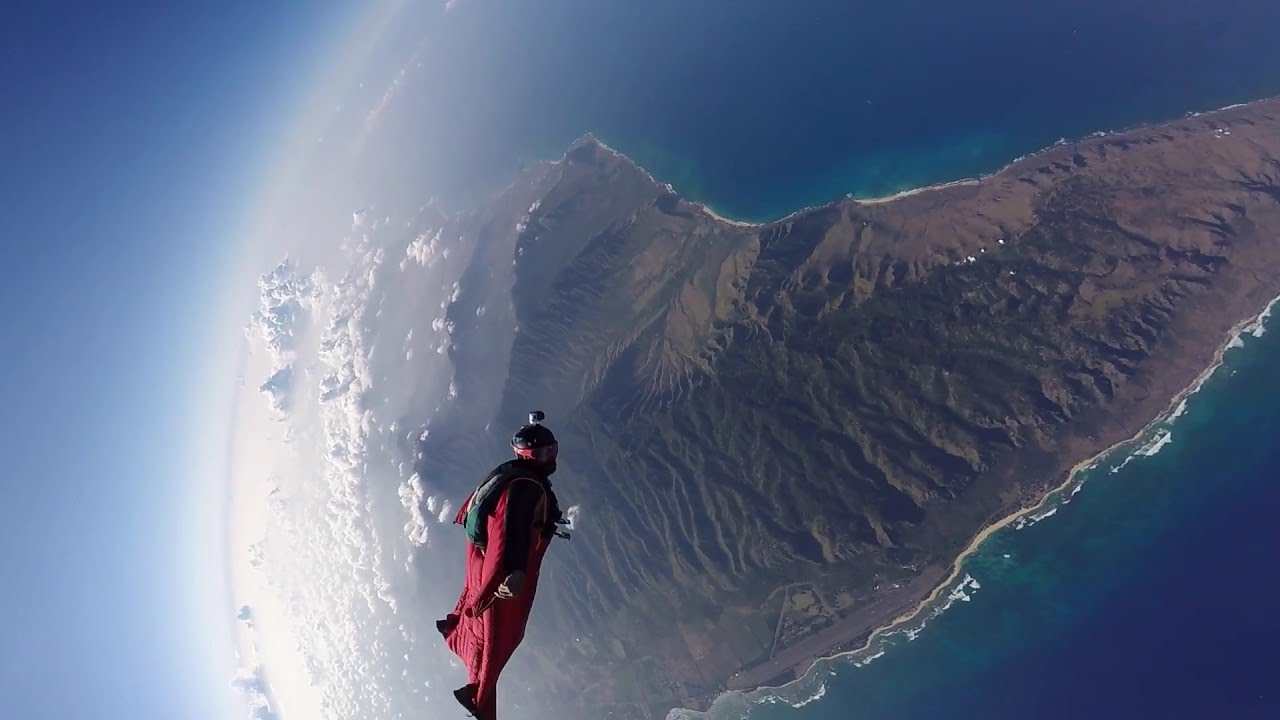
A red wingsuit, 20,000 feet, and one of the wildest views Hawaii has ever put on YouTube.
Long before wingsuit footage was a routine scroll-stopper on social media, a video titled “Maui’s HALO Wingsuit” showed the extreme sports world what a High Altitude Low Opening jump actually looks like from the inside. Shot and published by aerial videographer and skydiver TK Hinshaw, who operates under the Skydive Hawaii banner, the clip follows a skydiver nicknamed Maui as he exits an aircraft at roughly 20,000 feet over Oahu wearing a red wingsuit. There’s no gimmick, no proprietary gear story attached to it — just a genuinely rare vantage point on a HALO jump most people will never see up close.
- The jump launches from an exit altitude of approximately 20,000 feet, staged through Skydive Hawaii’s operations based at Dillingham Airfield on Oahu’s North Shore.
- Jumps at that altitude require the aircraft crew to breathe supplemental oxygen before exit, a standard safety requirement for HALO-tier civilian skydives.
- Published in the early 2010s, the video went on to rack up more than 20 million views by May 2020, making it one of the more widely watched wingsuit clips of its era.
Definitions of Maui and HALO
The title has led plenty of viewers astray. “Maui” isn’t the island where the jump took place — it’s the nickname of the skydiver in the red wingsuit who is the focus of the footage. “HALO,” meanwhile, is borrowed straight from military terminology: High Altitude, Low Opening, a jump profile where the parachutist exits at extreme altitude and free-falls or glides for an extended stretch before deploying the canopy much closer to the ground. Civilian skydiving crews have adapted the acronym for jumps that mimic that same high-exit, long-glide, late-deployment structure, minus the tactical payload.
Inside the Dillingham Airfield Operation
Skydive Hawaii runs its jumps out of Dillingham Airfield, the North Shore strip that’s become the launch point for a good chunk of Oahu’s tandem and licensed skydiving traffic. Getting a wingsuit flyer to 20,000 feet isn’t a quick joyride — the aircraft has to climb well past the altitude of a standard 10,000-to-14,000-foot recreational jump, which is exactly why supplemental oxygen comes into play before the door opens. Below that threshold, hypoxia risk climbs fast enough that operators simply won’t send jumpers out without it.
Once Maui clears the door, the footage settles into the part that made the video a viral fixture: a long, flat glide over Hawaiian coastline and island terrain, the wingsuit’s fabric panels holding him in a controlled dive well beyond what free-fall alone would allow. It’s the same physics that powers builds like the Jetson One personal aircraft, minus the engine — lift generated purely by body position and suit geometry.
The Glide, the Deployment, and the Numbers
Wingsuit flyers at this altitude typically extend their horizontal glide well past what a standard belly-to-earth free-fall allows, trading vertical fall rate for forward distance before pulling the deployment handle much closer to the ground than a conventional jump would call for. The video tracks that full arc — ascent, exit, glide, canopy deployment, landing — without cutting away, which is part of why it held up as a reference clip for the sport rather than just another highlight reel.
Twenty thousand feet up, supplemental oxygen on, one red wingsuit, and a glide over Hawaii that outlasted almost every other jump video on the internet at the time.
That combination of altitude, terrain, and unbroken footage is what separates HALO-style wingsuit content from the more common lower-altitude jumps that dominate skydiving social feeds. Viewers chasing the same rush of extended airtime and technical flying have found similar appeal in footage like the 240-mile, 22-minute flight video, where speed and distance carry the same visceral weight altitude does here.
Reasons for Continued Circulation
By May 2020, “Maui’s HALO Wingsuit” had cleared 20 million views without any paid promotion push behind it — just organic sharing across skydiving forums, extreme sports pages, and the kind of viral loop that keeps a well-shot jump video alive years after its upload date. Hinshaw’s camera work, staying locked on Maui through the entire descent rather than cutting for style, is a big part of why it kept getting rediscovered.
There’s no sequel jump attached to this one, no follow-up from Skydive Hawaii promising a higher exit altitude next time — it’s a single, complete piece of footage that’s been doing the rounds for close to a decade. If you’re going to watch one HALO wingsuit video out of Hawaii, this is still the one that shows up first.









Ross Gets Pinned Down By Taliban AK-47 & RPG Gunfire
Two Weeks Under the Sea
RYNO Motors at the Cutting Edge of Innovation
13 Beach Life Hacks / Coolest Summer Ideas!
Solo Overnight Camping In Blizzard — 70 Subscriber Special