

 InfoSearched
A single YouTube reel strings together five real gold-manufacturing lines, from a scrap furnace to the U.S. Mint’s coin press.
“Amazing Melting Pure Gold Technology – Modern Gold Coins and Bars Manufacturing Process,” posted by the industrial showcase channel NaLac Technique, is not footage of some lab breakthrough. It’s a compilation, stitched together from publicly available factory tours, that walks viewers through how gold actually gets from raw scrap to a stamped coin in a bank vault. The five segments jump between a precious-metals refiner, an African bullion refinery, and three of the world’s most recognizable mints.
- The video opens with traditional high-purity gold scrap melting and refining footage sourced from precious metals refiner So Accurate Group.
- A separate segment shows industrial casting and bar fabrication at Uganda’s African Gold Refinery (AGR) in Entebbe.
- The closing stretch covers coin striking at the Royal Canadian Mint, Australia’s Perth Mint, and the United States Mint, each shown punching planchets and stamping relief dies before the finished bars and coins go into high-security vaults.
Inside the Melt: How Scrap Becomes a 99.99% Bar
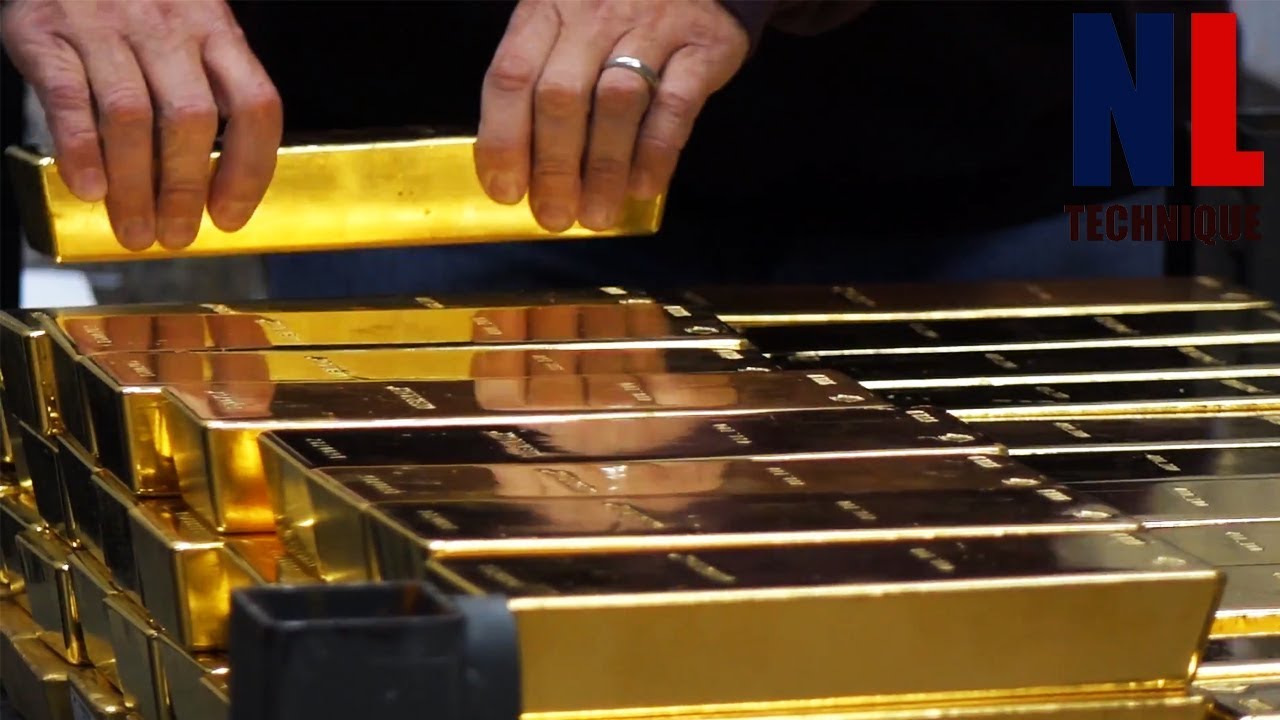
The opening sequence, drawn from So Accurate Group’s operation, follows the oldest step in the chain: an induction furnace liquefying scrap gold at heat intense enough to turn the metal into a glowing pool before it’s poured into cast-iron molds. Once it cools, workers run chemical assays to confirm the bar clears the 99.99% purity threshold that separates investment-grade bullion from lower-karat jewelry stock. That number matters because it’s the baseline refiners and mints alike have to hit before a bar can even be considered for coinage or resale on a bullion market.
Entebbe’s Role in the Supply Chain
From there, the video shifts to Uganda, where the African Gold Refinery in Entebbe handles industrial casting and fabrication of investment-grade bars. AGR’s footage shows molten metal poured, cooled, and rolled into uniform strips — the same kind of continuous casting and blanking work that turns a rough ingot into stock ready for stamping. It’s a reminder that gold refining isn’t confined to Zurich or London vaults; East Africa has built its own refining capacity to process bullion closer to where much of it is mined.
Striking Coins at Scale
The back half of the compilation is where the process gets mechanical. At the Royal Canadian Mint, Perth Mint, and U.S. Mint, planchets are punched from rolled sheet metal, then fed into automated coin presses fitted with custom relief dies. Those presses strike at dozens to hundreds of strokes per minute, turning out legal-tender gold and silver bullion coins with the kind of consistency hand-striking could never match.
Every coin that reaches a collector or investor first has to survive a die striking dozens to hundreds of times a minute and still come out identical to the last one.
That repetition is the whole point. National mints aren’t chasing artistry on every strike — they’re chasing uniformity, because a Maple Leaf or American Eagle only holds its bullion value if every coin from a given run matches the next down to the milligram.
From Furnace to Vault
The video closes on high-security vaulting, showing finished bars and coin reserves stacked and sealed away. It’s a fitting bookend: gold that started as scrap on a refinery floor ends the process locked behind the kind of security most viewers only associate with heist movies. For anyone curious how other raw materials get transformed through industrial processing before they reach consumers, the same instinct for the mechanics behind a finished product shows up in pieces like how recycling machines make new clothes from used apparel.
What makes NaLac Technique’s compilation worth the runtime isn’t a single dramatic reveal — it’s the sheer range of scale on display, from a mid-sized refiner like So Accurate Group up to sovereign mints striking currency. Gold’s appeal as a luxury and investment good depends on that entire chain holding together, a point worth remembering next time a shiny bar shows up in a display case rather than a furnace, the same way craftsmanship history behind other luxury goods tends to hide the industrial process underneath the polish.








Living In A Treehouse in Hawaii
He climbs stairs with his HEAD! – Guinness World Records
Single Mother Builds Scandinavian Inspired Tiny House To Escape
Made Perfect – with DIAMONDS
It Started Out Great, But… Solo Beach Camping On An Uninhabited Island – Day 1