

 InfoSearched
A minimalist survival veteran shows how far a poncho and some paracord can actually get you overnight.
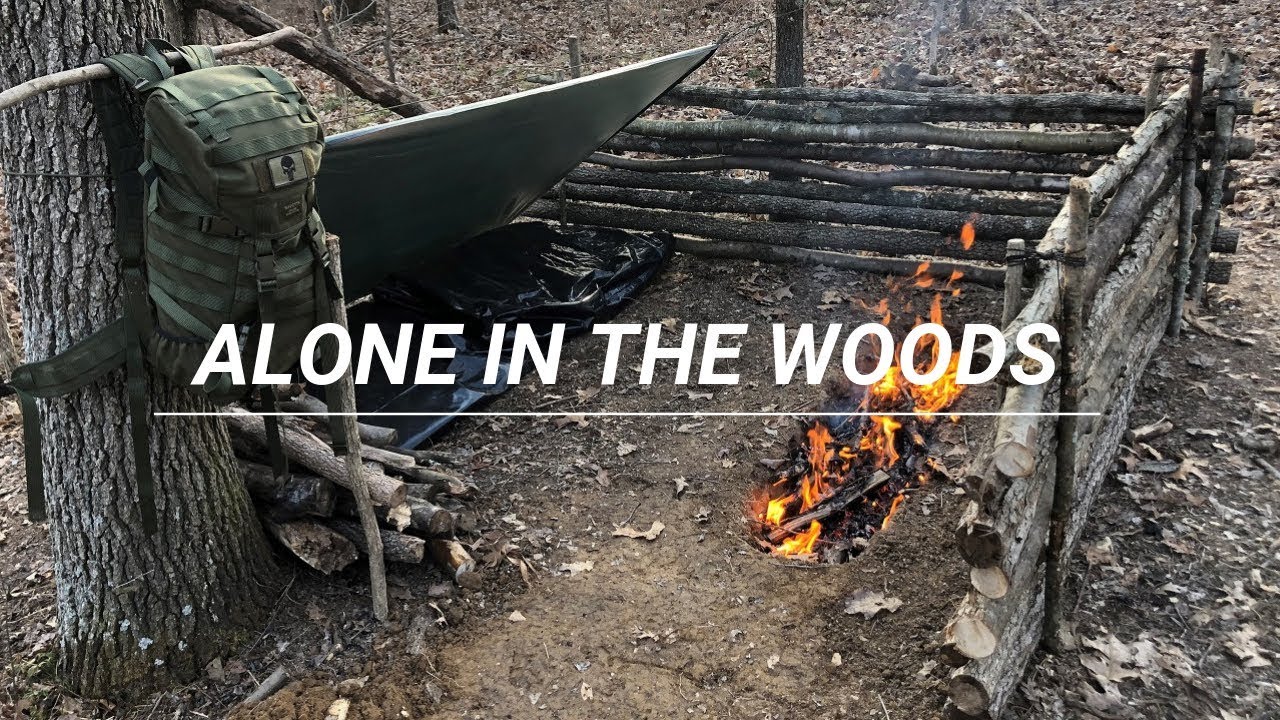
Shawn Kelly doesn’t reach for a four-season tent when the sun starts dropping. In “Overnight Shelter Building With Minimal Gear,” the bushcraft instructor behind the YouTube channel Corporals Corner strips his kit down to the basics — cordage, a tarp or military-style poncho, and whatever the forest floor gives him — and builds a shelter sturdy enough to sleep in through the night. It’s a demonstration built around the same five priorities he returns to in nearly every video: shelter, fire, water, food, tools.
- Shawn Kelly, creator of Corporals Corner, builds and sleeps in an emergency overnight shelter using only a barebones kit instead of standard camping gear.
- He selects a campsite based on natural windbreaks and elevation to cut down on wind exposure, ground moisture, and rain runoff before cutting a single branch.
- The build relies on minimal cutting tools and cordage to rig a lean-to or low-profile shelter using saplings, deadwood, and cleared debris for insulation.
Reading the Terrain Before Cutting Anything
Kelly’s process doesn’t start with a knife — it starts with a walk. Before committing to a spot, he scouts for terrain that already does part of the work: rises that shed water instead of collecting it, tree lines dense enough to block prevailing wind, and ground clear of the standing deadwood that turns into a hazard once the wind picks up overnight. Elevation and natural windbreaks are doing double duty here, cutting exposure without requiring extra material.
That site-selection step separates a shelter that survives a rough night from one that fails at 2 a.m. It’s the same instinct that shows up across the bushcraft genre, whether the build is a poncho lean-to or the kind of dug-in sandbag shelter other solo-overnight builders have tested in the woods.
Building the Frame With What’s on the Ground
With a site picked, Kelly works with saplings and deadwood as structural material, using minimal cutting tools to shape a frame rather than relying on packed-in poles. Cordage ties the frame together, and a tarp or military-style poncho becomes the shell — the same core setup that shows up whether he’s raising a simple lean-to or a lower-profile shelter designed to hug the ground and dodge wind.
The point isn’t elegance. It’s redundancy with almost nothing in reserve — one poncho, one length of rope, and forest debris doing the rest.
Reinforcing Against Wind, Moisture, and Cold
Once the frame and cover are up, Kelly shifts to reinforcement: clearing debris from the sleeping area, layering additional material for insulation, and tightening the rigging so the structure holds through wind and precipitation overnight. This is the phase where a shelter goes from “technically standing” to “survivable” — the difference between staying dry and waking up soaked through a gap in the tarp line.
Focused on shelter, fire, water, food, and tools — the fundamentals Kelly builds every demonstration around.
The Minimalist Kit Philosophy
What makes the video useful beyond a single build is the constraint Kelly imposes on himself: no conventional camping gear, just a barebones kit and the terrain in front of him. That’s the pitch to hikers, hunters, and outdoor enthusiasts — the goal isn’t recreating a comfortable campsite, it’s proving a habitable, weather-resistant shelter is buildable when the pack is light and the weather isn’t cooperating. Viewers looking for the same low-tech approach applied to insulation rather than framing can see it in Kelly’s other cold-weather builds, including the cattail down jacket solo overnight he’s demonstrated using foraged plant fiber instead of synthetic fill.
Corporals Corner keeps circling back to this exact format — one night, one stripped-down kit, one terrain problem to solve — and it’s why the channel’s solo-overnight catalog keeps growing rather than repeating itself. The next build just swaps the constraint: less cordage, worse weather, or a different forest floor to work with, but the same five priorities Kelly never skips.






Population of One: Living Alone in an Abandoned Ghost Town
9 Survival Gardening Crops to Grow in a Post Apocalyptic World
Slow motion of 50 cal sniper shot
NO FUEL Generator! – Renewable portable power EcoFlow Delta Solar Generator
What Happened to YVONNE DE CARLO ( LILY MUNSTER )