

 InfoSearched
That handful of cashews in your trail mix survived a chemical war before it ever hit the bag.
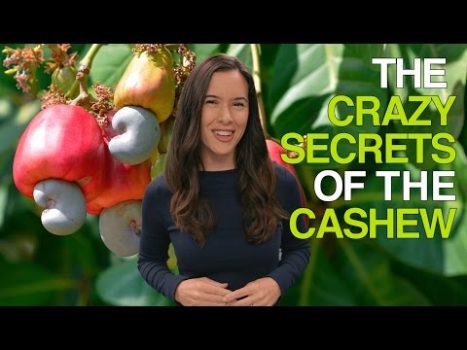
Cashews are the only major snack nut that never shows up in its shell at the grocery store, and the reason has nothing to do with marketing. According to the breakdown from TRUE FOOD TV, the cashew shell is packed with the same skin-blistering compound found in poison ivy, which means every cashew you’ve ever eaten went through a heat-treatment gauntlet just to become edible. The kernel itself isn’t even a nut in the botanical sense — it’s a seed hanging off the bottom of a fruit most Americans have never seen in person.
- Cashews (Anacardium occidentale) are technically seeds, not tree nuts, and they grow from the base of the cashew apple — a sweet-tart, vitamin C-rich accessory fruit, not the seed itself.
- The cashew belongs to the Anacardiaceae family alongside poison ivy, poison sumac, and mangoes, and its shell holds a resin loaded with caustic anacardic acids and urushiol, the exact irritant that causes poison ivy rashes.
- Processors must roast or steam the harvested drupes at high heat to neutralize the urushiol before shelling, which is why cashews labeled “raw” in stores have already been heat-treated and are never truly raw.
The Fruit Nobody Sees
Most people picture a cashew as a curved little nut in a can, but that’s only the seed. The actual fruit is the cashew apple, a swollen, blushing stem that grows above the seed rather than around it — the reverse of how most fruit-and-seed relationships work. It’s edible, juicy, and prized in parts of Brazil and India for juices and preserves, but it barely travels because it bruises and spoils fast, which is largely why it never made it into American grocery aisles the way the seed did.
A Shell Built Like a Chemical Weapon
The danger sits in the shell itself, not the kernel. Cashews are part of the Anacardiaceae family, the same botanical lineup that includes poison ivy, poison sumac, and even mangoes, and the outer shell carries a double-layered structure trapping an oily resin loaded with anacardic acids and urushiol. That’s the identical compound responsible for poison ivy rashes, and anyone who cracks a raw cashew shell bare-handed risks the same blistering, chemical-burn reaction — a fact that has real overlap with the itchy misery covered in how to never have a serious poison ivy rash again.
The oil trapped inside a raw cashew shell is the same chemical irritant found in poison ivy — which is exactly why you’ve never seen one for sale unshelled.
Roasting Out the Poison
To turn a hazardous drupe into a snack-aisle staple, processors have to cook the toxicity out before they ever crack the shell. High-heat roasting or steaming neutralizes the volatile urushiol oils in the resin, which both protects the workers doing the shelling and keeps that caustic oil from contaminating the soft kernel inside. Only after that thermal treatment is it safe to remove the shell and the thin inner skin, exposing the creamy-white seed that ends up in the bag.
Raw Cashew Labeling Misconceptions
That heat step is also why the “raw cashews” sold in health food stores are something of a misnomer. Every cashew on a shelf has already been roasted or steamed enough to destroy the toxic oil in its shell before it was ever extracted — there’s no such thing as a truly unprocessed cashew making it to a retail bin. The labor and hazard baked into that process is a big part of why cashews consistently carry a higher price tag than peanuts, almonds, or walnuts, a gap explored in why cashew nuts are so expensive.
None of that stops cashews from being one of the most consumed nuts on the planet — it just means every single one in the bag already survived a roasting process most shoppers never think twice about while grabbing a can off the shelf.








13 DIY Kawaii School Supplies!
ACKEE Fruit : Trying the Notoriously Delicious Fruit in JAMAICA (& Susumba Fruit Review + Recipe)
Small Vintage Trailer Renovated ON A BUDGET: Step by Step!
The Mars Homes That NASA Awarded $500k
Made Perfect – with DIAMONDS