

 InfoSearched
NASA just handed a New York architecture firm half a million dollars for a house designed to survive Mars.
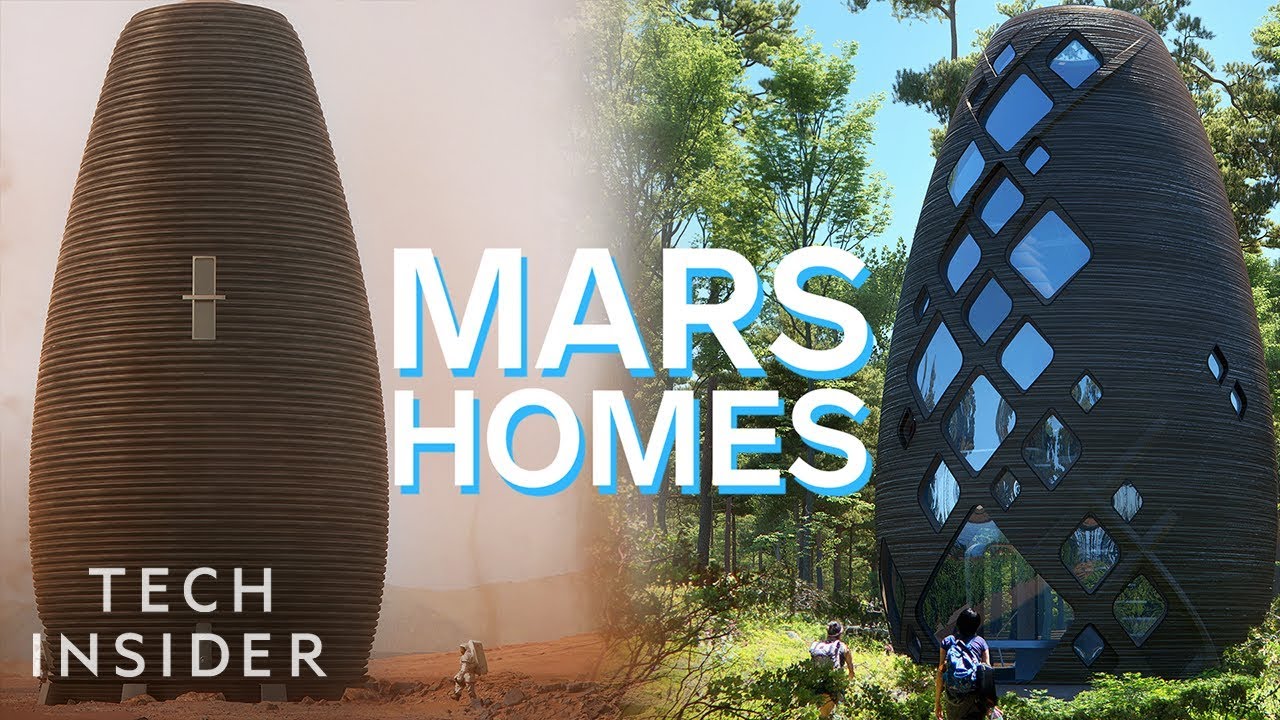
In May 2019, AI SpaceFactory beat out more than 60 competitors to win the top prize in the final phase of NASA’s 3D-Printed Habitat Centennial Challenge, a multi-year competition to design and build livable structures for the Red Planet. The New York-based design and technology agency didn’t just draw up blueprints — it autonomously printed a 15-foot-tall, 1:3 scale prototype of its habitat in 30 hours with virtually no human hands touching it. The structure, called MARSHA, looks nothing like the low dome shelters most people picture when they think of a Mars colony.
- AI SpaceFactory won the $500,000 top prize in NASA’s 3D-Printed Habitat Centennial Challenge in May 2019, topping a field of more than 60 teams.
- The team’s prototype, MARSHA, was printed autonomously in 30 hours at Caterpillar’s Edwards Demonstration Center in Illinois.
- MARSHA is built from a proprietary basalt-and-bioplastic composite that outperformed concrete mixes in NASA’s smoke, pressure, and impact stress testing.
Egg Shaped Tower Surpasses Dome
Most habitat concepts NASA has fielded over the years lean on squat, dome-like footprints because they’re structurally simple. AI SpaceFactory went the opposite direction with MARSHA, a slender, vertical, egg-shaped tower engineered specifically around the atmospheric pressure and thermal swings a structure would actually face on Mars. The vertical footprint also matters for a more practical reason: landers can only clear so much surface area, so a tall structure gets more usable volume out of a small printed base.
Inside, MARSHA is arranged across four floors connected by a spiral staircase — a wet lab, a kitchen, individual sleeping pods, a recreation area, and a sky-lit sanctuary on the top level. Robotically placed windows run throughout the design, a deliberate answer to the psychological toll of crew cabin fever on a mission that could keep astronauts sealed inside for months at a time.
A Material NASA Hadn’t Seen Before
The bigger breakthrough might not be the shape at all — it’s what MARSHA is made of. Instead of relying on concrete, which several competing teams used, AI SpaceFactory formulated its own recyclable biopolymer basalt composite: basalt rock fiber combined with polylactic acid, a renewable bioplastic that could theoretically be grown and cultivated on Mars itself. In NASA’s testing, that composite beat out competing concrete mixtures on smoke, pressure, and impact stress metrics — the exact conditions a real Martian structure would need to survive.
MARSHA was printed autonomously in 30 hours at Caterpillar’s Edwards Demonstration Center — with virtually no human intervention.
That construction speed and hands-off process is part of what NASA was actually testing for. A real Mars mission can’t send a construction crew ahead of the astronauts; the habitat needs to build itself, or close to it, using local materials before anyone even lands. Firms working on similarly ambitious material and construction problems back on Earth — from alternative prefab housing systems to more conventional concrete work — are still years behind the kind of autonomous, material-science leap AI SpaceFactory pulled off for a $500,000 prize.
From Mars Prototype to a New York Backyard
AI SpaceFactory isn’t just banking the prize money and moving on. The company announced plans to recycle MARSHA’s printed materials directly into TERA, an eco-friendly terrestrial habitat prototype the firm is building in upstate New York. The idea is to prove that the zero-waste, off-world construction techniques developed for Mars can double as a genuine sustainable-building method here on Earth — turning a NASA competition into a working case study for how a house gets built when nothing goes to waste.
TERA is the real next chapter of this story: a habitat originally engineered to survive Martian dust storms and radiation, repurposed to sit in upstate New York and answer a much simpler question — does the same zero-waste basalt composite actually hold up as everyday housing material, not just a $500,000 prototype.







5 Bushcraft Shelters – Full Camp Builds Start to Finish
Couple Builds Tiny House for Only $420!
Most Insane Water Jumps of ALL TIME
GIANT MANTIS SHRIMP – CATCH, CLEAN, COOK
Ralph Lauren: How I Built a Fashion Empire