

 InfoSearched
A wooden mouse trap becomes the trigger for landing wild trout through Rocky Mountain ice.
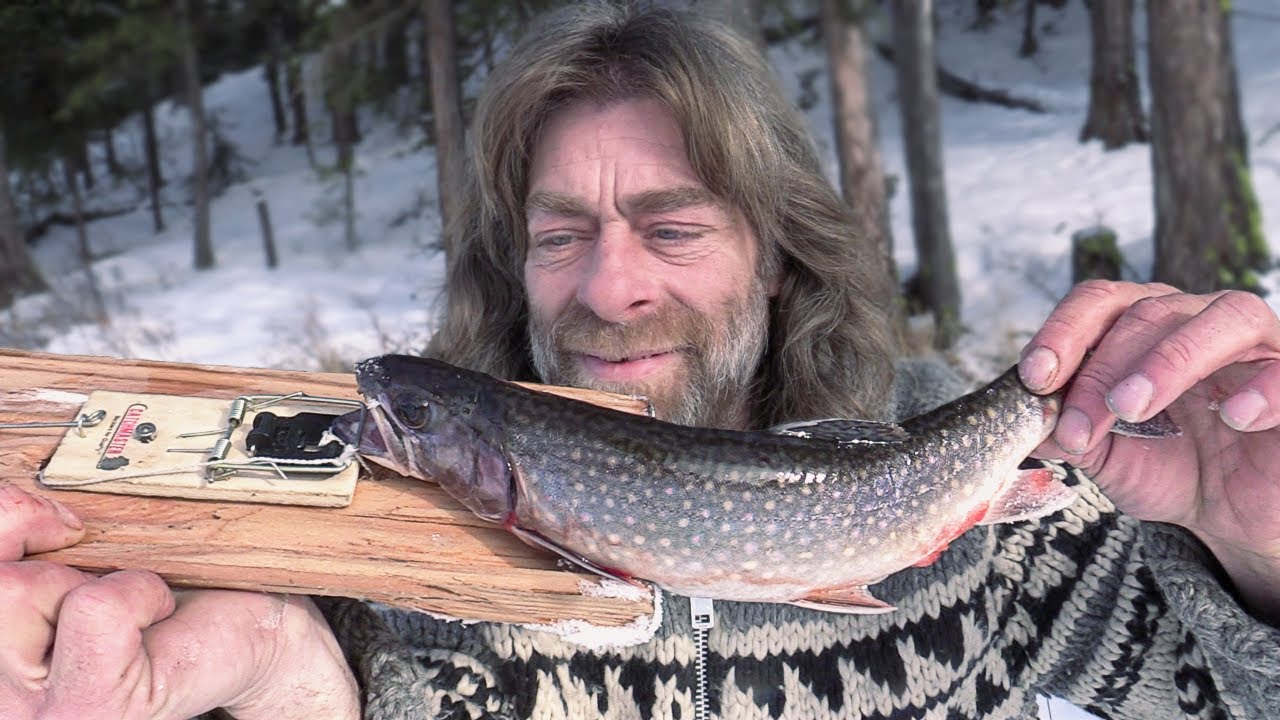
Greg Ovens doesn’t fish with a rod in his hand. In “How to Catch a Trout with a Mouse Trap (Ice Fishing),” the Canal Flats, British Columbia bushcrafter treks across snow-covered backcountry to a frozen mountain lake, augers a series of holes through the ice and rigs a standard wooden snap trap as an automatic hook-setter. No reel, no rod tip to watch — just a spring-loaded arm waiting for a trout to make a mistake.
- Greg Ovens, a self-taught survivalist and drywaller based in Canal Flats, B.C., builds the rig from an ordinary wooden mouse trap rather than using it as bait.
- The trap functions as a DIY tip-up: baited line runs through an augered ice hole and ties off to the trap’s trigger, so a strike snaps the arm and jerks the hook home automatically.
- Ovens drills multiple test holes, sets several lines across the lake, and monitors them until the mechanism trips and he lands wild mountain trout through the ice.
The Mechanism, Not the Bait
The setup gets misread constantly online, and Ovens’ video corrects the record just by showing the build. The mouse trap isn’t dangled underwater with cheese on it — it’s mounted above the ice hole as a mechanical trigger. Fishing line, baited on the working end, runs down through the auger hole into the water column and ties to the trap’s spring-loaded wire arm. A trout takes the bait, the tension pulls the trigger, and the trap fires the way it would on a rodent, only now that force is redirected straight up the line to set the hook.
It’s the same principle behind a commercial tip-up flag, built instead from five dollars of hardware-store spring steel. Ovens doesn’t need to hold a rod or watch a bobber; the trap does the watching, and the strike does the work of setting the hook harder and faster than most anglers manage by hand.
Working the Ice
The video follows Ovens’ actual process rather than a studio demo. He hikes out to a frozen Rocky Mountain lake, drills test holes with a hand auger to check ice thickness and depth, and sets multiple rigs at different spots to hedge his odds. That legwork — moving from hole to hole across open, wind-scoured lake ice — is the same patient, boots-on-the-ground approach he brings to his other bushcraft builds, the kind of project logic on display in his plastic-wrap bushcraft tent and his solo sandbag shelter build.
The trap doesn’t just alert Ovens to a bite — it sets the hook for him, driving the point home the instant a trout pulls the line.
Proof in the Landing
The payoff comes when one of the traps finally trips. Ovens checks his lines across the lake and finds the wire arm sprung on one of the rigs, line taut, a wild mountain trout already hooked and fighting below the ice. He works the fish up through the hole by hand rather than with a reel, since the trap did the only job a rod usually handles — setting the hook — before he ever touched the line.
That’s the entire case for the contraption: it converts a five-dollar mouse trap into a passive hook-setter that lets one angler tend several holes at once, landing fish on lines he isn’t physically holding. For anyone who’s spent a morning on a frozen lake watching an unmoving bobber, that’s the whole appeal in one snap of a spring.






5 Bushcraft Shelters – Full Camp Builds Start to Finish
The WEIRDEST Bike Park?
How This Guy Uses A.I. to Create Art
He climbs stairs with his HEAD! – Guinness World Records
Amazing Indoor-Outdoor Architecture Near Venice Beach