

 InfoSearched
A five-dollar Walmart tube and a packraft take on one of Utah’s toughest canyon loops.
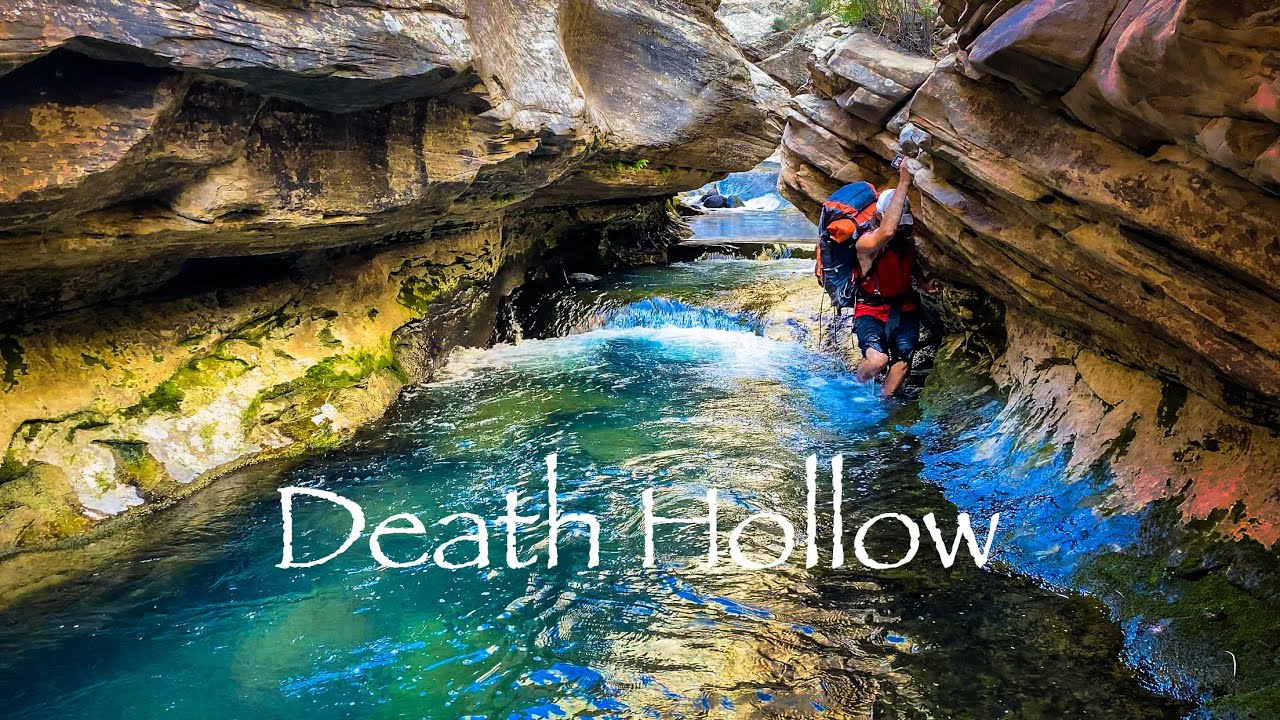
Outdoor videographer Norwegian Xplorer spent seven days in the Box-Death Hollow Wilderness this July, teaming with fellow adventurer My Own Frontier to float and hike the entire length of Death Hollow during a stretch of brutal summer heat. The pair departed from the upper Death Hollow Trailhead off Hell’s Backbone Road in the Dixie National Forest, carrying a packraft and an inflatable tube bought for five dollars at Walmart to get through the canyon’s coldest, deepest stretches.
- The loop began and ended at the same ridge along Hell’s Backbone Road, running the full length of Death Hollow down to its confluence with the Escalante River.
- The team combined technical canyon wading with floating, using a packraft and a $5 Walmart inflatable tube to get through chilled narrows and deep pothole pools.
- After exiting at the Escalante River, the pair closed the loop cross-country over the Slickrock Saddle Bench, crossing the historic Boulder Mail Trail and bushwhacking through Sand Creek before climbing back to Hell’s Backbone Road.
The Descent Into Death Hollow
Death Hollow doesn’t give hikers much choice about getting wet. The canyon’s slot walls squeeze down tight enough that walking the full length on dry ground isn’t an option, which is why Norwegian Xplorer and My Own Frontier packed flotation gear instead of relying purely on boots and rope. High summer heat actually worked in their favor here — the water running through the narrows stays cold year-round, and baking temperatures up top made the swimming sections feel less like an obstacle and more like relief.
Gear had to be fully waterproofed before every swim, since a soaked sleeping bag or camera bag on day two of a seven-day trip is the kind of mistake that ends a trip early. The route also forced the pair through dense poison ivy thickets and along narrow ledges where a wrong step meant a swim they hadn’t planned. Anyone attempting a canyon trip like this would do well to study up on poison ivy identification and treatment before heading out, since a bad reaction days from a trailhead is a serious problem — a lesson covered in detail in how to never have a serious poison ivy rash again.
Floating Gear Through the Narrows
The packraft handled the longer, deeper pools, while the Walmart tube — the kind of thing you’d expect at a lazy river, not a wilderness expedition — got pressed into service for shorter floats through the tightest sections. That combination let the pair keep moving through water too deep and too cold to wade comfortably, without hauling in a second full-sized boat.
A five-dollar Walmart tube did real work getting two backpackers and their gear through some of the coldest narrows on the Colorado Plateau.
Floating a fully loaded pack through a slot canyon is its own skill set — every dry bag has to be cinched down, and the current in the deeper pools can catch gear in ways that solid ground never does. It’s the same improvisational spirit that shows up in other long solo and small-team treks across the region, including the kind of self-supported route-finding documented in Hiking 70 Miles Alone on the Sawtooth Loop Trail in Idaho.
Closing the Loop Over Slickrock Saddle Bench
Reaching the Escalante River confluence marked the end of the technical canyon work, but not the end of the trip. From there, the pair turned to cross-country trekking over the Slickrock Saddle Bench, crossing paths with the historic Boulder Mail Trail — once used to carry mail between Escalante and Boulder, Utah, by mule before roads existed in the area. The return leg also meant bushwhacking through sections of Sand Creek, a slower, rougher slog than the float days, before the final climb back up the bench to Hell’s Backbone Road closed the seven-day loop.
The full descent stands as one of the more demanding self-supported routes on the Colorado Plateau, and Norwegian Xplorer’s footage captures a trip most hikers will only ever see from a trip report — narrow enough, cold enough, and remote enough that a five-dollar tube counted as essential gear rather than a gag.






The Dangerous Truth Of Jacob’s Well
This Dishwasher Charges $60K to Design Custom Guns
Germany’s Oldest Street-Legal Car | 1894 Benz Victoria
Explained: How did Narcos take control of Mexico?
Luxury Modern Small Home Built In Suburban Backyard