

 InfoSearched
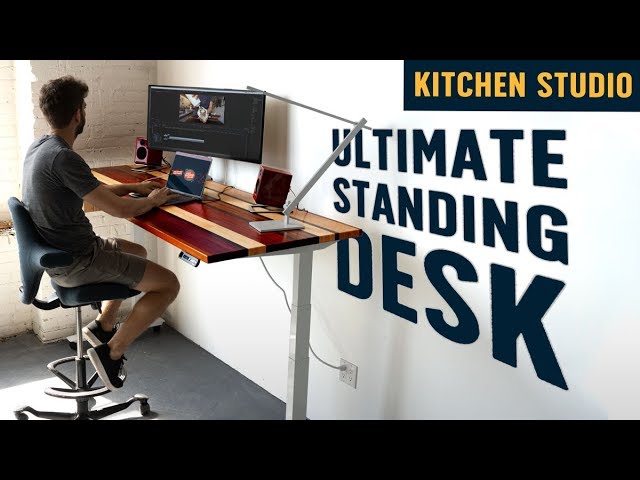
A woodworker turned full-time YouTuber decides the desk he needs doesn’t exist off the shelf, so he builds it himself.
Mike Greenfield, the creator behind Pro Home Cooks and his behind-the-scenes channel LifebyMikeG, had officially outgrown his apartment kitchen setup. With his channel shifting toward daily content production, Greenfield needed a dedicated video studio — and a workstation built for someone who stands six feet tall and spends hours a day on camera and at a keyboard. Rather than buy a pre-made standing desk surface at retail markup, he decided to build the whole thing from raw lumber.
- Greenfield designed and built a custom sit-to-stand desktop instead of purchasing a pre-made surface, citing the high markup on ready-made options.
- The desk was engineered around his own six-foot frame, with the wooden top mounted onto an adjustable motorized standing desk frame.
- The build included a multi-stage glue-up of surfaced solid wood boards, plus dedicated cable management, storage, and integrated workspace features.
From Apartment Kitchen to Real Studio
Pro Home Cooks had been run largely out of Greenfield’s apartment, but scaling up meant setting up a proper production space outside of it. That space needed a desk that could handle editing, planning, and on-camera work, and Greenfield treated the project less like furniture shopping and more like a build he’d take on in his woodworking days before content creation became his full-time job.
He leaned on that background directly. Instead of ordering a walnut or bamboo desktop from a standing-desk retailer — where the markup on the surface alone can rival the cost of the entire motorized frame — Greenfield decided to source his own boards and mill the top himself.
Designing Around a Six-Foot Frame
The planning stage centered on ergonomics specific to Greenfield’s own body. At six feet tall, standard desk proportions don’t always land right, so he worked out dimensions, surface height ranges, and layout before cutting a single board. The goal was a desktop that would sit correctly whether he was seated editing footage or standing to film.
Cable management got the same deliberate treatment as the desktop itself — routing power and camera/monitor cables out of frame was a functional requirement for a desk that would double as a filming backdrop, not just a workstation.
Sourcing, Surfacing, and the Glue-Up
With dimensions locked, Greenfield moved into sourcing solid wood boards and surfacing them himself rather than buying pre-planed stock. That set up the build’s most technical stretch: a multi-stage glue-up, joining the individual boards into a single, flat, structurally sound desktop wide enough to cover the full motorized frame.
Building it himself meant skipping the retail markup on a pre-made desktop entirely — the same reasoning that drives plenty of makers, like the builder behind the off-grid woodworking workshop profiled elsewhere, to mill their own materials rather than pay for finished stock.
Mounting the Top and Finishing the Workspace
Once the glued-up top was surfaced and finished, Greenfield mounted it onto an adjustable motorized standing desk frame, converting his handmade surface into a functional sit-to-stand workstation. He built in storage and integrated workspace features around the desktop, turning the finished piece into the centerpiece of his new studio setup — a project not unlike the transformation seen in turning a boring shed into a home theater, where a creator builds a dedicated production space from scratch rather than settling for an off-the-shelf room.
The result gave Greenfield a desk purpose-built for his height, his cable needs, and his day-to-day workflow — something no catalog listing was going to match exactly.








The Blind Assassin of the Desert
How Waste Is Dealt With On The World’s Largest Cruise Ship
ABANDONED city in America with NO LAWS
How This Guy Makes Record-Breaking Balloon Sculptures
We Invited 50 Followers to JOIN US ON SAFARI!!