

 InfoSearched
Colombia buried Pablo Escobar in 1993, but his hippos refuse to die off.
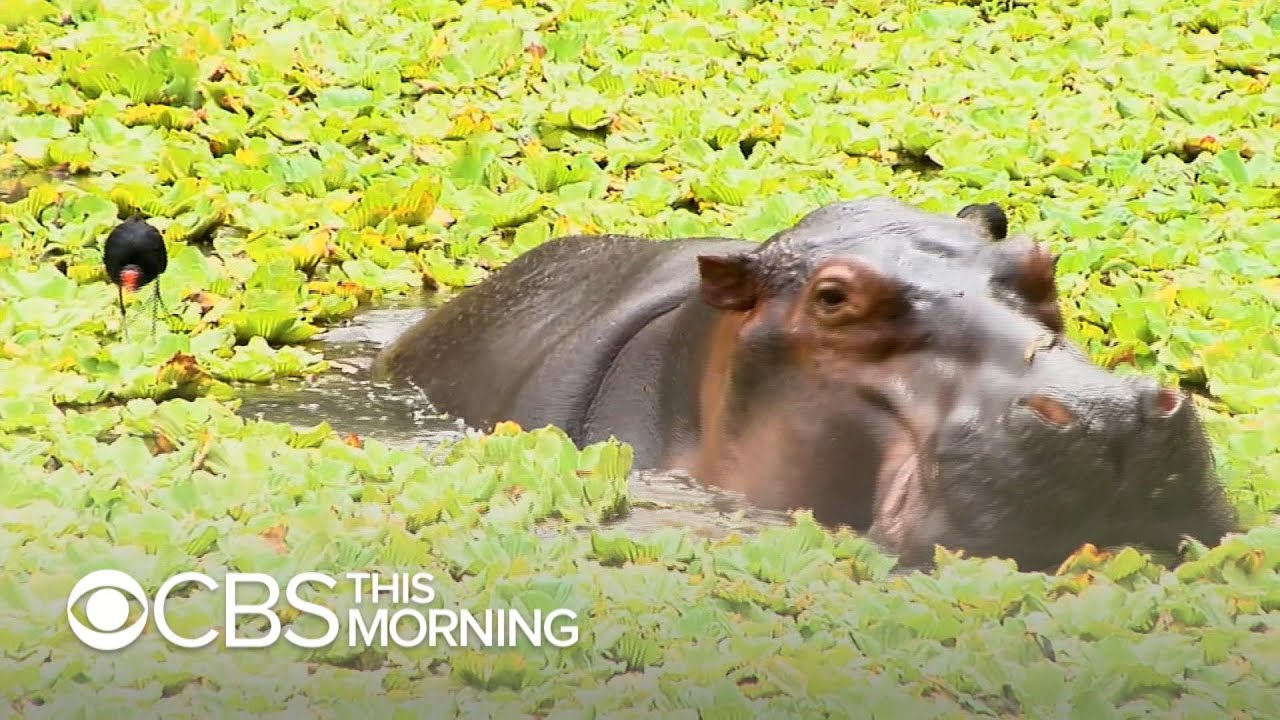
Four African hippopotamuses that Escobar smuggled into his private zoo in the 1980s have become one of Colombia’s strangest and most persistent problems. Left to fend for themselves after his death, they escaped into the Magdalena River basin and never stopped breeding. Three decades later, the herd has ballooned into the largest population of wild hippos outside Africa, and nobody in Bogotá has figured out how to stop it.
- Escobar’s original four hippos — one male, three females — imported to Hacienda Nápoles have multiplied into an estimated 90 to 120 animals spread across roughly 2,250 square kilometers of Antioquia and Santander.
- A January 2020 study from the University of California, San Diego, and Colombian researchers found the hippos’ waste is spiking nutrient levels and cyanobacteria in local lakes and rivers, triggering toxic algae blooms that threaten manatees and other native species.
- Every population-control option has stalled: a 2009 cull that killed a hippo named Pepe caused a public backlash, surgical castration runs up to $50,000 per animal, and shipping the hippos back to Africa is ruled out over parasite risk and a thin gene pool.
An Illegal Zoo That Outlived Its Owner
Escobar built his menagerie at Hacienda Nápoles, his sprawling estate in Puerto Triunfo, as a monument to the excess that made him one of the richest criminals in history. The four hippos he trafficked in were the exotic centerpiece, alongside giraffes and elephants that the government later managed to relocate. When Escobar was killed in a rooftop shootout in Medellín in 1993 and the state seized the ranch, officials moved most of the animals but left the hippos behind — they were simply too dangerous and too heavy to transport. Nobody expected them to become a self-sustaining population; hippos were never supposed to be here at all.
The Numbers Behind an Exploding Herd
What started as four animals is now estimated at 90 to 120, and scientists tracking the herd warn it could reach 150 within a decade if nothing changes, with projections running into the thousands over a longer stretch if the animals go unchecked. Colombia’s climate is part of the problem: there’s no dry season severe enough to limit food, no natural predator, and Colombian-born hippos reach sexual maturity earlier than their African counterparts. The herd’s range now stretches across roughly 2,250 square kilometers of the Magdalena basin, well beyond the fences of the old estate.
Scientific Findings Revealed
The January 2020 study didn’t just count hippos — it measured what they’re doing to the water. Each animal spends its nights grazing on land and its days wallowing in lakes and rivers, and the waste it deposits is elevating nutrient levels enough to fuel cyanobacteria blooms. Those blooms threaten the same aquatic ecosystems that support manatees and other native wildlife along the Magdalena, turning what looked like a curiosity into a documented ecological risk.
Estimates put the herd at 90 to 120 hippos across roughly 2,250 square kilometers — and researchers say it could hit 150 within ten years.
Persistent Failure of Proposed Fixes
Colombian authorities are effectively stuck. Culling is politically toxic; the 2009 killing of a rogue hippo named Pepe, authorized by the government, set off a wave of domestic and international outrage that authorities have avoided repeating. Surgical castration is technically an option, but it’s slow, risky for the animal, and can cost up to $50,000 per hippo — an impossible bill to scale across a growing herd. Relocating them to Africa has been ruled out too, given the parasite risk to native populations and a gene pool too narrow to justify the transport. Meanwhile, residents around Puerto Triunfo are split: some see a lethal animal wandering near roads and farmland, others have built ecotourism businesses around boat tours to see Escobar’s hippos up close.
Nobody in Colombia has a deadline for solving this — there’s no task force with a target number or a funded plan on the table, just a herd that keeps growing while officials weigh options nobody wants to greenlight. For now, the hippos of the Magdalena basin remain exactly what they’ve been since the 1990s: the one part of Escobar’s empire the state still hasn’t been able to shut down.








50 years off-grid: architect-maker paradise amid NorCal redwoods
DMT Always Shows Shane Mauss the Same Purple Woman on His Trips – Tales from the Trip
INSIDE BARBARA CORCORAN’S $13M PENTHOUSE
Bear Safe Hammocking In Grizzly Territory Day 21 of 30 Day Survival Challenge Canadian Rockies
Negotiation Skills: The “60 Seconds Or She Dies” Challenge With FBI Negotiator Chris Voss