

 InfoSearched
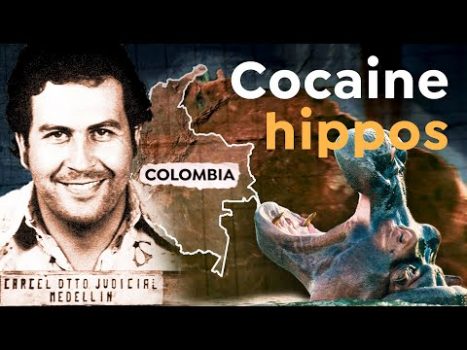
Pablo Escobar has been dead for nearly three decades, and Colombia is still cleaning up after his zoo.
Of all the wreckage left behind by the Medellín Cartel, the strangest is also the most alive: a herd of hippopotamuses that Escobar smuggled into the country in the 1980s has quietly become one of the largest invasive-species problems in the Western Hemisphere. What started as four animals on a drug lord’s private estate has turned into a population biologists can no longer ignore.
- Escobar imported one male and three female hippos to Hacienda Nápoles, his estate roughly 250 kilometers northwest of Bogotá; after his death in December 1993, authorities relocated the rest of his menagerie but left the hippos behind because they were too large and dangerous to capture.
- The herd has grown to an estimated 80 to 120 animals by early 2021, ranging more than 200 kilometers from the original estate, with researcher Nataly Castelblanco’s projections showing the population could exceed 1,400 by 2034 without intervention.
- Surgical castration of a single bull hippo has cost upwards of $50,000 in early attempts, and both chemical sterilization and culling proposals have triggered fierce backlash in towns like Puerto Triunfo, where the animals draw tourists.
From Private Zoo to Feral Herd
Hacienda Nápoles was Escobar’s monument to himself — a sprawling estate stocked with giraffes, ostriches, elephants, and the hippos, meant to broadcast the scale of his wealth at the height of the Medellín Cartel’s power. When police killed Escobar in a 1993 shootout, the Colombian government seized the property and began shipping the exotic animals off to regional zoos. The hippos were the exception. Moving a two-ton animal with a violent temperament and thick, bulletproof-adjacent hide proved too risky and too expensive, so wildlife officials simply left them on the grounds.
That decision let four hippos become an ecological experiment nobody signed up for. The Magdalena River basin gave them everything sub-Saharan Africa never could: no dry-season die-offs, no predators, and no competition they couldn’t shove aside. Without the seasonal droughts that keep African hippo populations in check, Escobar’s herd simply kept breeding.
An Invasive Species With No Natural Brakes
By early 2021, that unchecked growth had researchers sounding real alarms. Nataly Castelblanco’s studies described the hippos as a textbook invasive threat — one that dumps enormous volumes of waste into rivers and lagoons, changing the water chemistry in ways that hurt fish and other aquatic life. Native manatees and capybaras, which once had those waterways to themselves, are getting pushed out of prime habitat by animals that have no business being in South America at all.
The danger isn’t just ecological bookkeeping. Hippos are among the most lethal large mammals on the planet when it comes to territorial aggression, and fishermen working the same rivers the herd has colonized face genuine risk of being charged or capsized. That’s the same blunt math behind why villages near Australia’s mouse plague or the fishermen profiled in Fishpeople have had to rethink how they use the water in front of them — except a mouse doesn’t weigh 1,500 kilograms and can’t flip a canoe.
The Politics of Culling a Beloved Pest
Colombian environmental agencies have known for years that the math doesn’t work in the herd’s favor — Castelblanco’s own projection of 1,400 hippos by 2034 is the kind of number that should force a decision. Instead, officials have been stuck between two unworkable paths. Surgical castration works, but at $50,000 or more per bull, with high odds of a fatal anesthetic complication on an animal that size, it isn’t a program you can scale to dozens of hippos scattered across 200 kilometers of river.
Without intervention, projections show the population could surpass 1,400 hippos by 2034.
Culling is the cheaper, faster option on paper, and it’s the one that’s gone nowhere politically. In Puerto Triunfo, where the hippos have become the town’s biggest tourist draw, residents and animal-welfare groups have pushed back hard against any plan that ends with a rifle. Chemical sterilization experiments have offered a middle path, but they’re slow, unproven at scale, and still don’t answer the fishermen who have to share a river with an aggressive, territorial animal that outweighs their boat.
The Legacy That Won’t Stay Contained
What makes the hippo problem different from the rest of Escobar’s legacy is that it’s still expanding in real time. The cartel networks he built have been dismantled, the mansions seized, the fortune scattered — but the hippos just keep having calves, and every year without a real management plan makes the eventual fix more expensive and more politically explosive.
Puerto Triunfo’s tourism board isn’t going to vote to shoot the town’s main attraction, and no Colombian agency wants to be the one that greenlights a mass cull of an animal most locals now consider a mascot rather than a menace. Until someone finds a sterilization method that’s cheap enough to run on 80-plus wild hippos at once, Escobar’s strangest export just keeps doing the one thing it’s always done best: multiplying.








Watch This Caterpillar Turn Into A Puss Moth
How to Make Hourglass Diorama | Resin Art
Horrifyingly Mysterious Lakes In The World
Inside Aaron Paul’s Rustic Riverside Home In Idaho
Infiltrating Scientology Ep 1: Sunday Church Service