

 InfoSearched
A backyard orchard doesn’t need an orchardist to run it.
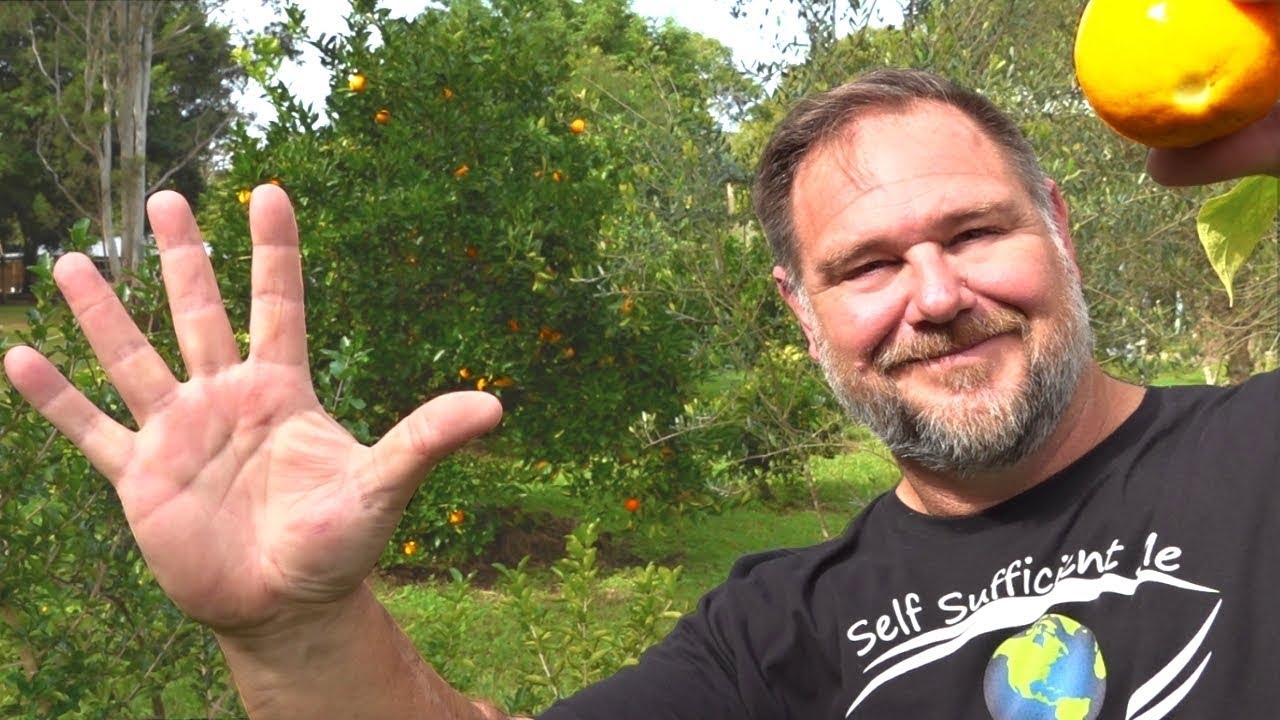
Mark Valencia, the Australian Army veteran behind the homesteading channel and blog Self Sufficient Me, built his latest breakdown around a simple pitch: you don’t need acreage, a pruning certificate, or a green thumb passed down through generations to pull real harvests out of a suburban backyard. His video, “5 Fruit Trees that are too EASY to GROW in the Home Garden,” runs through his picks for beginner gardeners who want fruit without the fuss, released in early 2020 as interest in home food production was climbing fast.
- The video comes from Mark Valencia, an Australian Army veteran who founded Self Sufficient Me in 2011 to promote realistic, non-fanatical self-reliance for urban and semi-rural households.
- Valencia’s guiding line for the channel — “You don’t have to be self-sufficient in everything, just be self-sufficient in something” — frames the entire video’s approach to beginner fruit growing.
- The guidance targets hardy, heavy-cropping varieties over temperamental stone fruits, built around dwarf rootstocks, self-fertile trees, adequate sunlight, mulch, and organic feeding for container or small-yard growing.
The Self Sufficient Me Approach
Valencia didn’t build his channel around off-grid fantasy or survivalist theatrics. Since 2011, Self Sufficient Me has pitched itself as a practical resource for people who work regular jobs and live on regular suburban blocks but still want to grow a meaningful share of their own food. That’s the frame he brings to this video — not a homestead manifesto, but a checklist for someone with a small yard and no orchard experience.
The recurring theme across his content, and the one he leans on again here, is that self-sufficiency doesn’t have to be total to matter. Pick one or two crops you can actually manage well, and let those carry the load rather than trying to replicate a full farm in a quarter-acre lot.
You don’t have to be self-sufficient in everything, just be self-sufficient in something.
Debunking the Orchardist Myth
The video opens by tackling a specific misconception Valencia says trips up new gardeners constantly: the idea that fruit trees demand expert-level orchard skills, heavy labor, and a lot of land before they’ll produce anything. He argues that belief keeps plenty of would-be growers from planting a single tree, when in reality a handful of varieties will crop reliably with far less intervention than people assume.
Instead of pushing finicky stone fruits that punish inattentive owners with disease and poor fruit set, Valencia steers viewers toward selections that tolerate a wider range of climates, shrug off common pests and diseases, and don’t require constant pruning to stay productive. That’s the filter running underneath all five of his picks — not the fruit that tastes best on paper, but the fruit that survives neglect and still delivers a harvest.
The Fundamentals He Teaches
Rather than treating fruit growing as a set of memorized rules, Valencia breaks the video down into foundational principles anyone can apply regardless of which trees they end up planting. He walks through choosing self-fertile varieties or dwarf rootstocks so pollination and mature size aren’t obstacles, matching trees to basic climate compatibility before buying, and making sure the planting spot gets enough direct sunlight to actually fruit rather than just grow leaves.
From there it’s maintenance basics: mulching to retain moisture and suppress weeds, and organic feeding to build healthy soil rather than relying on constant chemical inputs. Readers looking to apply the same low-effort logic to other crops can find a parallel approach in how to grow raspberries, blueberries, and blackberries in containers, which leans on the same container-friendly, minimal-fuss thinking Valencia applies to fruit trees.
Strategic Rationale for Market Timing
The video dropped in early 2020, right as households were suddenly paying much closer attention to where their food comes from and how much of it they could produce themselves. That backdrop gave Valencia’s core argument — that homegrown fruit can meaningfully cut grocery costs and build a bit of resilience without demanding a farm’s worth of labor — an audience primed to actually act on it rather than just watch. For anyone converting more of their yard into food production during that same stretch, the logic overlaps closely with pieces like how to turn your lawn into a vegetable garden, where the same instinct toward practical, small-space self-reliance shows up in vegetable beds instead of tree rows.
Valencia’s case never rests on exotic techniques or specialized equipment. It rests on picking the right five trees, giving them sun, mulch, and decent soil, and letting the plant do what it’s bred to do — which, for a beginner gardener staring at an empty patch of backyard, is exactly the low bar he’s trying to clear.






Mind-Blowing Ultra-Compact Eco Tiny House
The Man Behind the Most Grueling Footrace on Earth
“It Will Be an OPEN SOURCE Platform” [Ultra Classified Information!!!]
INSIDE a $10,995,000 HOLLYWOOD HILLS Modern Home with the Views of the Entire City!
Secret Service Most Wanted Man Explains How He Swindled Millions from Banks