

 InfoSearched
A single off-grid builder went back to check on a cabin he’d left standing for a year — and the $500 shack held up.
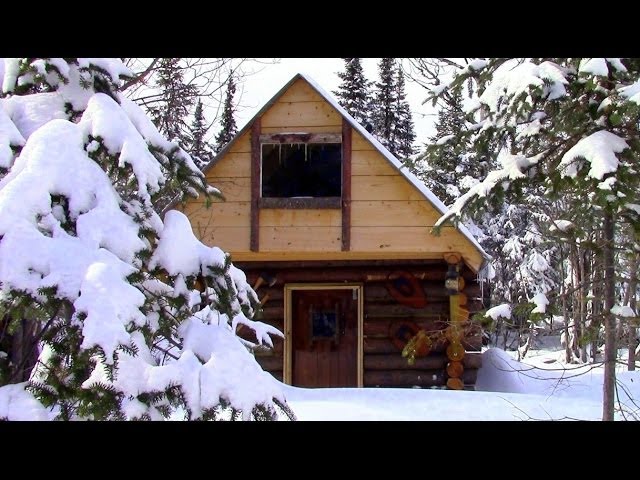
The channel “The Outsider,” known for its Canadian wilderness cabin builds, revisits one of its earlier projects in “Simple Log Cabin- Built for $500- No Permit Required.” After a full year away from the site, the creator walks the structure inside and out, checking the roof, the joints, and the floor for rot or shifting before breaking down exactly how the build stayed under budget and under the radar of local building codes.
- The cabin was built for under $500 total, using on-site timber and salvaged or low-cost materials instead of milled lumber.
- Its footprint was deliberately kept small — in the range of 100 to 200 square feet — so it fell below the threshold that triggers permit and inspection requirements in the area.
- Construction relied on manual labor and hand tools rather than power equipment or heavy machinery.
Cabin Construction Bypassed Permit Office
Most jurisdictions set a minimum square footage before a structure counts as a “dwelling” requiring a building permit, inspection, and certificate of occupancy. By keeping the cabin under that line, the builder was able to treat it the same way a shed or bunkhouse is treated on paper — legally exempt from the paperwork that governs full-size cabins and houses. That’s the entire premise behind the $500 price tag: no architect, no permit fees, no inspector visits, just materials and time.
It’s the same logic that shows up across the broader tiny-shelter and off-grid-building space, where builders lean on small footprint log structures specifically to stay outside regulatory thresholds while still getting a functional four-walls-and-a-roof space on their land.
One Year Impact On Budget Build
The return visit is the real point of the video — anyone can film a build in progress, but showing the same structure a year later, unmaintained, is the honest test. The creator inspects the roofing, checks whether the salvaged materials held their seal against rain and snow melt, and looks at how the on-site timber logs settled after a full seasonal cycle of freeze and thaw.
Built for $500, no permit required — and still standing a year later.
That kind of durability check matters more for a hand-tool build than a conventional one, since there’s no engineer’s stamp guaranteeing the joinery or the roof pitch will perform. The same scrutiny applies to other DIY shelter projects in the wilderness-build niche, like the sandbag shelter builds that trade speed for improvised materials, or roof work done under pressure like the roof framing completed in soaking rain on other bushcraft channels.
The Economics of a Sub-$500 Build
Sourcing free or nearly free logs directly from the land, cutting them by hand, and skipping contractor labor entirely is what keeps the total under $500. There’s no drywall, no plumbing rough-in, no electrical panel — just framed walls, a roof, and enough insulation logic in the log stacking itself to make the space usable in rough weather. It’s a bare-bones structure by design, built to prove a concept rather than to replace a house.
That trade-off is the whole appeal for viewers of this niche: it’s not a comfortable retreat with amenities, it’s a proof-of-concept for what a single person with hand tools, no crew, and no bank loan can put up on their own land before winter.








HOW MUCH $$$ DOES WRAP COST? | The REAL STORY Shops Might Not Tell You!
Building a Cabin from Pallet Wood: Cheap Off Grid Homestead
School Bus Converted To Incredible Off-Grid Home
Explained: How did Narcos take control of Mexico?
wow-is-this-an-axe-or-a-laser-beam?