

Man Spends 30 Years Regenerating Farmland into Amazing Forest | Fools & Dreamers (Full Documentary)
 InfoSearched
A weed everyone hated became the tool that regrew a New Zealand forest.
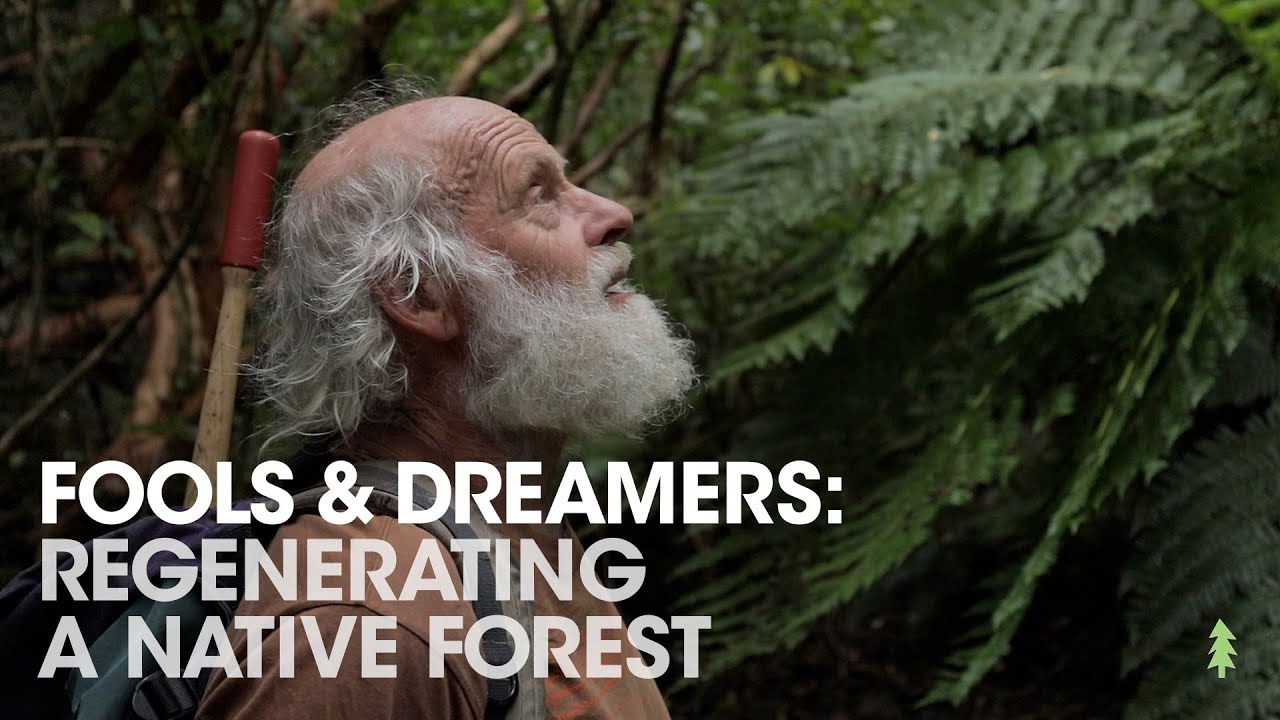
On Banks Peninsula, near Christchurch, more than 99% of the original old-growth forest had been stripped away for pasture by the time botanist Hugh Wilson took over a patch of scrubby, gorse-choked hillside in 1987. Rather than fight the invasive gorse with herbicide and bulldozers like everyone told him to, Wilson let it grow — and used it against itself. Thirty years later, that decision produced the Hinewai Reserve, a 1,500-hectare native forest that the Happen Films documentary Fools & Dreamers: Regenerating a Native Forest, directed by Jordan Osmond and Antoinette Wilson, sets out to explain.
- Wilson has managed and served as kaitiaki of Hinewai Reserve on Banks Peninsula for more than 30 years, starting on land where over 99% of the original forest cover had been cleared.
- Instead of eradicating gorse, Wilson used the nitrogen-fixing weed as a temporary “nurse canopy” that shelters native seedlings until they overtop it and it dies out naturally.
- The reserve grew to 1,500 hectares, restored 47 flowing streams and waterfalls, and now runs without motorized vehicles — Wilson walks up to two hours to reach his daily work sites.
The Method Nobody Believed In
Gorse is a thorny, fast-spreading shrub that farmers on Banks Peninsula spent generations trying to burn, spray, and dig out. When Wilson refused to do the same, the reaction was open mockery. He’d noticed something the herbicide crews hadn’t bothered to consider: gorse fixes nitrogen into depleted soil and needs full sun to survive. Native canopy species, by contrast, can germinate and grow just fine in shade. Plant them under a gorse thicket and they’ll rise for years protected from wind, frost, and grazing animals — and once they climb high enough to block the light gorse needs, the gorse simply starves and collapses on its own, no chainsaw or spray rig required.
It’s the kind of patient, counterintuitive land management that shows up in permaculture circles more than conventional farming, closer in spirit to the kind of low-input regenerative approach documented on small permaculture holdings than to anything taught in mainstream agricultural extension courses. The difference at Hinewai is scale — Wilson applied the idea across an entire peninsula, one gully at a time.
From Ridicule to “Fools & Dreamers”
The backlash wasn’t subtle. A local farmer published a letter dismissing the reserve project, closing with the line “heaven help us from fools and dreamers” — a phrase that stuck around long enough to become the title of the documentary itself.
Heaven help us from fools and dreamers.
That kind of skepticism wasn’t irrational at the time. Turning weed-infested, gorse-covered pasture into anything resembling a forest inside one human lifetime sounded like wishful thinking to farmers who’d spent decades clearing the same plant by hand. Wilson kept walking the land anyway, tracking which gullies were regenerating fastest and adjusting where he let the gorse run versus where he intervened.
Thirty Years, 47 Streams
The proof showed up in the water. As native canopy returned and root systems stabilized the soil, previously dry watercourses on the peninsula came back to life — the reserve now counts 47 flowing streams and waterfalls where degraded, overgrazed land once shed rainfall too fast to hold it. Native birds and understory plants that had been pushed out by a century of pastoral clearing returned along with the canopy.
Hinewai now runs entirely without motorized vehicles. Wilson, still walking up to two hours across the terrain to reach his daily work sites well into his role as the reserve’s longtime manager, built the operation on foot rather than machinery — a detail that says as much about the project’s philosophy as any of the regrowth numbers.
From Backlash to Buy-In
The neighboring farming community that once mocked the project came around as the results became impossible to ignore. Streams that had run dry for generations were flowing again, and land that critics said would never amount to anything had turned into one of the largest privately managed regeneration efforts on the South Island. It’s the kind of slow, unglamorous land-repair story that rarely gets the same attention as flashier conservation projects, which is part of why Fools & Dreamers exists — to put Wilson’s three decades of gorse management and forest ecology on record before the story becomes just a footnote in Canterbury farming history.
Wilson’s approach never required a grant-funded eradication program or a fleet of contractors — just a correct read on how gorse actually behaves and the patience to let that read play out over 30 years. That’s the whole method, and it’s why Hinewai keeps getting cited by other land managers on Banks Peninsula who are now willing to try letting a weed do the job for them.





EXTREME Minimalist Living With ONLY 47 Possessions!
How To Make and Sustain a Fire in The Rain
How This Woman Makes People Look 2D with Body Paint
Population of One: Living Alone in an Abandoned Ghost Town
How My Luxury Lifestyle Started! – Candid Conversations With Anna Bey #1 School of Affluence