

 InfoSearched
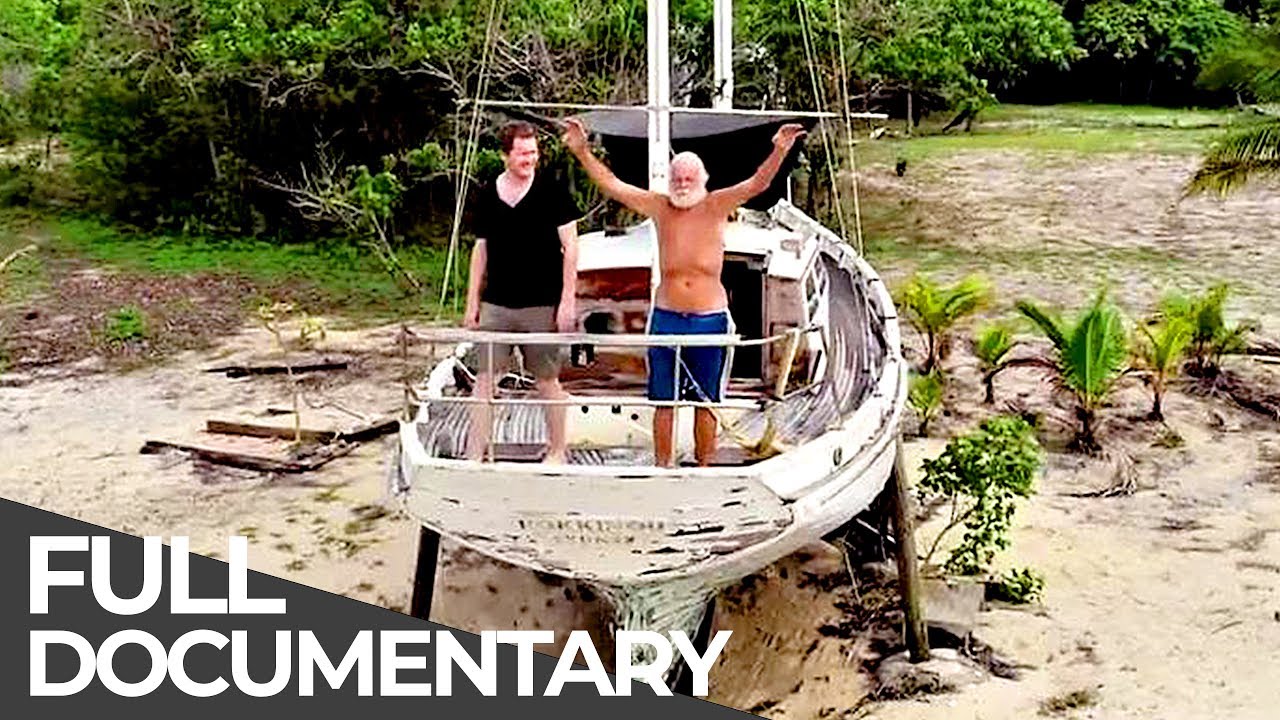
A man once worth nearly $30 million now brews his own beer on a 100-acre speck of Queensland coastline he shares with two dingo-cross dogs and a pair of dressed mannequins.
David Glasheen had the kind of paper fortune most people never see in a lifetime, and then he watched it vanish in a single market crash. Rather than claw his way back into boardrooms and brokerage accounts, he packed a suitcase, walked away from mainland Australia, and built a life on Restoration Island that has now outlasted cyclones, crocodiles, and two decades of solitude. His story is the subject of the Free Doc Bites segment “How a Multimillionaire became the modern Robinson Crusoe,” produced by Free Documentary.
- Glasheen’s paper net worth peaked near $30 million before the 1987 stock market crash wiped it out, a collapse that also ended his marriage and left him in debt.
- In 1997, after years of couch-surfing, he moved to Restoration Island (Ma’alpiku) off northeastern Queensland with little more than clothes, a flashlight, and toiletries, initially planning an eco-resort before land disputes stalled the project and left him as the island’s sole resident.
- He published a memoir, The Millionaire Castaway, in 2019, and has survived hazards including venomous coastal taipans, saltwater crocodiles, sharks, and Cyclone Trevor in early 2019.
From Mining Money to a Market Wipeout
Before Restoration Island, Glasheen was a mining entrepreneur and stock investor riding the speculative booms of 1980s Australia, with a paper net worth estimated at close to $30 million at its peak. The 1987 crash erased that fortune almost overnight. The financial wreckage didn’t stop at his bank balance — it dissolved his marriage and family life and pushed him into a stretch of debt and personal turmoil that stretched across the following decade.
By his own account, the years after the crash were defined by couch-surfing and failed attempts to rebuild what he’d lost. In 1997, rather than keep chasing a comeback in the same system that had ruined him, Glasheen made the call to opt out entirely. He packed a small suitcase — clothes, a flashlight, toiletries — and relocated to Restoration Island, a 100-acre outpost off the northeastern tip of Queensland also known by its indigenous name, Ma’alpiku.
A Stalled Resort and a Solo Resident
Glasheen’s original plan wasn’t full isolation. He secured a share in a lease with intentions of developing an eco-resort on the island, betting on tourism rather than total withdrawal. That project stalled once opposition and land disputes bogged it down, and instead of walking away when the business plan collapsed, Glasheen simply stayed. What began as a commercial venture turned into a permanent, solitary residency.
He built his own shelter from what the island gave him — driftwood, beach logs, and corrugated sheet metal — assembling a shack that has served as his home for more than two decades. There’s no resort infrastructure, no staff, no guests checking in. Just Glasheen, his dogs, and whatever the tides bring in.
Running an Off-Grid Operation Solo
Glasheen’s self-sufficiency setup is deliberately low-tech: a solar panel array for power, rainwater collection for drinking water, and a diet built around foraged native oysters and whatever fish he can catch off the reef. He even brews his own beer on-site, a detail that shows up in nearly every account of his routine. It’s the kind of off-grid arrangement that would look familiar to readers who’ve followed other stripped-down, self-built setups, like the self-built floating home profiles that pop up in similar off-grid documentaries.
The dangers are constant and specific: coastal taipans, one of the most venomous snake species on the continent, share the island with him, and the surrounding waters carry saltwater crocodiles and sharks. Severe tropical storms have repeatedly tested his shack, none more destructive than Cyclone Trevor, which tore through the region in early 2019.
Modern civilization — not the island — is the true prison.
Company on an Empty Island
Glasheen isn’t a total hermit. Roving volunteers, passing fishermen, and sailors occasionally stop by, and he’s welcomed them into his routine when they do. But his day-to-day companions are far stranger than any tourist: his dingo-cross dogs, and two dressed mannequins he’s named Miranda and Phyllis, standing in for company he otherwise doesn’t have. It’s a detail that captures just how far removed his daily life is from the trading floors and boardrooms he used to occupy, in the same way remote-living stories about island survival on tiny, isolated landmasses tend to hinge on the strange substitutes people find for ordinary human contact.
Glasheen laid all of this out in The Millionaire Castaway, published in 2019, framing the trade of corporate pressure for isolation as the thing that actually restored his health and mental peace — the opposite of how most people would read a story about losing $30 million and ending up alone on a beach.
More than two decades in, Glasheen shows no sign of angling for a return to the mainland. The shack still needs rebuilding after every major storm, the oysters still need foraging, and Miranda and Phyllis are still standing watch — which, for a man who once measured his worth in eight figures, is exactly the point.
Plant this once and have FOOD for 30 YEARS!
Walking Through An Ancient Ice Cave
How to Start a Fire With Your Bare Hands in the Wilderness | Basic Instincts
US Military’s $19M, 4500HP, 6 Axis, Aircraft Motion Simulator
Skateboarding In A Global Pandemic | COVID-19 Los Angeles