

 InfoSearched
A finger-sized lime grown in the French sun is fetching chef-only prices that rival actual caviar.
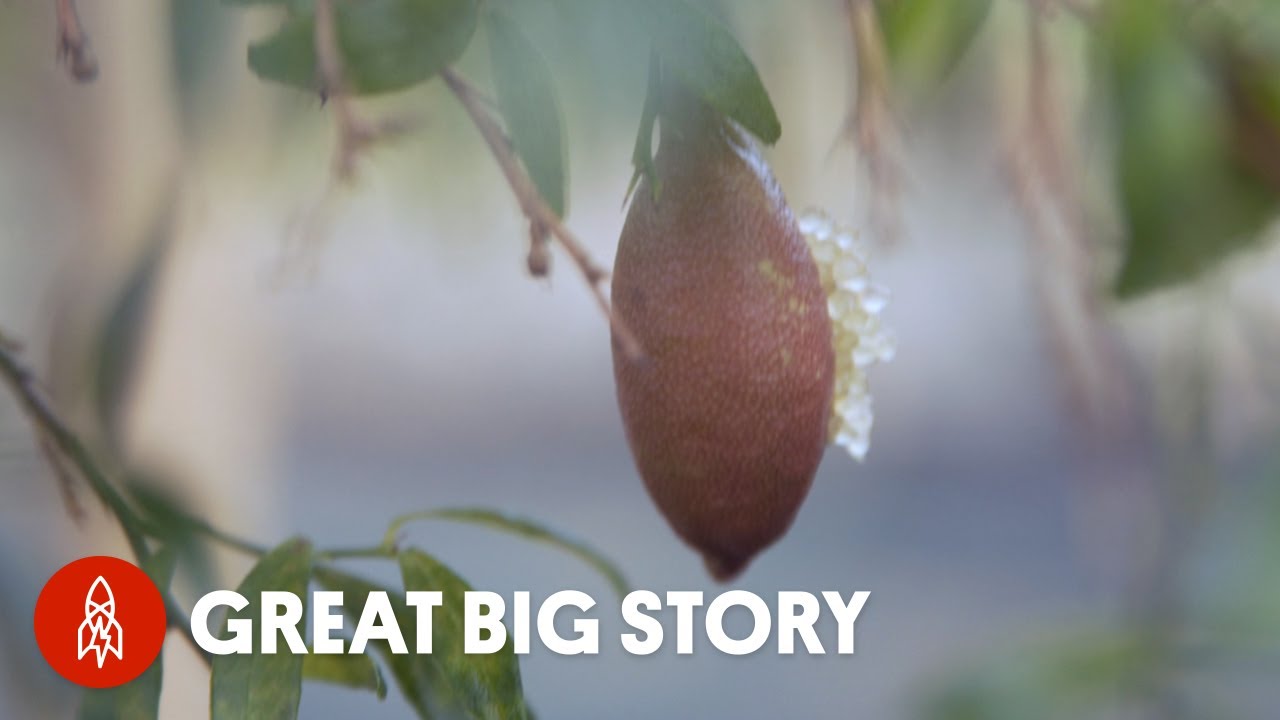
On a farm in Eus, in the south of France, Etienne and Perrine Schaller are growing something most French farmers have never touched: the Australian finger lime, a citrus fruit whose flesh bursts into tiny, translucent beads that look almost exactly like sturgeon roe. The region gets roughly 320 days of sunshine a year, and the Schallers have used that climate to become the first farmers in France to grow finger limes commercially. What comes off their trees doesn’t go to a supermarket — it goes straight to chefs willing to pay for a garnish nobody else in the country can supply.
- Etienne and Perrine Schaller are recognized as the first French farmers to cultivate the Australian finger lime, Citrus australasica, on a commercial scale.
- Their farm in Eus benefits from around 320 days of sunshine per year, the growing condition that makes the crop viable there.
- The Schallers sell exclusively to top restaurants, including chef Daniel Lutrand of Le Pastis Restaurant in Montpellier, who uses the fruit across his tasting menus.
Defining Features of This Caviar
The Australian finger lime is native to the rainforests of Queensland and New South Wales, but the fruit itself is elongated rather than round — closer in shape to a stubby gherkin than a lemon. Slice one open and the inside is packed with vesicles, tiny juice-filled spheres that separate cleanly with a spoon, the same way roe separates from its membrane. Visually, the resemblance to sturgeon caviar is uncanny enough that the fruit picked up the nickname “citrus caviar” or “lemon caviar” well before it reached French soil.
The eating experience is what actually sells it to chefs. The vesicles burst on the tongue with a sharp, concentrated citrus acidity, but unlike a squeezed lemon wedge, they don’t flood a plate with liquid. That means a chef can spoon the pearls onto a dish moments before it leaves the kitchen without turning a crisp element soggy or diluting a sauce — a property regular citrus juice simply doesn’t have.
Growing It in Eus
Finger limes are notoriously fussy outside their native range, which is part of why the Schallers’ operation stands out. Etienne and Perrine built their growing operation around the sun exposure Eus offers, treating the crop less like a novelty and more like a legitimate orchard product. Being first movers in France means they’ve had no domestic playbook to follow and no local competitor’s yields to benchmark against — everything about scaling the crop, from spacing the trees to timing the harvest, has been worked out on their own land.
The vesicles burst with sharp citrus acidity without releasing excess moisture — the exact trait that turns a novelty fruit into a chef’s tool.
From the Orchard to the Tasting Menu
The Schallers don’t sell to grocers or wholesalers — their buyers are the restaurants and culinary figures who can justify the price. Daniel Lutrand, chef at Le Pastis Restaurant in Montpellier, is one of them, working the finger lime pearls into elevated tasting-menu courses where a small, precise burst of acidity does more work than a full squeeze of lemon ever could. That kind of narrow, high-end distribution is exactly why the fruit carries the price tag it does: limited growers, labor-intensive harvesting, and a client list of kitchens rather than supermarkets.
For growers experimenting with high-value specialty crops the way the Schallers have, the appeal is the same logic that’s pushed farmers into other pricey niche foods — scarcity and hands-on labor translate directly into what a kitchen is willing to pay, the same dynamic that’s kept prices high for why cashew nuts are so expensive or driven interest in cultivating gourmet and medicinal mushrooms for restaurant buyers.
Le Pastis keeps building menus around what the Schallers can supply, and as long as they remain the only commercial-scale finger lime growers in France, that short list of chefs — Lutrand included — is likely to stay exactly that short.








Roofing a Steep 45° Pitch! Barn Board Sheathing
Human-Powered Helicopter
Homemade Hoverbike
Graphic Designer Builds Custom 4×4 FUSO Overland Tiny Home for World Travel
Easy Way To Grow Tomato Plant in Plastic Hanging Bottle