

 InfoSearched
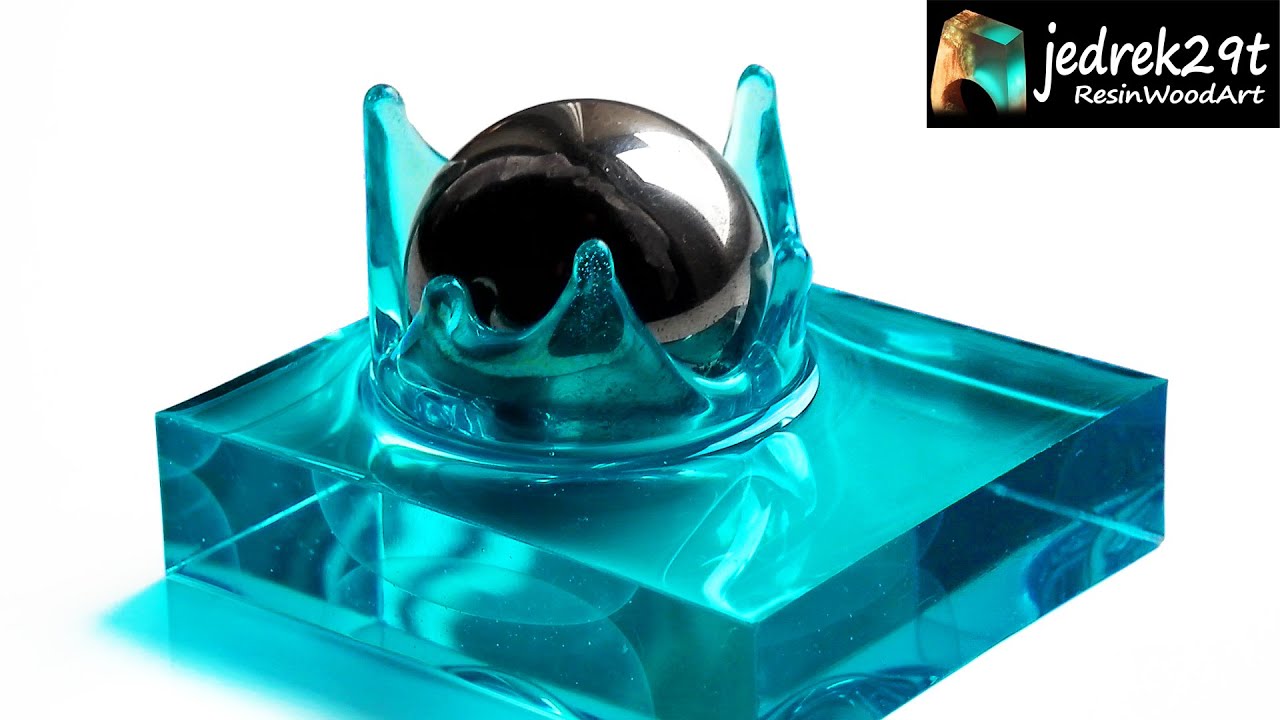
A single frozen droplet of “water” that never actually got wet.
The channel ResinWoodArt — run by a Polish craftsman known online as Jędrek, or jedrek29t — has built a specialized niche out of making liquid stand still. His tutorial “Splash of Water from Resin. How to make Resin Splash / RESIN ART” walks through exactly how he turns clear epoxy into a splash frozen mid-air, the kind of shot you’d normally need a high-speed camera to catch. There’s no actual water anywhere in the piece. Every crown, droplet and arc is cast, cured and assembled resin.
- The video is a step-by-step tutorial from Jędrek’s ResinWoodArt channel showing how to sculpt a freeze-frame splash and droplet effect entirely out of clear epoxy resin.
- The technique relies on controlling resin viscosity and curing stages, then curing pieces tilted or upside-down so gravity and surface tension pull the resin into natural droplet crowns before it sets.
- ResinWoodArt built its reputation on this “Freeze-Frame” series — underwater bullet trajectories, falling objects, and splash sculptures — which racked up millions of views across 2018 and 2019.
The Mechanics of Splash Creation
Jędrek doesn’t pour a single block and hope for the best. The build happens in stages, with each pour partially cured before the next layer goes on, which is how he keeps thin droplet “necks” from collapsing under their own weight while the resin is still liquid. Clear casting resin is mixed in small batches, since working with tiny amounts gives him more control over how fast it thickens.
Framework matters as much as the resin itself. Thin plastic sheeting or wire acts as scaffolding, holding a shape while gravity does the sculpting — the resin is left to drip, bead and gather into a crown exactly the way a real splash would look for a fraction of a second before it collapses. Cure the piece at the wrong angle and the whole illusion goes flat; cure it right and the droplet looks like it’s still falling.
Timing the Cure Is the Whole Trick
Epoxy resin moves through distinct stages as it hardens — thin and self-leveling at first, then a gel stage where it holds a shape but isn’t yet rigid, and finally a hard cure. Jędrek’s splash work lives almost entirely in that middle gel window, where the material is tacky enough to hold a curled droplet shape but still soft enough to manipulate by hand or with tools.
Every crown, tendril, and bead in the piece is resin that was tilted, dripped, and caught mid-motion before it had the chance to set flat.
Miss that window and the resin either runs out before it holds a shape, or hardens too fast to manipulate at all. That narrow margin is what separates a convincing splash from a lumpy blob, and it’s the part of the tutorial Jędrek spends the most time walking through frame by frame.
Rise of the Freeze-Frame Style
Splash casting is one branch of a broader diorama technique that exploded across YouTube’s maker community in 2018 and 2019 — resin artists using the same tricks to fake underwater bullet wakes, mid-drip paint, and objects suspended in falling water. It reads well on camera because the payoff is instant: a static, solid object that the eye insists is still moving. For anyone coming from other resin work, like the step-by-step process behind pouring epoxy floors in a 2000-square-foot home, the material itself is familiar — it’s the sculpting and gravity tricks that turn a flooring product into fine art.
That crossover is part of why the tutorial format travels so well. The same batching, mixing ratios and curing patience that show up in large-scale epoxy flooring jobs apply at miniature scale to a splash the size of a fist — just with far less resin and a lot more attention to the exact moment it stops being liquid.
Jędrek’s channel keeps returning to the same premise with new subjects — a splash here, a suspended droplet there — because the trick never really gets old on camera. The next payoff for viewers isn’t a new gimmick, it’s just a cleaner cast: a sharper crown, a thinner tendril, one more second of “motion” locked into something you could hold in your hand.



Doomsday Bannock – how to make campfire bread
Musician’s Incredible Modern Tiny House & Mobile Music Studio
Inside Jessica Alba’s $10M Los Angeles Home
Find Me A Luxury Home
Hunting For A Rare Congolese Weed Strain With “The Kings of Cannabis”