

 InfoSearched
A mile-long tunnel carved beneath a maximum-security prison became the blueprint for the world’s most notorious escape.
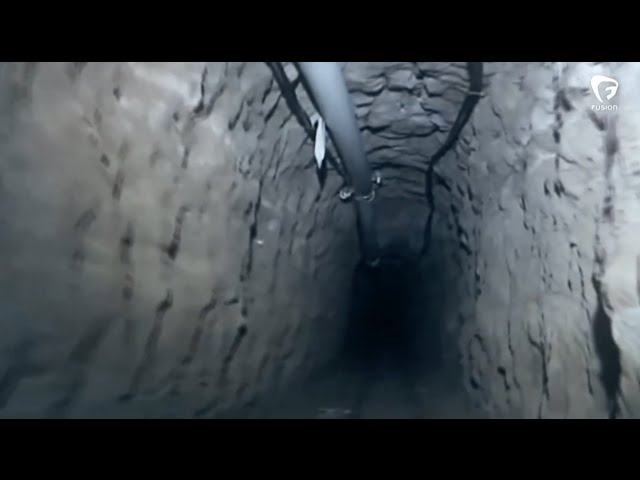
On July 11, 2015, Joaquín “El Chapo” Guzmán vanished from Altiplano, Mexico’s most fortified federal prison, through a hole cut into his cell’s shower floor. What waited beneath that hole was not a crude hiding spot but a fully engineered escape corridor — nearly a mile of tunnel dug specifically to get him out. Investigative footage from “Deep Inside El Chapo’s Secret Tunnels | Capturing El Chapo Part 3” retraces that passage step by step, from the shaft under the shower to the unfinished house where it surfaced.
- On July 11, 2015, Guzmán escaped the Federal Social Readaptation Center No. 1 (Altiplano) in Almoloya de Juárez through a 1.5-kilometer tunnel, exiting his cell via a 50-by-50-centimeter opening cut into the blind spot of his shower floor.
- Mexican authorities, including Interior Minister Miguel Ángel Osorio Chong, confirmed the tunnel took roughly one year to build, ran approximately 19 meters underground, and connected to an unfinished cinderblock house in the nearby Santa Juanita neighborhood.
- The passage was outfitted with ventilation PVC ducting, electrical wiring, oxygen tanks, reinforced dome-style ceiling framing, and a rail system carrying a modified, engine-powered motorcycle used to haul dirt and move Guzmán quickly through the mile-long stretch.
The Breach in the Shower Floor
Every escape needs a starting point, and Guzmán’s was hidden in plain sight. Cell inspectors and prison cameras at Altiplano covered most angles of his quarters, but the shower floor had a blind spot — and that’s exactly where the crew building the tunnel from outside broke through. The opening measured just 50 by 50 centimeters, barely large enough for a man to slide through, dropping onto a ladder shaft roughly 10 meters deep before connecting to the main tunnel corridor.
A 50-by-50-centimeter hole cut into the blind spot of his cell shower floor was all it took to start Joaquín Guzmán’s second prison break.
Engineering a Mile Beneath Almoloya de Juárez
From the base of that ladder, the tunnel ran nearly 19 meters underground and stretched about 1.5 kilometers — close to a mile — to an unfinished cinderblock house in the Santa Juanita neighborhood. Mexican officials, including Osorio Chong, said the project took approximately a year to complete, a timeline that speaks to how methodically the Sinaloa cartel planned the operation rather than rushing it.
The build quality reflected that patience. Crews installed high-grade ventilation PVC ducting and electrical wiring to keep the corridor breathable and lit, stocked it with oxygen tanks, and reinforced the ceiling with dome-style framing to prevent collapse under nearly two decades’ worth of dirt and rock overhead. It’s the kind of underground infrastructure documented elsewhere in cartel operations, similar to the smuggling architecture explored in How Mexican Drug Cartels Make Billions.
The Rail System and the Getaway
What separated this tunnel from a simple dirt crawlspace was the integrated rail system running its length, carrying a modified, engine-powered motorcycle fixed on tracks. Crews used it during construction to haul excavated dirt out of the mile-long dig, and Guzmán used the same rail line to move rapidly through the corridor during the actual escape — turning what could have been a slow, exposed crawl into a fast, controlled exit.
Guzmán was no stranger to this kind of engineering. He had already pioneered transnational underground passageways for moving drug shipments across the U.S.-Mexico border, work chronicled in accounts of the cartel’s broader trafficking network. The 2015 Altiplano breakout marked his second successful escape from a Mexican federal prison, following his earlier 2001 escape, and it turned him into an even bigger target for both Mexican and U.S. authorities.
Recapture and Extradition
The tunnel bought Guzmán roughly six months of freedom. He was recaptured in Los Mochis, Sinaloa, in January 2016 following a raid that ended in a shootout, and in 2017 he was extradited to the United States to face trial. The scale of the operation that got him out of Altiplano — the excavation timeline, the rail-mounted motorcycle, the precise cut in the shower floor — remains one of the clearest illustrations of how much resources the Sinaloa cartel was willing to commit to keep its leader out of a cell, a pattern of cartel logistics still visible in cases covered in Mexico’s Cartels Are Deadlier Than Ever Despite the Pandemic.
What’s stuck with investigators since is less the escape itself than the math behind it: a year of digging, a mile of tunnel, 19 meters of depth, all funneling toward a house in Santa Juanita that authorities didn’t find until Guzmán was already gone.





I Attempted the Air Force Special Warfare PAST Test (without practice)
Why Real Champagne Is So Expensive?
ILLEGAL FREEDOM: Train Surfing Journey To The Black Sea
Soldiers Encounter Mysterious Monsters in Vietnam War
This woman lives every day like it’s 1958