

 InfoSearched
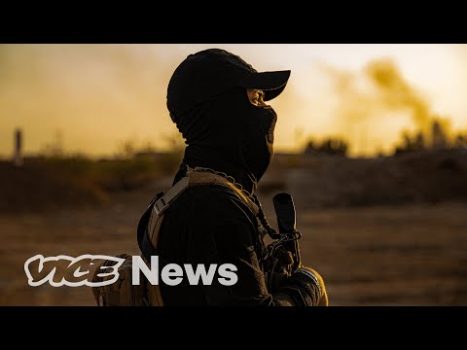
VICE talked its way into Iran and Iraq to chase the shadow war Washington and Tehran won’t admit they’re fighting.
In March 2021, with COVID-19 border restrictions still locking most of the world down, VICE founder Suroosh Alvi and a small production crew secured rare journalistic visas to move through Iran and then Iraq. The trip started as a story about a string of assassinations targeting Iranian nuclear scientists, most notably Mohsen Fakhrizadeh, the head of Iran’s nuclear program killed in November 2020 by what’s been described as an Israeli remote-controlled weapon system. It turned into something bigger: a firsthand look at how far Iran’s reach now extends across the region.
- The crew visited a Tehran exhibition displaying the bomb-damaged vehicles of assassinated scientists and interviewed nuclear physicist Fereydoon Abbasi, who survived a 2010 car bomb attack himself.
- VICE obtained the first foreign media interview with an alleged ISIS fighter captured by Iranian-backed militias, plus an exclusive sit-down with Hossein Amir-Abdollahian, a close associate of Quds Force commander Qassem Soleimani, who was killed in a January 2020 U.S. strike.
- The team secured rare access to the Badr Organization, the powerful Iranian-backed paramilitary group, including a visit to the Baghdad residence of commander Hadi Al-Amiri.
Inside Iran’s Assassination Files
The exhibition the crew toured in Tehran functions as a kind of memorial-slash-propaganda display: the actual, blast-scarred cars of scientists killed over the past decade, parked and lit like museum pieces. Fereydoon Abbasi walked them through it as a survivor, not a curator. He was targeted in a 2010 car bomb attack and lived, and he told the crew he still can’t move through public life without calculating who might be watching. That fear, more than any official statement, is what the assassination campaign was designed to produce.
Fakhrizadeh’s killing in November 2020 sits at the top of that list. He ran Iran’s nuclear program and was killed by what Iranian officials describe as an Israeli-operated remote weapons system — not a bomb, not a gunman on the ground, but a machine gun rigged to fire from a parked vehicle as his convoy passed. It’s the kind of operation that reads more like a movie script than a foreign policy tool, and it’s exactly the entry point that got Alvi’s crew thinking about who else has been doing this kind of work in the shadows.
The Man Behind Soleimani’s Legacy
VICE’s most consequential interview may be the one with Hossein Amir-Abdollahian, a close associate of Qassem Soleimani, the Quds Force commander killed in the January 2020 U.S. drone strike in Baghdad. Sitting down with Western cameras is not something figures at that level of the Iranian security establishment do often, and Amir-Abdollahian used the moment to push back directly on the premise that Tehran is building an empire.
Iran, he argued, isn’t seeking imperial control — it’s filling a vacuum the United States created when it invaded Iraq in 2003.
That argument is the spine of the whole documentary. Whether or not you buy it, it’s the exact framing Iranian officials have used for nearly two decades to justify backing militias, funding proxies, and building influence networks from Beirut to Baghdad. Amir-Abdollahian wasn’t apologizing for any of it.
An ISIS Fighter, on Camera
Getting access to an alleged ISIS fighter held by Iranian-backed militias is not something foreign media had done before this trip. The interview gave VICE a rare, unfiltered look at how these forces treat captured jihadists and what that says about who’s actually doing the fighting and holding ground years after the coalition campaign against the Islamic State degraded its territorial caliphate. Viewers who want the fuller arc of that fight — from the caliphate’s collapse to the mop-up operations still running today — can find more context in Inside the US-Led Coalition’s Fight Against ISIS.
Crossing Into Badr Territory
From Tehran, the crew drove overland into Iraq, working their way to militia frontlines and eventually into a level of access most journalists never get: the Badr Organization, one of the most powerful Iranian-backed paramilitary groups operating on Iraqi soil. Commander Hadi Al-Amiri hosted the crew at his Baghdad residence, and his fighters didn’t hide the arrangement — they told VICE plainly that their logistics, their political direction, and their material support all run through Tehran.
That’s the real payoff of the documentary. Nearly two decades after the U.S. invasion, and years after billions of dollars and thousands of American troops were deployed into Iraq, it’s Iranian money, Iranian weapons, and Iranian command structures that fighters on the ground openly credit for keeping their operation running.
Reporting Under COVID Restrictions
None of this access happened easily. Iran and Iraq were both operating under heavy pandemic-era border controls in early 2021, and getting a foreign film crew through those checkpoints and into militia-controlled territory required visas that simply weren’t being issued to journalists at the time. The fact that Alvi’s team pulled it off is part of why the material feels as unguarded as it does — officials and fighters alike spoke more freely than they typically would with Western cameras rolling.
What sticks after watching it is how casually the Badr fighters confirmed everything Amir-Abdollahian spent his interview downplaying — that Tehran isn’t just influencing Iraq from a distance, it’s running logistics on the ground through people who’ll say so on camera. That’s the story VICE actually walked away with, even though they went in chasing a different one about dead scientists.


Jim Norton and Joe Rogan Debate Bob Lazar’s Story
Japan’s Master Inventor Has Over 3,500 Patents
Hydroplaning Dolphins
BIG SWORDFISH HEARTBREAK AND TRIUMPH -YouFishTV
Why Do Americans Refrigerate Their Eggs and Most Other Countries Don’t?