

 InfoSearched
A storm drain in a strip-mall parking lot turns into the most unlikely fishing hole on YouTube.
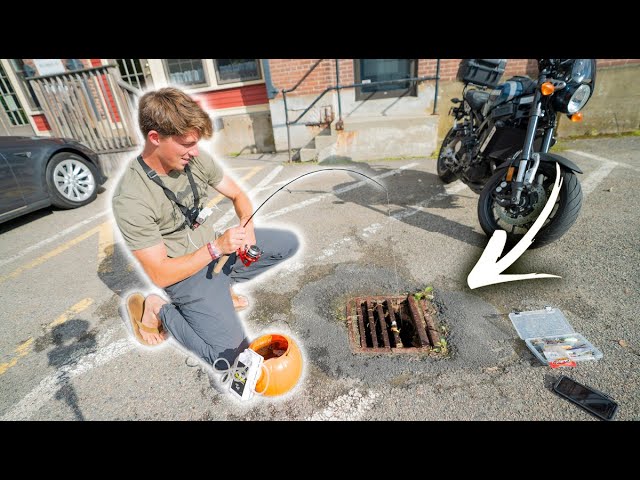
Jon B., a founding member of the Googan Squad and one of the most recognizable names in urban and micro-fishing content, doesn’t need a boat ramp or a boat at all for his latest catch. In “Parking Lot Fishing! I DISCOVERED an UNDERGROUND River (NEW SPECIES CAUGHT),” he crouches over a storm drain grate in an ordinary paved lot and drops tackle straight down into the darkness below. What’s underneath isn’t a cave system or an uncharted waterway — it’s the concrete culvert network that carries runoff under city streets, and Jon B. treats it like prime water.
- Jon B. fishes directly through a storm drain grate in a commercial parking lot, targeting fish holding inside the underground concrete culvert where runoff collects.
- The video’s premise centers on urban micro-fishing rather than a scientific discovery — he’s sight-fishing and threading gear through narrow drainage infrastructure to see what’s actually living beneath the asphalt.
- He lands a small fish species new to his own personal catch list pulled straight out of the drain, the payoff the title promises.
Fishing Where No One Else Looks
Jon B. built his following on exactly this kind of angle: finding fish in places nobody thinks to check. He’s known for urban fishing runs around Chicago and the greater Midwest, working canals, retention ponds, and drainage ditches that most anglers drive past without a second glance. The parking lot grate is the logical extreme of that approach — water is water to the fish living in it, whether it’s a reservoir or a runoff pipe.
The technical challenge is real even if the setting is mundane. Getting a hook, line, and bait through a metal grate and into a confined concrete channel without snagging requires the same patience and small-scale technique that defines micro-fishing, just applied to infrastructure instead of a creek bed.
Deep Sea Ecosystem Biodiversity Overview
Storm drain systems like the one in the video aren’t sealed off from the rest of a city’s waterways — they connect to creeks, canals, and larger drainage networks, which is how fish end up trapped in these underground stretches in the first place. That connectivity is exactly why Jon B. bothered to drop a line through the grate rather than walk past it.
New species to his catch list, pulled out from underneath a parking lot.
The “new species” hook in the title isn’t a discovery for science — it’s a new species for Jon B.’s personal life list, the running tally serious anglers keep of every distinct fish they’ve caught. Landing one in a storm drain is the punchline: proof that even overlooked urban water can hold something he hadn’t caught before.
The Appeal of Urban Angling
Videos like this trade the scenery of a lake or river for the novelty of the setting itself. There’s no dock, no current worth mentioning, no wildlife beyond whatever’s swimming in the runoff — just a paved lot, a grate, and the question of what’s underneath it. That’s the entire draw, and it’s why urban and micro-fishing content built around drainage ditches, canals, and culverts keeps finding an audience alongside more traditional catch-and-cook or big-water fishing footage.
Jon B.’s next moves tend to follow the same pattern: pick an overlooked patch of water in or around a city and see what’s actually swimming in it. The parking lot grate is a small entry in that catalog, but it’s the kind of clip that keeps his catch list — and his audience’s curiosity about what’s under their own feet — growing one unlikely spot at a time.






Solo Overnight Building a Sandbag Shelter In the Woods
5 Survival Shelters Everyone Should Know
Tears For Fears – Everybody Wants To Rule The World – Solo Acoustic Guitar
Luxury Modern Small Home Built In Suburban Backyard
Hiking 70 Miles Alone on the Sawtooth Loop Trail in Idaho