

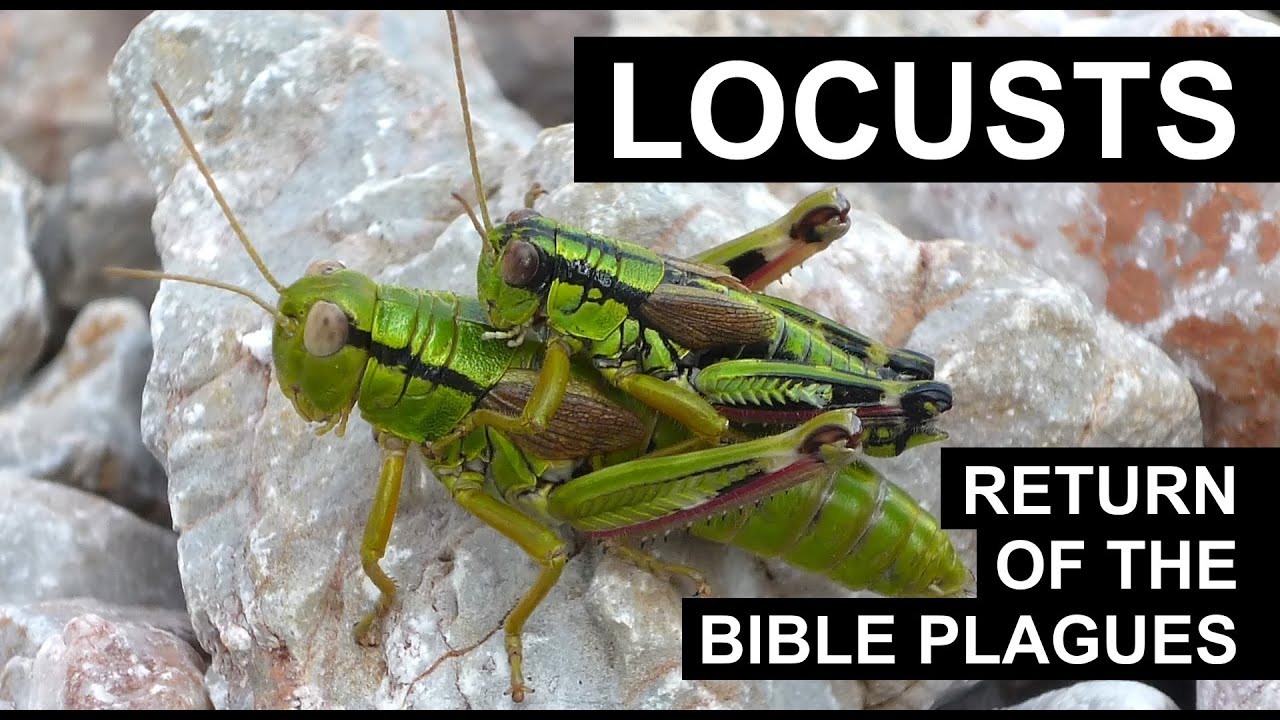
 InfoSearched
A small-town congregation in Iowa spends nearly twenty minutes walking through one of the strangest showdowns in the Book of Exodus.
The latest installment of Pastor Talk, produced by First Presbyterian Church (FPC) of Spirit Lake, Iowa, digs into Exodus 10:1-19 — the chapter where God sends the eighth plague against Egypt. The teaching walks verse by verse through the exchange between Moses and Pharaoh, the failed compromise Pharaoh offers, and the two winds God uses to bring the locusts in and then sweep them back out.
- God instructs Moses to warn Pharaoh that locusts will devour whatever crops survived the earlier plague of hail.
- Pharaoh’s own officials push him to relent, but his counteroffer — letting only the men leave to worship — is rejected outright by Moses.
- An east wind delivers the swarm across Egypt for a full day and night; after Pharaoh begs for relief, a west wind drives every locust into the Red Sea.
The Confrontation Renewed
The study opens where Exodus 9 leaves off: Egypt’s fields are already stripped bare by hail, and God tells Moses to go back to Pharaoh anyway. The lesson frames this as deliberate — God tells Moses plainly that He has hardened Pharaoh’s heart “so that I may perform these signs among them,” a detail Pastor Talk treats as the theological hinge of the whole passage. Moses is told to warn Pharaoh that a locust swarm is coming that will finish off anything green left standing, a threat aimed squarely at whatever food supply Egypt has left after the hailstorm.
Pharaoh’s Failed Compromise
Before the locusts even arrive, Pharaoh’s own advisors turn on him. The lesson highlights how his officials recognize the country is already ruined and press him to let the Israelites go rather than risk a ninth disaster. Pharaoh calls Moses and Aaron back and asks a pointed question — recorded in the text as “Who is going?” — clearly hoping for a narrow answer he can control.
“We will go with our young and old, with our sons and daughters, and with our flocks and herds.”
That’s Moses’ answer, and the study spends real time on it: Pharaoh is willing to let the adult men leave to worship, but Moses refuses to negotiate down to a partial exodus. The rejection enrages Pharaoh, who has Moses and Aaron physically driven out of his presence.
Wind From the East, Wind From the West
The centerpiece of the lesson is the mechanics of the plague itself. Once Moses raises his staff, God sends an east wind that blows across Egypt for a full day and night, carrying in a locust swarm the text describes as covering the ground so thickly it darkens the land — worse, the passage notes, than anything Egypt had seen before or would see again. Pastor Talk lingers on the scale of it: every plant and every tree left standing after the hail is stripped bare.
Pharaoh’s response is fast and familiar — he summons Moses and Aaron, admits he has sinned, and asks for the plague to be lifted, but only after the damage is already done. Moses prays, and God answers by reversing the wind entirely: a “very strong west wind” picks up every locust in Egypt and dumps them into the Red Sea, leaving not one behind.
A Hardened Heart
The study closes on the same note it opened with — Pharaoh’s heart stays hardened even after the locusts are gone, and he refuses to let the Israelites leave. Pastor Talk treats that outcome as the real point of the passage: the removal of the plague isn’t a change of heart, just relief from immediate pain, and Pharaoh goes right back to refusing Moses’ demand the moment the pressure lifts.
Pastor Talk has been working through the plague narrative one episode at a time, and this installment leaves the story exactly where Exodus does — with nine plagues down, Pharaoh still refusing to budge, and the text already pointing toward darkness as the next blow to fall on Egypt.







BILLIONAIRE for a week – Most EXPENSIVE of DUBAI
How Recycling Machines Make New Clothes From Used Apparel
Japanese Kobe Beef Factory!!! MOST EXPENSIVE Meat in the World!!!
Meet Bruce Lee, king of Romania’s tunnel underworld
Inside a $195 Million Bel Air Estate With Secret Tunnels