

 InfoSearched
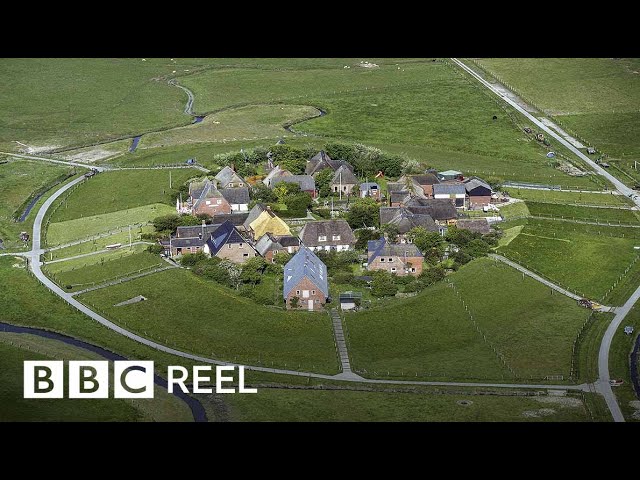
Sixteen people, one mound of earth, and a railway across the tidal flats — that’s the entire population and infrastructure of Hallig Oland.
Off Germany’s northwestern coast, in the North Frisian Wadden Sea, sits a speck of land that doesn’t behave like an island at all. Hallig Oland floods on purpose — or rather, by design of the sea, since it has no dike to stop the water. A BBC Reel documentary, shared by BBC Global under the title “The small German island defying the ocean,” follows the roughly 16 residents who’ve built their entire existence around living with the tide instead of against it.
- Oland is a “hallig” — an undyked marsh islet that submerges multiple times a year, most severely during winter storm surges.
- Its unofficial population stood at approximately 16 people as of 2019, all living on a single elevated mound called a Warft, or terp.
- The island connects to the mainland and to the neighboring hallig of Langeneß via the Lorenbahn, a narrow-gauge causeway railway that residents run themselves using motorized rail trollies called Lorries.
Living on a Warft
Unlike the larger, diked North Frisian islands, Oland was never built up with sea walls. When storm surges roll in, the marshland itself goes under water — sometimes several times in a single season. The only reason anyone can live there year-round is the terp: an artificial dwelling mound raised above the flood line, onto which every single house on the island is clustered. There’s no spreading out. Every structure on Oland sits on that one raised patch of ground, a defensive layout that dates back centuries in hallig culture.
The Lorenbahn: A Railway Instead of a Road
There’s no bridge and no ferry schedule tying Oland to the mainland — instead there’s a narrow-gauge rail line laid directly across the tidal flats, connecting Oland to Langeneß and onward to solid ground. Residents don’t wait for a conductor; they own and operate small motorized rail trollies, known locally as Lorries, hauling groceries, mail, and everyday supplies back and forth across the causeway themselves. It’s a self-run transit system for a community you could fit in a single minibus.
Sixteen residents, one mound, one railway — and a lighthouse smaller than most people’s living rooms.
Germany’s Smallest Lighthouse
Oland’s most photographed landmark isn’t a house or the railway — it’s the lighthouse, officially the smallest in Germany. What sets it apart nationally isn’t just its size but its roof: it’s the only lighthouse in the country topped with traditional thatch, giving it more the look of a cottage than a maritime beacon. For a settlement this small, it’s an outsized point of local pride.
Reasons Residents Choose to Stay
The documentary’s real subject isn’t the geography — it’s the choice to keep living there despite the flooding, the isolation, and the shrinking population. The families on Oland have repeatedly turned down easier lives on the mainland, maintaining a tight-knit routine built around tide tables, rail schedules, and the terp itself. It’s the kind of place where everyone’s daily life is dictated by the same six-hour cycle of water coming in and going back out, and where sixteen people make up the entire electorate of local decision-making.
For anyone drawn to how far people will go to hold onto a patch of land against the odds, the same instinct shows up on other tiny outposts around the world — including the smallest inhabited island in the Caribbean and the remote visa-free island at the top of the world. Oland’s version of that story just happens to run on rail trollies and a tide table instead of a boat schedule.








Escaping the Rent Trap – Simple Living In A Lotus Belle Tent
The Hunt for a Better Gut Bacteria in Central Africa
Making a Spider Resin Shift Knob – Epoxy Resin Art
Wearable Fashion Trends 2021 for Women Over 40
The Godmother Of Drumming Plays “Down With The Sickness”