

 InfoSearched
Somewhere in the Central Asian steppe, a cat is glaring at you and it has never once looked happy.
The manul, better known as Pallas’s cat, has built an entire internet reputation on looking permanently furious — and the science behind that face is stranger than the memes suggest. First described in 1776 by the German naturalist Peter Simon Pallas, this small wildcat survives conditions that would kill most domestic breeds, hunting alone across rocky steppe and high montane terrain from Iran to Mongolia. A new breakdown from the channel Wonders of the World lays out exactly what makes this animal one of the least understood cats on the planet.
- Manuls weigh just 2 to 4.5 kilograms yet withstand winter temperatures as low as -50°C, protected by the densest fur coat of any feline species.
- Their flattened skull and unusually low, widely spaced ears let them peer over rocks without exposing their profile to predators such as steppe eagles.
- Pikas make up more than half their diet, and manuls often den in abandoned marmot burrows since their short legs make them poor sprinters.
The Face Behind the “Angriest Cat” Label
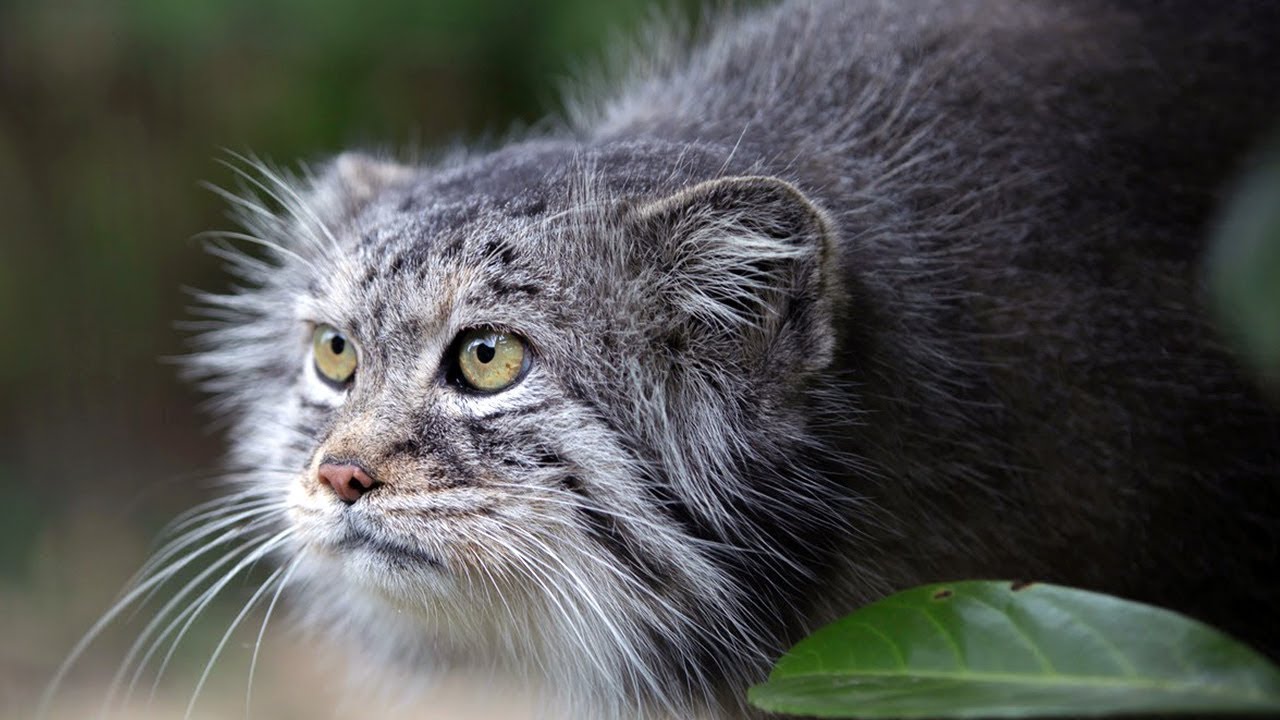
The manul’s scowl isn’t attitude — it’s anatomy. A flat, low forehead combined with round, widely spaced ears set low on the skull gives the face a squashed, permanently displeased look that has nothing to do with mood. Dark cheek stripes frame large, expressive eyes with circular pupils, a trait that sets the manul apart from most cats, whose pupils contract into vertical slits. Put together, it’s a face built for camouflage and stealth on open, rocky ground, not for scowling at a camera, even though that’s the effect it produces.
A cat that can withstand -50°C, hunts from abandoned marmot burrows, and still can’t stand being domesticated — even by the people trying hardest to study it.
Engineered for -50°C
Manuls carry the thickest, densest fur of any feline species on Earth: a woolly undercoat topped with white-tipped guard hairs that give the coat a frosted look while breaking up the animal’s outline against rock and snow. That coat is the difference between life and death across a range that spans some of the coldest, driest terrain in Central Asia, including elevations reaching several thousand meters. Their short, stocky legs aren’t built for speed, though — manuls are lousy sprinters compared with most wildcats, which shapes everything about how they actually hunt.
An Ambush Predator, Not a Chaser
Because they can’t outrun much of anything, manuls rely almost entirely on ambush tactics — stalking prey low to the ground and exploiting the same low-set ears and flat skull that make their face famous, allowing them to watch prey or scan for threats without lifting their head above cover. Pikas account for over half of what they eat, supplemented by voles and small birds, and manuls frequently take over abandoned marmot burrows or natural rock crevices as den sites rather than dig their own. It’s a hunting style built entirely around patience and cover, closer to the ambush-and-wait approach seen in other desert ambush predators than the chase-based hunting of larger cats. The eagles overhead are a real threat too, part of the same predator-prey pressure documented in coverage of raptors that hunt small, ground-level mammals.
Solitary, Territorial, and Impossible to Tame
Manuls live and hunt alone, defend their territory aggressively against other manuls, and cannot be domesticated regardless of how much human contact they get from birth — a trait that separates them sharply from most small wildcats. Rather than a typical meow, they communicate through chirps, growls, and short bark-like yelps, another sign of just how distant they are from anything resembling a housecat despite the superficial resemblance. That fierce solitary streak echoes the same territorial instinct seen when big cats get pushed out of established ranges and have to hold ground entirely on their own.
Most manuls will live out their entire lives without a human ever getting close enough to see that flat, unimpressed face up close — which, given how little of Central Asia’s high steppe has ever been properly surveyed for them, is probably the point.









Inside Jessica Alba’s $10M Los Angeles Home
IS IT TOO LATE TO FLY HOME??? | Van Life in a Global Pandemic
The Secret Darker Art of Dr. Seuss
Inside Mexico’s Warring Cartels and the Millions of People They’ve Displaced
NASA’s Plan to Stop an Asteroid Headed for Earth