

 InfoSearched
Four years and 25,000 miles taught Jenna Spesard that tiny living isn’t the Pinterest fantasy everyone thinks it is.
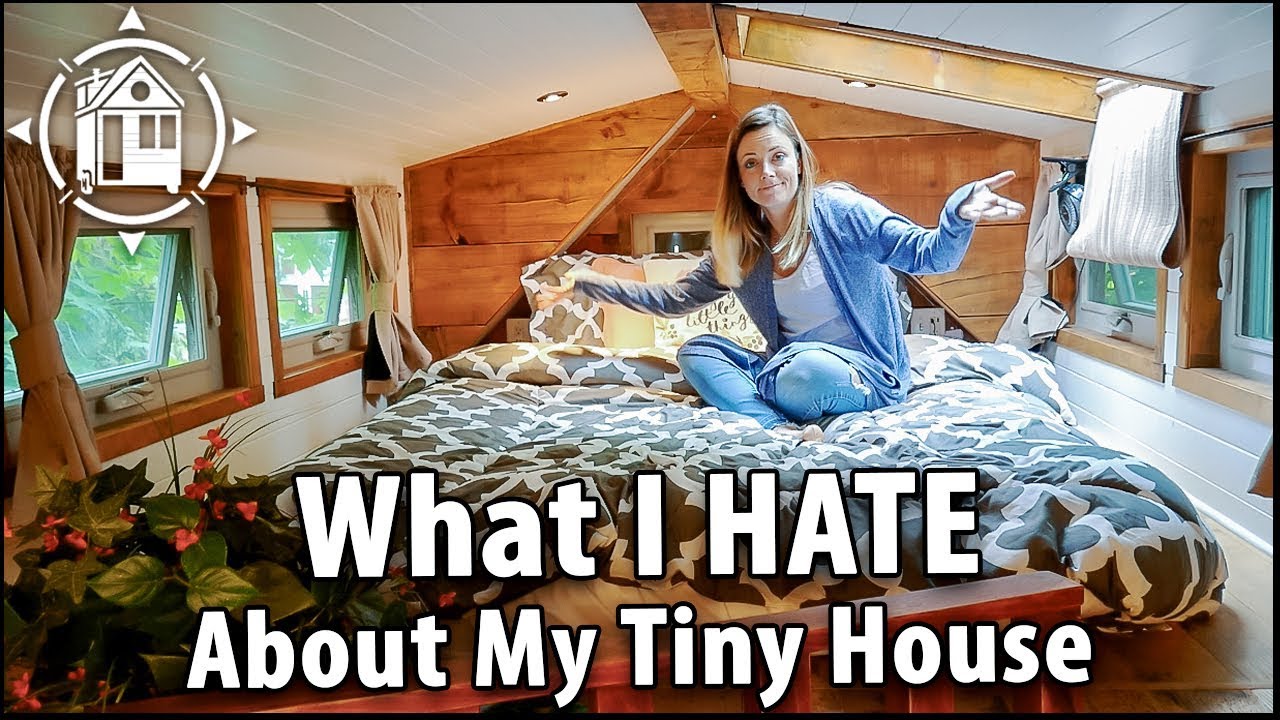
Jenna Spesard built her name on tiny houses. As the founder of Tiny House Giant Journey, she and her custom 20-foot home on wheels became one of the movement’s most recognizable stories after she towed it across more than 30 U.S. states and five Canadian provinces between 2014 and 2015. In her video “Living in a Tiny House Stinks (Sometimes),” she drops the highlight reel and walks through what nearly three years of full-time tiny living actually felt like day to day.
- Spesard built her 20-foot tiny house on wheels in 2013 specifically to eliminate debt and pursue filmmaking, then lived in it full-time for close to three years.
- Between 2014 and 2015 she towed the house more than 25,000 miles through over 30 states and five Canadian provinces before parking it permanently on a piece of property.
- The video breaks down the real downsides of downsizing: no personal space, compact bathrooms and composting toilets, cooking smells with nowhere to go, and friction from sharing tight quarters with a partner.
The Bathroom Problem
Spesard doesn’t bury the lede — the title of her video is a literal reference to what composting toilets and cramped bathrooms do to a tiny house’s air. Without the plumbing and ventilation of a standard bathroom, a compact toilet setup in 200 square feet or less becomes an unavoidable, constant presence rather than something tucked away behind a closed door and an exhaust fan doing real work.
She pairs that with the kitchen side of the same issue: cooking dinner in a galley the size of a closet means every fried onion, every batch of bacon, lingers because there’s no separate room for it to dissipate into. It’s the kind of detail that never shows up in a magazine spread but defines the actual sensory experience of living in one of these builds.
Tiny houses may look adorable in photoshoots, but living in one is far from romantic.
No Room to Be Alone
The lack of physical space translates directly into a lack of personal space, and Spesard treats that as the more corrosive problem over time. In a home measured in single-digit hundreds of square feet, there’s no spare bedroom to retreat to, no door to shut for an hour of quiet — every conversation, every mood, happens in the same small footprint as everything else.
That becomes especially pointed when a couple shares the house. Spesard is candid about how living on top of a partner, with zero visual privacy and nowhere to decompress separately, wears on a relationship in ways that a spacious home simply doesn’t force. Builders chasing the aesthetic of a metal house or a container conversion often skip past this exact tradeoff before signing off on a floor plan.
Storage, Clutter, and Daily Logistics
Tiny houses also strip away the incidental storage most people never think about — linen closets, garages, junk drawers, pantries. Spesard points out that without designated storage zones, especially in the kitchen, clutter accumulates fast and turns basic tasks like cooking or eating into a small daily negotiation over counter space.
Loft sleeping areas compound the logistics problem. Most tiny houses put the bed in a loft reached by a ladder or steep stairs, and insulating that space adequately through cold months is genuinely difficult — Spesard notes residents often end up cold and uncomfortable overnight no matter how well the rest of the build is sealed. Anyone comparing that experience to a full dream home built from a kit is going to notice the difference in insulation and layout immediately.
A Reality Check, Not a Rejection
None of this amounts to Spesard turning against the lifestyle she spent years documenting and promoting. Her point is narrower and more useful: the tiny house movement sells minimalism and financial freedom, but rarely mentions the toilet, the smell, the loft ladder, or the argument that has nowhere to go because there’s no other room to walk into. After 25,000 miles and three years living it, she’s earned the right to say so.
Spesard eventually parked her house for good rather than keep towing it, which tells you plenty about where the math on full-time mobile living lands after enough time on the road. For anyone weighing the jump into a build of their own, her video functions less as a warning and more as the missing page from the brochure — the one that covers what happens after the photoshoot ends and the composting toilet needs emptying.








Solo Overnight & Ice Igloo Build Part 2 /Day 4 of 5 “On The Ice”
Living a Radically Simple Permaculture Life on 1/4 Acre
Eating Giant Rat with Miss Nigeria!!
Piers Morgan – The Luxury Life Of Dubai HD Documentary 2019
HOW MUCH $$$ DOES WRAP COST? | The REAL STORY Shops Might Not Tell You!