

 InfoSearched
Thousands of bats skim a river at dusk, and beneath the surface something is already waiting for them.
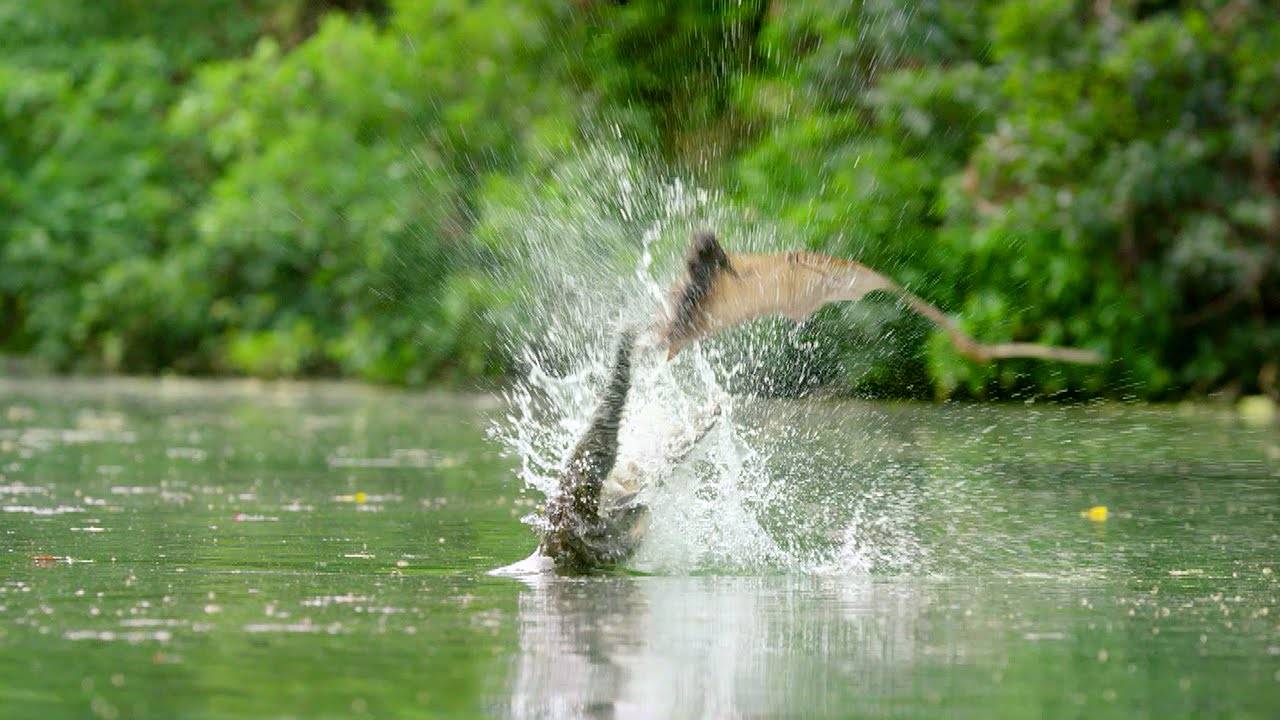
In the dry buildup before Australia’s monsoon breaks, the BBC Natural History Unit captured one of the most brutal ambush sequences ever filmed for television. The clip, pulled from Wonders of the Monsoon (released internationally as Lands of the Monsoon), drops viewers into the Northern Territory at the peak of the pre-monsoon heat, when a river becomes the only thing standing between a colony of bats and heatstroke. Waiting in that water, virtually motionless, are Australian freshwater crocodiles with one job: strike before the bats even know they’re there.
- The sequence comes from Episode 1, “Waiting for the Rains,” of the BBC’s Wonders of the Monsoon, narrated by Colin Salmon and originally broadcast in October 2014.
- Roughly 300,000 little red flying foxes (Pteropus scapulatus) converge on the river as regional temperatures push past 38°C, closing in on the 40°C threshold that can kill them.
- Australian freshwater crocodiles (Crocodylus johnstoni) lie submerged and still, using sensory receptors along their snouts to detect the faintest disturbance on the surface before launching vertical strikes.
A Colony Pushed to the Edge by Heat
Little red flying foxes don’t sweat, and in the scorched buildup to the monsoon that’s a serious problem. Once air temperatures climb toward the high 30s Celsius, an entire colony numbering in the hundreds of thousands has no option but to head for open water. The river isn’t a food source in this moment — it’s the only available air conditioning for an animal that can die from heat stress if it can’t cool down fast.
To beat the heat without actually landing in croc territory, the bats fly low, fast passes just above the surface, dipping their chests into the water to soak their fur. Back at the roost, they lick the moisture off themselves, turning a few seconds of skimming into a workable cooling system. It’s an efficient trick — right up until something below decides to time its jump to match the pass.
The Freshwater Crocodile’s Waiting Game
Crocodylus johnstoni isn’t the animal most people picture when they think “Australian croc” — that’s usually the much larger, far more aggressive saltwater crocodile. Freshwater crocodiles are smaller and generally considered less dangerous to humans, but against a bat skimming inches off the water, size isn’t the deciding factor. Warmed and energized by the same heat that’s punishing the bats, these crocodiles hold still in the current, relying on pressure-sensitive organs along their jaws to read the faintest ripple overhead.
When a bat commits to its pass, the crocodile explodes upward in a near-vertical lunge, snapping its jaws shut in midair to intercept the animal right at the moment its chest touches the surface. It’s a strike built entirely on stillness and timing rather than speed or pursuit — the croc never chases, it just waits for the gauntlet to bring the target to it.
Roughly 300,000 bats run the gauntlet, and the crocodiles only need to time one jump.
Statistical Data Favors the Colony
With a single colony numbering around 300,000 animals, the sheer scale of the crossing means any individual bat’s odds of being singled out are small, even with multiple crocodiles working the same stretch of river. That volume is the colony’s real defense — not agility, not evasive maneuvering, just overwhelming numbers moving through a kill zone faster than any predator can capitalize on more than a handful of strikes. For anyone who enjoys watching predator-prey standoffs play out on pure physics and timing rather than chase scenes, it sits alongside other stark ambush footage collected in The Most Extreme Wild Animals Battles!
It’s also a reminder of how much pressure Australia’s dry season puts on wildlife broadly — the same brutal heat and water scarcity that forces this river crossing has shaped other survival stories across the country, including the wild population booms covered in Millions of Mice Are Terrorizing Australia.
The sequence ends the way it always does in this stretch of river — most of the 300,000 bats make it back to the roost dripping and cooled off, a handful don’t, and the crocodiles slide back under the surface to wait for the next pass at dusk.





How This Woman Started Diving in DIY Submarines
Louis Vuitton Spring-Summer 2020 Show: All-Access with Loïc Prigent
Fabulous Cave House w/ Luxury Interior & Stone Hot Tub
Living in a Minivan during Freezing Temperatures
The Godmother Of Drumming Plays “Down With The Sickness”