

 InfoSearched
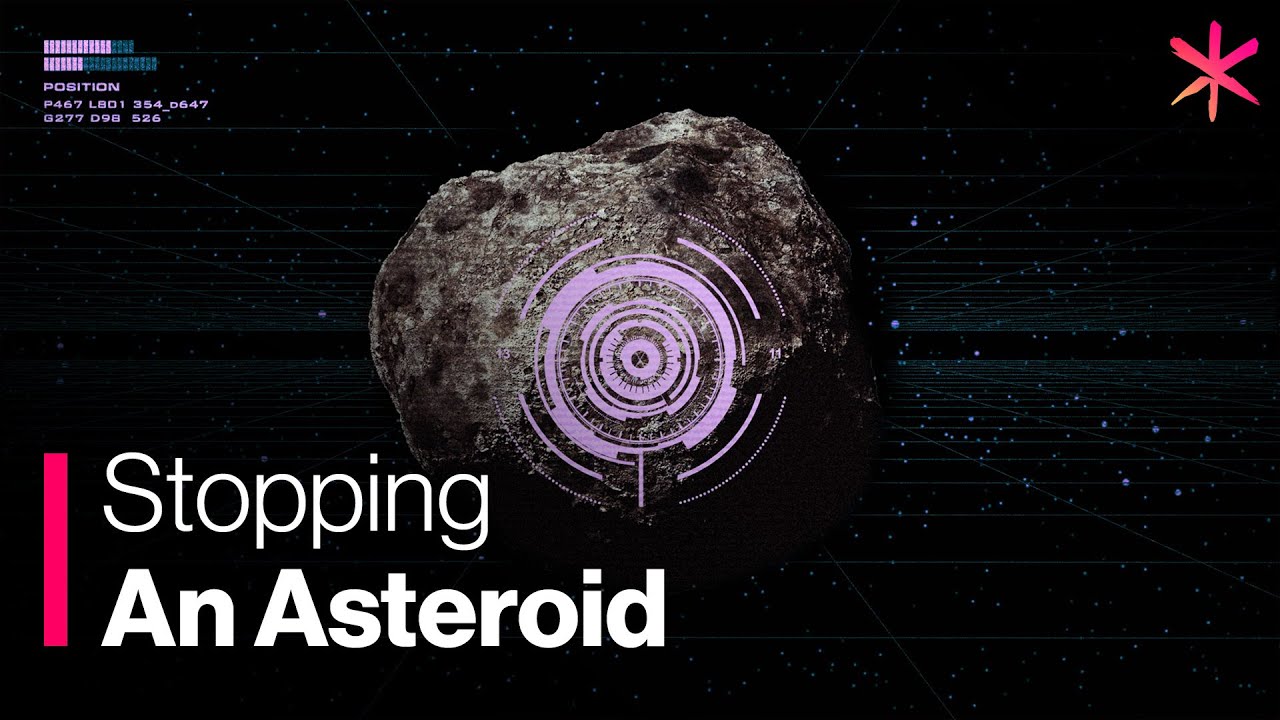
NASA and the Johns Hopkins Applied Physics Laboratory are about to try something no one has ever done: punch an asteroid off course on purpose.
The mission is called DART — the Double Asteroid Redirection Test — and it’s scheduled to launch in 2021 aboard a SpaceX Falcon 9. Its target is a moonlet roughly 160 meters wide, orbiting a larger asteroid called Didymos A about 6.8 million miles from Earth. If it works, it will be the first time humans have deliberately altered the path of a celestial body.
- DART is the flagship project of NASA’s Planetary Defense Coordination Office, created in 2016 and led by Planetary Defense Officer Lindley Johnson, in response to threats like the 2013 Chelyabinsk meteor that sent over 1,200 people to the hospital.
- The spacecraft will slam head-on into Didymos B — the 160-meter moonlet orbiting the 780-meter Didymos A — at roughly 14,700 miles per hour (6.6 km/s) in late 2022.
- The impact is designed to shift the moonlet’s orbital period around Didymos A by several minutes, changing its orbital speed by only a fraction of one percent.
The Kinetic Impactor Approach
DART isn’t a bomb mission or a tow job — it’s a battering ram. The car-sized spacecraft is built to intercept Didymos B and transfer momentum directly into the moonlet through sheer force, a technique known as a kinetic impactor. Nudge an asteroid early enough, the thinking goes, and a small change in velocity compounds over years into a wide miss instead of a direct hit.
Because Didymos is what astronomers call an eclipsing binary — the moonlet periodically passes in front of and behind the primary asteroid as seen from Earth — ground-based optical and radar observatories can measure the timing of those eclipses before and after impact with enough precision to detect a shift of just minutes in Didymos B’s orbital period.
DART will hit Didymos B at roughly 14,700 miles per hour — enough force to bend the moonlet’s orbit by a fraction of one percent.
Targeting the Didymos System
Didymos A and Didymos B were picked for a reason: neither poses any threat to Earth, but the pair’s size and geometry make them close analogues to the kind of near-Earth object planetary defenders actually worry about. Didymos A stretches roughly 780 meters across; its moonlet, Didymos B, is closer to 160 meters wide — squarely in the range NASA’s Planetary Defense Coordination Office tracks as potentially hazardous if a similar object were ever headed toward Earth.
Hitting a target that small at that distance, at 6.6 kilometers per second, leaves no room for a human at the wheel. That’s where DART’s autonomous systems take over in the final hours before impact, a level of onboard decision-making documentaries on modern space engineering have increasingly focused on as missions push further from real-time ground control.
The Technology Aboard DART
The spacecraft’s eyes are DRACO — the Didymos Reconnaissance and Asteroid Camera for Optical navigation — paired with autonomous targeting algorithms built by APL engineers to lock onto the moonlet and correct course without waiting on commands from Earth. Power comes from Roll-Out Solar Arrays, a compact deployable panel design, while a NEXT-C ion thruster handles propulsion. Ground-based tracking of the mission is being led by APL scientists Andrew Rivkin and Andrew Cheng, who will help confirm exactly how much DART’s impact bends Didymos B’s orbit once the dust — literally — settles.
Beyond DART: The AIDA Partnership
DART is only half of a two-mission effort called AIDA — the Asteroid Impact and Deflection Assessment. The European Space Agency is developing a follow-up mission, Hera, to arrive at the Didymos system after DART’s impact and survey the crater and the binary pair’s altered dynamics up close, turning a one-shot experiment into a fully documented before-and-after case study.
Assuming the 2021 launch window holds, DART won’t reach Didymos B until late 2022 — meaning the real test of whether a spacecraft can nudge an asteroid off its path is still roughly two and a half years away from being answered.








Making a Basket from PINE NEEDLES | Start to Finish Project
Life On Enceladus | NASA’s Unexplained Files
US Military’s $19M, 4500HP, 6 Axis, Aircraft Motion Simulator
The Surprising Truth About Drugs At Psychedelic Festivals | Shambhala
Herbert Nitsch, The Deepest Man On Earth