

 InfoSearched
Saturn’s smallest icy moon just became the solar system’s best bet for finding life somewhere other than Earth.
Discovery’s NASA’s Unexplained Files episode “Life On Enceladus” walks through what the Cassini spacecraft actually found when it got close enough to look at a moon nobody expected much from. Enceladus is barely 310 miles across, smaller than England, and scientists initially wrote it off as a frozen, dead rock. Then Cassini’s instruments started picking up things that didn’t add up.
- Since 2005, Cassini detected magnetic field anomalies at Enceladus and then imaged cryovolcanic plumes firing water vapor, organics, and ice particles hundreds of miles into space at roughly 800 mph.
- Researchers counted at least 101 distinct geysers erupting along four parallel “tiger stripe” fractures near the south pole, feeding directly into Saturn’s E ring.
- Direct sampling of the plumes turned up sodium salts, ammonia, complex organic molecules, and silica nanoparticles — evidence of hydrothermal vents where water meets a rocky core above 90°C (200°F).
Cassini Observations Reveal New Insights
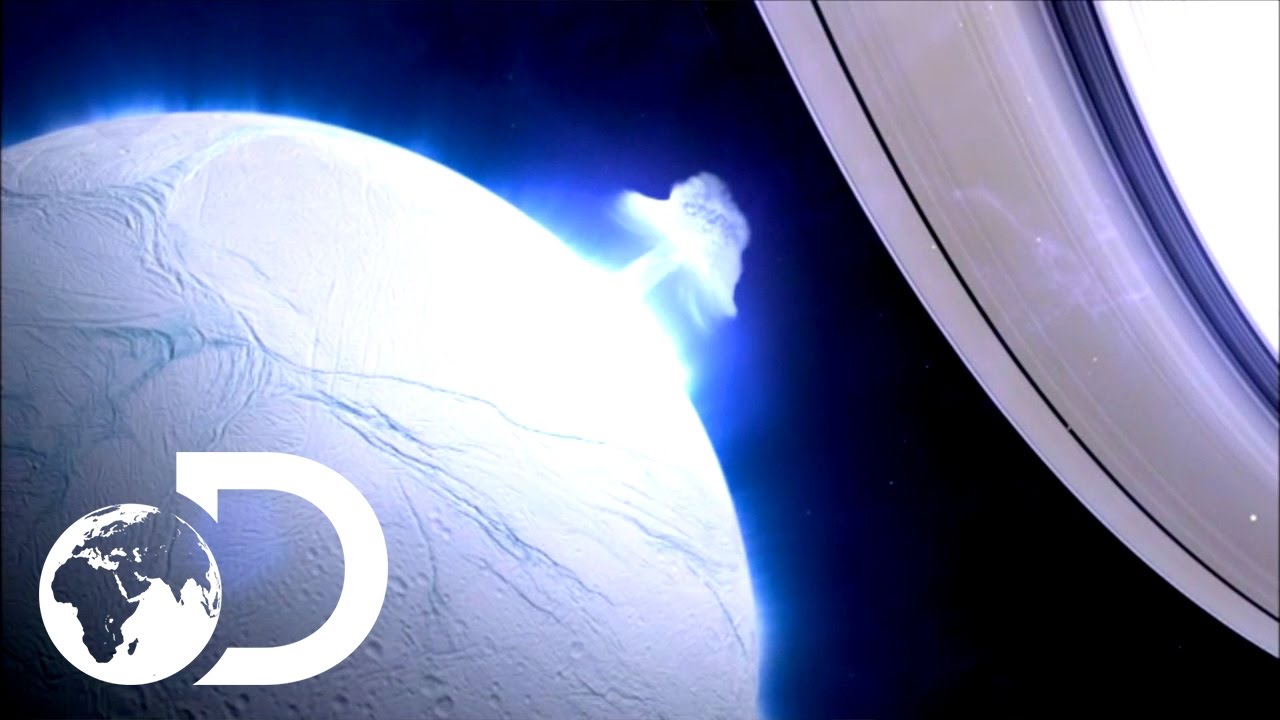
The first clue wasn’t a photograph — it was a wobble in Cassini’s magnetometer readings during an early flyby. That anomaly sent the mission team back for a closer pass, and that’s when cameras caught the plumes: geysers of water vapor and icy grains blasting out of Enceladus’s south pole at speeds around 800 miles per hour, visible against the blackness beyond Saturn’s rings. Nothing about a supposedly inert ice ball should behave like that.
Cassini Project Scientist Linda Spilker and the mission team traced the eruptions to four parallel fractures nicknamed the “tiger stripes,” running near the south pole. Follow-up flybys mapped at least 101 separate geysers venting along those cracks, with the ejected material streaming out to help feed Saturn’s E ring. Repeated passes let Cassini fly directly through the plumes and sample them with its instruments rather than just photograph them from a distance.
Composition Analysis Of Planetary Plumes
The chemistry is what turned this from a curiosity into a genuine astrobiology target. Cassini’s readings of the plume material showed sodium salts, ammonia, and complex organic molecules — the kind of ingredients chemists look for when they’re asking whether a place could support life. The presence of silica nanoparticles was the real tell: those grains only form when liquid water interacts with a rocky core at temperatures above roughly 90°C (200°F), which points to active hydrothermal vents on the ocean floor, not just a passively melting ice shell.
Researchers identified at least 101 distinct geysers venting along the tiger-stripe fractures, feeding material straight into Saturn’s E ring.
That’s a direct parallel to deep-sea hydrothermal vents on Earth, which support dense microbial ecosystems without a shred of sunlight reaching them. If Enceladus has the same kind of vent system, it has the same kind of energy source that keeps life running at the bottom of Earth’s oceans.
The Ocean Underneath The Ice
Gravity measurements taken during Cassini’s flybys, combined with a slight wobble in the moon’s orbit, confirmed Enceladus isn’t just venting surface ice — it’s sitting on a global subsurface liquid ocean. That ocean sits under an ice crust estimated at 19 to 25 miles thick, entirely hidden until Cassini’s instruments picked apart the orbital mechanics well enough to prove it was there.
Put together — liquid water, a heat source from hydrothermal activity, organic chemistry, and the nutrients found in the plume samples — Enceladus checks every box scientists use to judge whether a world could host microbial life. That combination is why the documentary, and the broader planetary science community, rank it among the top candidates in the solar system for finding life beyond Earth, alongside targets covered in other space and science documentaries exploring similar unexplained phenomena.
Cassini itself never got to test the ocean directly — the spacecraft was deliberately plunged into Saturn’s atmosphere in September 2017 to avoid any risk of contaminating Enceladus or Titan with Earth microbes. Everything scientists know about the moon’s chemistry came from those plume flybys, which is exactly why a follow-up mission built to fly through the geysers with better instruments, or even land near the tiger stripes, keeps coming up as the next logical step for anyone chasing a real answer on Enceladus.








30 medicinal plants the Native Americans used on a daily basis
How Strong Was Bruce Lee?
I was sex trafficked for years. Brothels are hidden in plain sight
Beautiful close encounter with manatees seeking refuge in Florida.
Soldiers Encounter Mysterious Monsters in Vietnam War