

 InfoSearched
Whiteboard Video Revives Antarctic Debate
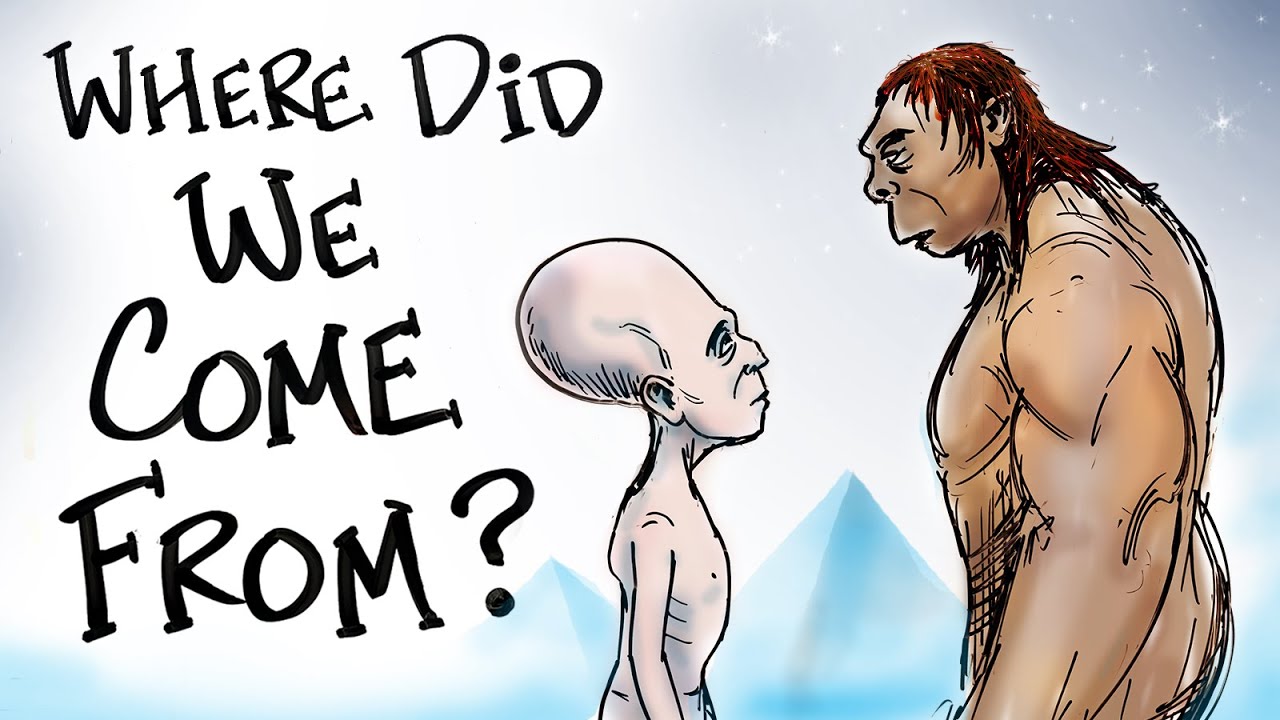
“The Lost Ancient Humans of Antarctica,” a whiteboard-animation explainer from the education channel After Skool, uses the 2008 discovery of the Denisovans to ask a bigger question about how much of the human story is still missing. The video doesn’t claim to settle anything — it lays the orthodox “Out of Africa” model next to a string of anomalies, from a 500-year-old map to Antarctic ice cores, and lets viewers decide how much weight the fringe theories deserve.
What makes the video worth watching isn’t a smoking-gun discovery. It’s the pattern it draws between real genetic science and the internet folklore that’s grown up around Antarctica, and how easily the two get mixed together in online discourse.
- The 2008 identification of the Denisovans — an extinct hominin subspecies found in Siberia — whose DNA persists today in populations across Oceania and parts of Asia, pointing to interbreeding and migration routes mainstream anthropology hadn’t mapped.
- The 1513 Piri Reis map and viral claims about “pyramid-shaped” Antarctic peaks, both cited by lost-civilization theorists and both addressed head-on by geologists, who attribute the pyramid shapes to ordinary freeze-thaw erosion.
- Ice core data showing Antarctica’s ice sheets formed millions of years before Homo sapiens existed roughly 300,000 years ago, which is the central fact mainstream geoscientists use to reject the Antarctic-civilization hypothesis outright.
The Denisovan Wrinkle in Out of Africa
The “Out of Africa” model has humans originating on that continent and radiating outward over land, a relatively tidy narrative that dominated textbooks for decades. The Denisovans complicate it. Identified from bone fragments in a Siberian cave in 2008, this subspecies left a genetic fingerprint that shows up today in people across Oceania and pockets of Asia — evidence of interbreeding and long-distance movement that nobody had documented before the genome work came back.
After Skool’s video treats that discovery as proof that paleogenomics is still rewriting the rulebook, not proof of anything about Antarctica specifically. The logic runs: if a whole human subspecies was hiding in the genetic record until 2008, what else hasn’t turned up yet? It’s a fair question, and it’s also where the video pivots from settled science into speculation.
The Piri Reis Map and the Pyramid Myth
Lost-civilization theorists, a group popularized by writers like Graham Hancock, lean heavily on the 1513 Piri Reis map, which some read as depicting an ice-free Antarctic coastline centuries before Europeans supposedly charted it. They pair that with viral photos of Antarctic peaks that look, from the right angle, like pyramids.
Geologists have been blunt about the “pyramids”: the shapes are freeze-thaw erosion, the same process that carves sharp ridgelines out of any cold, rocky mountain range on Earth.
That debunking hasn’t slowed the theory down online, mostly because it doesn’t need to be true to be shareable. It’s the same appetite that keeps stories about physics-defying tribal feats or unexplained human anomalies in circulation — readers curious about that broader genre of unexplained-phenomena claims can see a related example in this look at a tribe said to violate the laws of physics.
Evidence From Antarctic Ice Cores
The hardest data point against an ancient Antarctic civilization is also the simplest: ice core records show the continent’s sheets formed millions of years ago, long before anatomically modern humans existed around 300,000 years ago. Remote sensing and deep-penetrating radar surveys of the ice have turned up natural geological features every time, not walls, not tunnels, not buried cities.
That’s the gap the video keeps circling back to. Crustal displacement theory and rapid-climate-shift hypotheses are the mechanisms lost-civilization proponents reach for to explain how an advanced society could vanish under ice without a trace, but neither has geological support strong enough to move the timeline. The ice was there long before anyone could have built on it.
Evolving Scientific Understanding of Antarctica
None of this means the field is standing still. Paleogenomics has upended assumptions about early humans before — the Denisovan case is the clearest example — and After Skool’s larger point is that rigid timelines have a habit of getting revised when new genetic or archaeological evidence surfaces. The difference is that revision happens through peer-reviewed sequencing and dated ice cores, not viral photos of mountain ridges.
The video’s real subject, in the end, isn’t Antarctica at all — it’s how fast anthropology can change when a single genome comes back with an answer nobody expected. The Denisovans went from unknown to genetically present in millions of living Oceanians in the space of one 2008 announcement. That’s the kind of jolt that keeps people watching whiteboard videos about frozen continents, waiting to see what gets rewritten next.








Why Army Recruits Train Inside A Tear Gas Chamber In Boot Camp
Catch and Cook BATRAY! Delicious Recipe!!
A Day in the Life of a Minimalist
Mexico’s Cartels Are Deadlier Than Ever Despite the Pandemic
How Strong Was Bruce Lee?