

 InfoSearched
A young family swapped a mortgage for a 30-acre mountainside and a canvas roof.
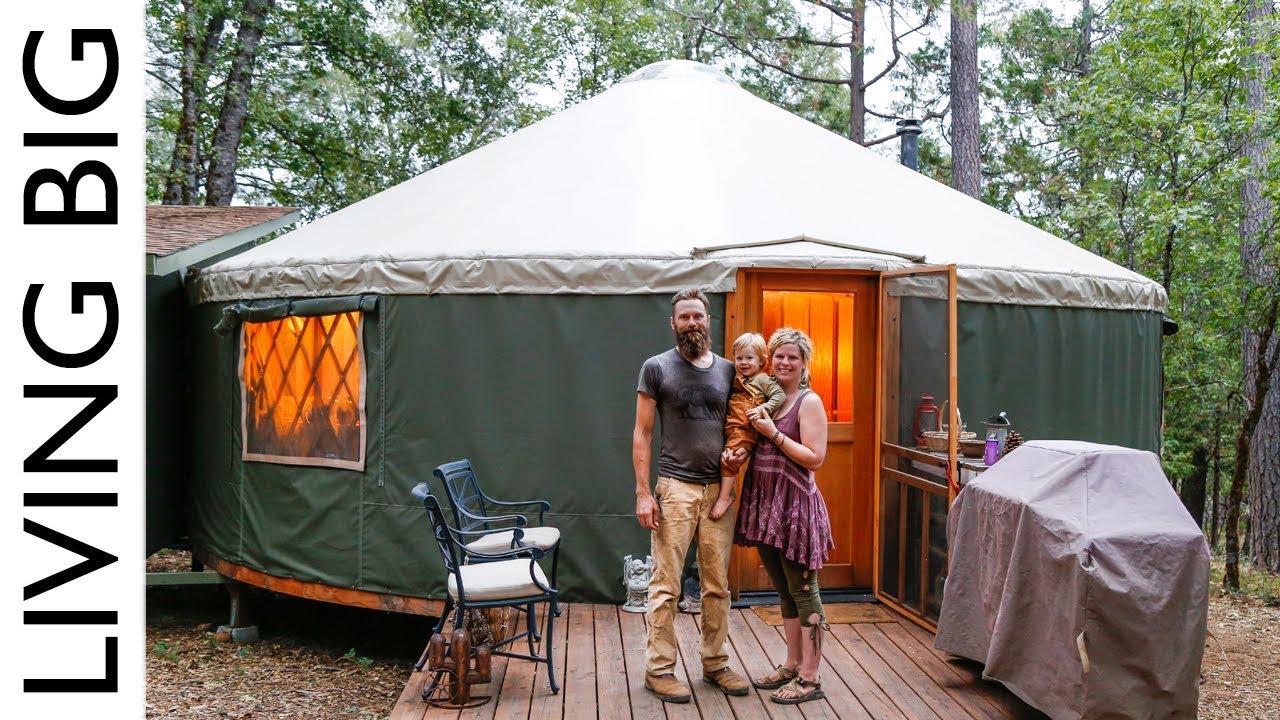
Bryce Langston’s Living Big In A Tiny House heads into California’s High Sierra for a visit with a young family who traded conventional housing for a circular yurt at the center of a working permaculture homestead. The episode, filmed on the family’s 30-acre property, walks through how the couple built a mortgage-free life around regenerative land management, food production, and a home designed to move with the seasons rather than fight them.
- The family lives full-time in a large circular yurt situated on a 30-acre homestead in the High Sierra region of California.
- The property functions as a working permaculture and regenerative agriculture site, combining food production with ecological land management.
- The family made a deliberate shift from conventional housing to off-grid, mortgage-free living centered on the yurt.
Yurt Aligns With Family Strategy
A yurt isn’t a novelty structure here — it’s the practical answer to building affordably on rugged, undeveloped land. The circular design, built from lightweight lattice framing and canvas or vinyl covering, goes up faster and cheaper than stick-frame construction, and it sheds snow and wind well at elevation. For a family trying to avoid a 30-year loan, that combination of low material cost and quick assembly made the yurt the obvious starting point rather than a fallback option.
Bryce Langston’s tour of the interior shows how the family organized daily life — cooking, sleeping, and storage — inside a single open volume without sacrificing comfort. It’s the same design logic that runs through other tiny-footprint builds featured on the channel, including We Built Our Dream Home, FROM A KIT!, where owner-builders leaned on efficient, prefabricated systems to get a functional home up without a conventional construction budget.
Thirty Acres Built Around Permaculture Design
The yurt is really just the hub of a much larger project. Around it, the family runs a 30-acre permaculture operation built on regenerative agriculture principles — systems designed to work with the site’s natural patterns rather than against them, cutting waste and building soil fertility over time instead of depleting it.
Off-grid, mortgage-free, and built on 30 acres designed to feed itself.
That approach puts this family in the same lineage as other growers featured on the channel who’ve scaled permaculture down to a fraction of the acreage, like the setup detailed in Living a Radically Simple Permaculture Life on 1/4 Acre. The High Sierra property simply has the acreage to push those same principles — rotational land use, diversified plantings, minimal ecological footprint — further.
Trading a Mortgage for Mountain Terrain
The High Sierra’s rugged terrain and elevation aren’t obstacles the family works around — they’re the reason the property works. The rocky, sloped land that keeps large-scale conventional development out is exactly what makes it viable for a homestead built on the same logic as high-desert and mountain resilience for people used to depending on themselves rather than infrastructure. That’s the trade the family made: give up ease of access and utility hookups, get 30 acres, no mortgage, and full control over how the land gets used.
Evidence Revealed In The Episode
Langston’s format sticks to what makes the channel work — a walkthrough of the yurt’s layout followed by a tour of the land itself, letting the family explain their own systems in their own words rather than narrating over them. It’s a quieter entry in the tiny-house catalog than some of the channel’s more elaborate builds, but the payoff is the same: a real look at what it takes to run a self-sufficient household on land most people would drive past.





Backyard teahouses for meditation, guest cottage, and homeoffice
Ginger Spice Tells the Story Behind Her Union Jack Dress
How to Get a Job in the Outdoor Industry | Land Your Dream Job | My Story
Made Perfect – with DIAMONDS
Gordon Ramsay Reveals the Reason Behind His Healthy Lifestyle | This Morning