

Negotiation Skills: The “60 Seconds Or She Dies” Challenge With FBI Negotiator Chris Voss
 InfoSearched
A former FBI hostage negotiator squares off against a fake kidnapper and a ticking clock — and refuses to blink.
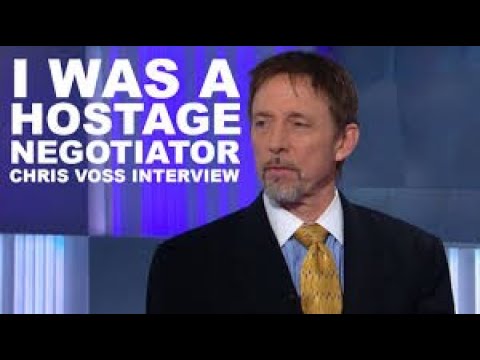
Chris Voss spent decades talking gunmen and kidnappers into standing down, and in this session with his firm, The Black Swan Group, he puts that same pressure-cooker skill set on display for a business audience. The centerpiece is a live simulation called “60 Seconds Or She Dies,” in which Voss has to defuse an ultimatum from a role-playing hostage-taker before an artificial deadline expires. What he shows isn’t a script of clever comebacks — it’s a system for controlling tone, tempo and emotion when someone else is trying to force a snap decision.
- Voss retired from the FBI as its lead international kidnapping negotiator after working more than 150 cases, including the 2006 Jill Carroll kidnapping in Iraq and the Steve Centanni case in the Gaza Strip.
- He co-authored the best-selling book “Never Split the Difference” with Tahl Raz, translating hostage-negotiation tactics into business and everyday negotiating skills.
- Through The Black Swan Group, Voss teaches “Tactical Empathy” using tools like calibrated questions (“How am I supposed to do that?”), mirroring, labeling emotions, and a slowed-down “late-night FM DJ voice” to control the pace of a confrontation.
The Effectiveness of 60 Seconds Test
The exercise is deliberately unfair. A hostage-taker barks a deadline, the negotiator has almost no information, and the instinct for most people is to either panic or start bargaining down the middle — offering half of what’s demanded to make the threat go away. Voss built his career proving that instinct gets people killed. In real kidnapping cases, splitting the difference on a ransom or a timeline signals weakness and invites the other side to push harder, not less.
Instead, Voss demonstrates buying time without ever looking like he’s stalling. He slows his cadence, drops his register, and refuses to match the aggressor’s urgency — a technique instructors at Black Swan call the late-night FM DJ voice. The goal is to make the deadline itself lose its grip on the conversation, because a negotiator who sounds rattled has already lost leverage before a single term gets discussed.
The Calibrated Questions Voss Leans On
Rather than making demands or issuing counter-threats, Voss repeatedly turns the pressure back on the hostage-taker with open-ended, seemingly powerless questions. “How am I supposed to do that?” is the signature line — a question that forces the other party to solve the negotiator’s problem for them, without ever conceding ground.
“How am I supposed to do that?”
He pairs that with mirroring — repeating the last few words a counterpart says — and labeling, naming the emotion underneath the threat out loud (“It sounds like you’re feeling like this is your only option”). Both tactics, drawn straight from the hostage negotiation playbook Voss used on cases in Iraq and Gaza, are designed to slow an aggressive counterpart down long enough to extract real information: who they are, what they actually want, and how they think they’ll get it.
From Hostage Cases To The Boardroom
“Never Split the Difference” turned Voss’s field experience into a manual for sales negotiations, salary talks and business disputes, arguing that the same emotional dynamics that play out with a kidnapper play out — at lower stakes — in a contract negotiation. The book’s central claim is that logic rarely wins a negotiation; the side that manages the emotional temperature of the room usually does. Voss’s FBI résumé, built across cases that put him opposite armed captors demanding money or political concessions, gives that claim more weight than most business-book advice, and it’s part of why his firm’s talks and demonstrations, like the money-laundering breakdowns other former federal specialists give on how real-world crime tactics compare to fiction, draw crossover interest from both crisis responders and executives.
Reading The Room Under An Ultimatum
The clearest lesson from the simulation is what Voss refuses to do: he never argues with the threat itself. Arguing that a deadline is unfair, or that a demand is unreasonable, just gives the other side something to defend. Instead he treats the ultimatum as information — a signal of what the hostage-taker fears losing — and works the conversation around it using empathy that’s tactical, not sentimental. It’s a distinction Voss returns to constantly: sounding calm isn’t the same as being soft, and the negotiator who talks the slowest is usually the one steering the outcome.








Maui’s HALO Wingsuit
The Darkest Black on Earth? Why Scientists & Artists Want the World’s Blackest Substances
The Man Living in Complete Isolation for 40 Years (Part 4/4) | Far Out
Piers Morgan – The Luxury Life Of Dubai HD Documentary 2019
50 years off-grid: architect-maker paradise amid NorCal redwoods