

 InfoSearched
A near-death experience turned one Michigan tree farmer into the last line of defense for the world’s biggest trees.
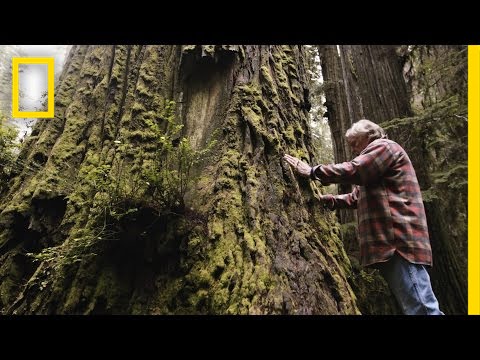
David Milarch spent decades in the nursery business before liver and kidney failure nearly killed him in 1991. He came out of it convinced he had one job left: capture the genetic material of the planet’s oldest, largest trees before they’re logged, burned, or simply die of old age. That mission is the subject of “One Man’s Mission to Revive the Last Redwood Forests,” a short film from The Story Group featured in National Geographic’s Short Film Showcase.
- Milarch, a third-generation nurseryman and arborist from Copemish, Michigan, co-founded the Champion Tree Project with his sons after his 1991 near-death experience.
- The project became the nonprofit Archangel Ancient Tree Archive in 2008, focused on cloning old-growth coast redwoods (Sequoia sempervirens) and giant sequoias (Sequoiadendron giganteum) in Northern California and the Pacific Northwest.
- Climbers scale hundreds of feet into the canopy of trees thousands of years old to collect viable shoots and branches, which are then rooted and cloned in propagation labs.
From Timber Country to Tree Archivist
Milarch’s background wasn’t in activism — it was in growing trees for a living. That’s part of what makes his pivot notable: a man who understood nursery stock, root systems, and propagation from the inside decided to point that expertise at the oldest specimens on Earth instead of the fastest-growing ones. After his 1991 medical crisis, he reoriented his entire operation around a single question — what happens when the genetic lines of these ancient giants disappear before anyone bothers to save them?
The redwoods and giant sequoias he targets aren’t ordinary old trees. Coast redwoods can live well over a thousand years, and the giant sequoias Milarch’s team works with have survived centuries of drought, wildfire, and disease that have wiped out lesser genetic stock around them. That survival record is exactly what makes their cuttings valuable — not sentiment, but proven resilience.
Cloning What Mainstream Arborists Called Impossible
For years, conventional forestry wisdom held that ancient trees were essentially uncloneable — too old, too far gone in their growth cycle to root successfully from a cutting. Milarch’s team set out to prove that wrong. Climbers ascend into canopies reaching hundreds of feet to harvest shoots and branches from individual “champion” trees, cuttings that are then rushed to propagation facilities where technicians attempt to root genetic material from specimens that predate the founding of the country.
Milarch’s team has spent years proving that trees thousands of years old can still be cloned — a feat many mainstream arborists once considered impossible.
Successfully rooting those cuttings means the archive can preserve genetics that have already survived what a changing climate is now throwing at the rest of the forest — drought cycles, disease pressure, and fire seasons that have grown longer and hotter across Northern California.
Building “Living Libraries” Around the World
Milarch’s endgame isn’t a warehouse of preserved cuttings — it’s replanting. The Archangel Ancient Tree Archive’s stated goal is to establish “living libraries” of cloned champion trees in multiple locations globally, then get saplings grown from that highest-performing ancient genetic stock back into the ground. His argument is straightforward: reforest with proven survivors, not average stock, and you maximize what those trees can do for air quality, water systems, and carbon sequestration.
It’s a philosophy that overlaps with the same instincts driving projects like permaculture-based land restoration — working with what already thrives in a given ecosystem rather than starting from scratch. Milarch’s team applies that same logic at a much larger scale, propagating cuttings the same way a grower might approach cultivating specialty species in a controlled environment, just with stakes measured in centuries rather than seasons.
The film leaves Milarch mid-mission, not finished — climbers still scaling redwood canopies, labs still testing whether the next batch of cuttings will take root. For a man who wasn’t supposed to survive 1991, that’s the point: the archive keeps growing one champion tree at a time.






Coleman Instant Up 10P Lighted Northstar Darkroom Tent – Features
How To Start An Airline
Building a Cabin from Pallet Wood: Cheap Off Grid Homestead
Off-The-Grid Desert Living in a Tiny Earthen Home & Permaculture Community
Modern Cave House is Man’s Life Long Dream – 5,700 sq ft!