

 InfoSearched
A single dish separates competent sushi chefs from masters, and it isn’t the fish.
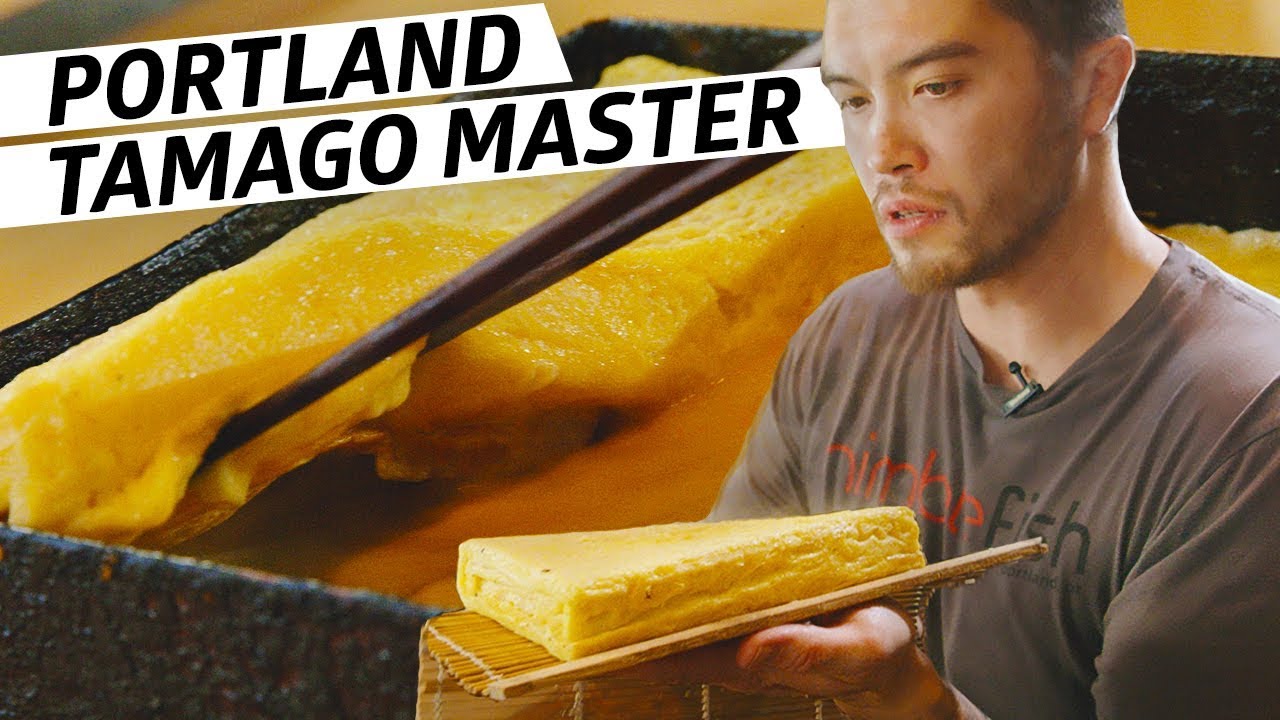
At Nimblefish, the Edomae-style sushi counter chef and co-owner Cody Auger built in southeast Portland, the omakase menu is judged early — and it’s judged on an egg. Eater’s “Omakase” series follows Auger through the making of tamago, the sweetened rolled Japanese omelette that traditionally opens or closes a formal sushi service, to show why this humble-looking dish is treated as a benchmark of technical skill rather than an afterthought.
- Cody Auger co-founded Nimblefish in December 2017 with Dwight Rosendahl, running it as an Edomae-style sushi restaurant in southeast Portland, Oregon.
- Auger’s background is in architecture, and he applies that discipline — precision, ratios, geometry — to his sushi technique, including how he builds and folds tamago.
- The Eater video documents his heat control, egg-to-seasoning ratios, and folding sequence, framing tamago as one of the hardest single components to execute cleanly in an omakase service.
Tamago Serves as Chef Benchmark
Tamagoyaki shows up on plenty of home tables and bento boxes, but the Edomae version served in an omakase sequence is a different animal. It’s built from thin layers of egg poured, set, and rolled in succession on a rectangular tamagoyaki pan, with the seasoning — soy sauce, sugar, mirin, and often a dashi base — calibrated so the interior stays custardy while the exterior holds a clean, even color. Any inconsistency in heat or timing shows up immediately in the texture and the slice, which is exactly why sushi chefs consider it a truer test of skill than a cut of toro.
Auger’s Architectural Approach
Auger’s path to the sushi counter runs through architecture, and that training shows in how he talks about building tamago layer by layer — thinking in terms of structure, proportion, and repeatable geometry rather than just taste. It’s the same instinct that shapes Nimblefish’s Pacific Northwest-inflected omakase, where he applies traditional Edomae technique to local ingredients instead of importing every element from Tokyo.
Getting the fold right, layer after layer, without breaking the structure — that’s the whole test.
That combination of borrowed technique and local sourcing is part of what’s made Nimblefish, and Auger specifically, a name Eater and other outlets have pointed to among Portland’s rising sushi talent since the restaurant opened in December 2017.
The Craft Behind the Roll
The video breaks down the mechanics most diners never see: pouring a thin sheet of egg mixture across the hot pan, letting it just set, then rolling it toward the front before pouring the next layer beneath it. Repeat that enough times with the right rhythm and the tamago comes out as a tight, even brick that slices into neat rectangles — the kind of consistency that separates a chef who’s done this a thousand times from one who’s done it ten. It’s a similar respect for ratio and structure that shows up whenever cooks tackle other technically demanding, ingredient-driven dishes, the sort of precision on display in Lemon Crunchy Chicken cooked in the middle of the forest, where technique matters as much as the ingredients themselves.
Auger’s design background also explains why he frames the pan itself, and the layering process, almost like load-bearing construction — get the foundation wrong early and the whole roll won’t hold its shape, not unlike the structural math involved in removing a load-bearing wall without the rest of the structure shifting.
Tamago Placement in Omakase Sequence
In a full omakase progression, tamago’s job is contrast — a warm, sweet, custardy course dropped between raw nigiri to reset the palate. Its simplicity is deceptive; there’s no fish to hide behind if the seasoning ratio is off or the layers cook unevenly. That’s the point Eater’s cameras keep returning to at Nimblefish: the fanciest piece of uni on the counter doesn’t tell you as much about a chef’s hands as four minutes with an egg and a hot pan.
Next time the Nimblefish counter opens for a seating, the tamago is still the course worth watching closest — it’s the one dish on the menu where Auger has nowhere to hide.







Building a Cabin from Pallet Wood: Cheap Off Grid Homestead
Making a Basket from PINE NEEDLES | Start to Finish Project
Inside the US-Led Coalition’s Fight Against ISIS
It Started Out Great, But… Solo Beach Camping On An Uninhabited Island – Day 1
Graphic Designer Builds Custom 4×4 FUSO Overland Tiny Home for World Travel