

 InfoSearched
One man spent eight winters blasting a home out of solid sandstone in the Utah desert.
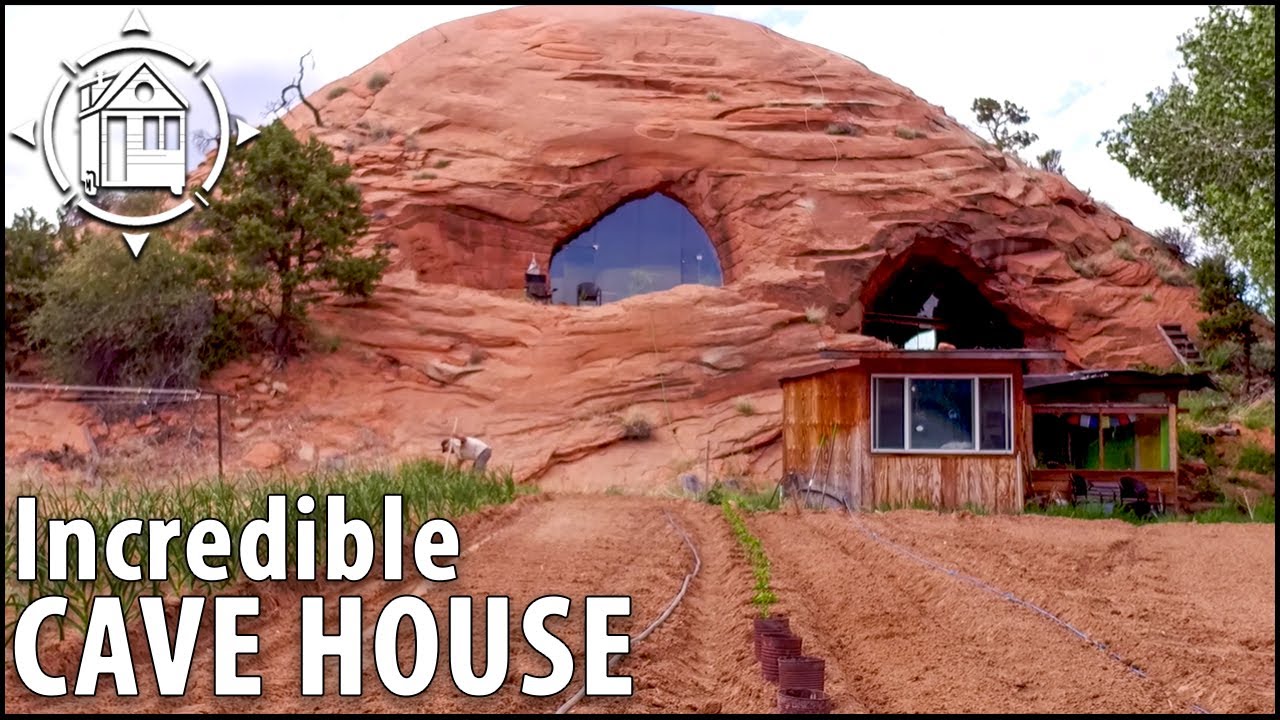
Deep within a private 40-acre inholding surrounded by the Grand Staircase–Escalante National Monument, homesteader Grant Johnson built something most builders would call impossible: a 5,000-to-5,700-square-foot residence carved directly into a slickrock cliff face. Jenna Spesard, host of the video series Tiny House Giant Journey, toured the finished property — known as the Bedrock Homestead — near Boulder, Utah, in June 2020. What she found wasn’t a rustic dugout but a fully off-grid, micro-hydro-powered home with running water, climate control, and a rented guest wing.
- Grant Johnson bought the 40-acre parcel in 1980, years before it became a private inholding inside the Grand Staircase–Escalante National Monument when the monument was designated in 1996.
- He lived on the land for 25 years in a trailer with no electricity or running water before beginning to excavate the cave starting around 1995.
- The home was blasted and hollowed out across eight successive winters and now runs entirely off-grid on a micro-hydroelectric system powered by an onsite waterwheel.
From Mining Skills to a Life’s Project
Johnson’s path to building a cave home wasn’t accidental. He moved to Utah as a young man and worked as a miner while putting himself through college, picking up the blasting and excavation know-how that would later let him carve his own house out of bedrock rather than hire it out. Those skills sat mostly unused until the mid-1990s, when he started controlled blasting into the massive sandstone formation on his property, one winter season at a time, for eight years running.
Building Inside the Monument’s Boundary
The timing of Johnson’s land purchase turned out to matter enormously. He bought the 40 acres in 1980, more than 15 years before President Clinton established the Grand Staircase–Escalante National Monument in 1996 and swallowed his property whole as a private inholding. That status let Johnson keep developing his own land inside a nearly 1.9-million-acre federal monument, something homesteaders like the ones behind Australia’s underground homes would recognize as its own kind of regulatory tightrope walk.
Positive Living in a Negative Space
Johnson describes the result of all that blasting in blunt terms.
“Positive living in a negative space.”
The finished cave interior functions like a full modern house rather than a novelty: there’s climate control, a dedicated music jamming space, and enough square footage to comfortably split into two living zones. Johnson occupies one wing with his partner, Gina, while the second wing — a private two-bedroom suite — gets rented out as an Airbnb, giving visitors a rare chance to actually sleep inside the sandstone.
Running the Homestead Off-Grid
None of it draws from a utility line. The micro-hydroelectric system, fed by an onsite waterwheel, handles power for the entire property, while an orchard, gardens, and livestock supply much of the food. It’s the kind of full-loop self-sufficiency that fans of off-grid builds like the self-built floating home or the off-grid log cabin workshop tend to chase, except Johnson’s version required literal dynamite instead of lumber.
Twenty-five years in a trailer without power or plumbing was the price of admission before any of the blasting even started. That’s the detail that sticks — Johnson didn’t stumble into a dream home, he earned it one winter charge at a time, and the Airbnb guests booking that two-bedroom wing today are sleeping inside eight winters’ worth of his own labor.







EXTREME Minimalist Living With ONLY 47 Possessions!
How This Woman Started Diving in DIY Submarines
Billionaire in ‘World’s Toughest’ Prison Accused of Cop’s Death
How To GROW Asparagus The LAZY Way!
Living In A Treehouse in Hawaii