

 InfoSearched
Mercedes just built a car with no steering wheel, no pedals, and a joystick that reads your pulse.
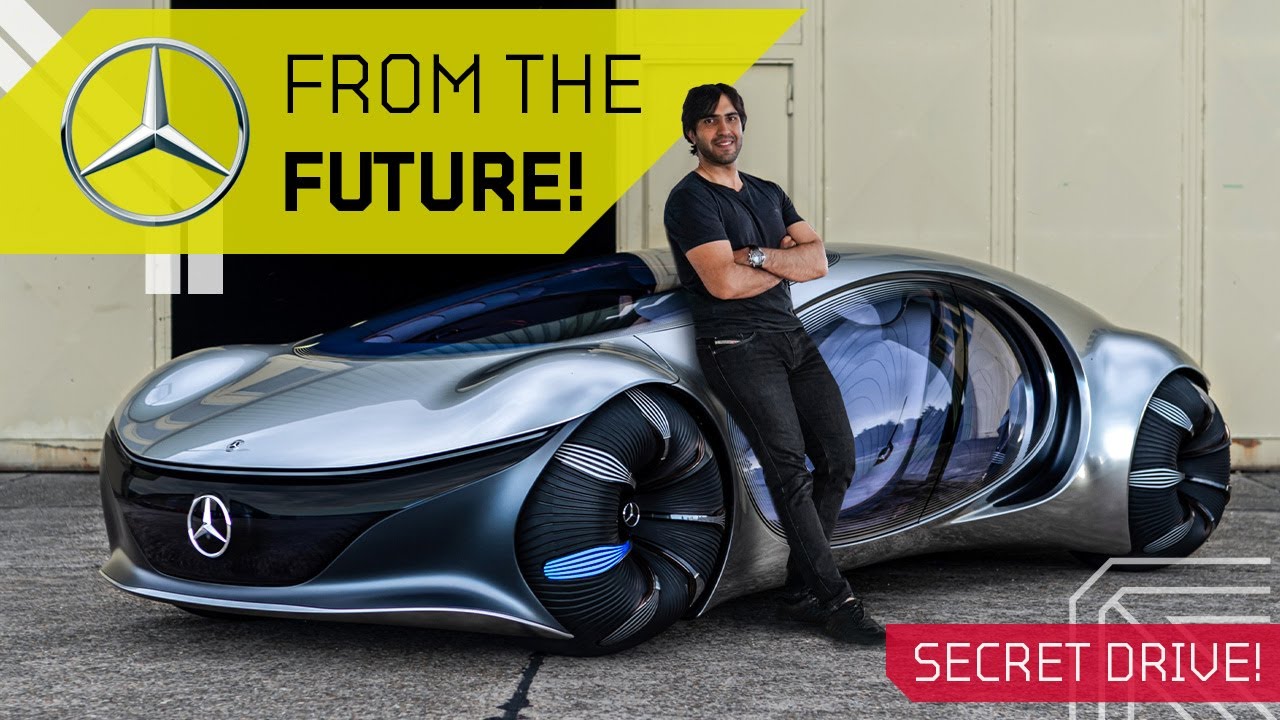
The Vision AVTR isn’t a facelift or a trim update — it’s Mercedes-Benz throwing out the entire idea of what sits between a driver and a car. Unveiled by Daimler chairman Ola Källenius at CES 2020 and inspired directly by James Cameron’s Avatar, this concept swaps the wheel for a single control element that rises out of the center console to meet your hand. Reviewer channel Remove Before Race got rare hands-on time with it, and the video breaks down just how far Mercedes has pushed past its earlier autonomous concepts, including the F 015.
- The Vision AVTR replaces the steering wheel and pedals with a multifunctional joystick that biometrically reads the driver through breathing and heart rate, syncing the seat’s pulse to match.
- Four wheel-mounted motors produce a combined 469 horsepower (350 kW) with torque vectoring, drawing from a 110 kWh graphene-based battery that charges in about 15 minutes for up to 435 miles of range.
- Spherical wheels let both axles pivot up to 30 degrees at once, allowing the car to crab-walk diagonally, while 33 movable “bionic flaps” on the rear communicate with surrounding traffic.
A Control Scheme Built Around the Driver’s Body
Instead of a wheel, the Vision AVTR’s cabin centers on what Mercedes calls a polyvalent control element — a joystick-like unit embedded in the console that physically rises to meet the driver’s palm. Once it makes contact, it reads biometric signals like heart rate and breathing, and the seat is engineered to pulse in time with the driver’s own heartbeat. It’s less a control interface than a handshake between person and machine.
Navigation happens without touchscreens or buttons. A menu projects directly onto the driver’s palm, and every selection is made through hand gestures rather than physical inputs. Up front, a curved display doesn’t just show speed and navigation — it renders real-time 3D views of the world outside and layers in forces the human eye can’t normally see, including ultraviolet light and magnetic fields.
Skin, Scales, and a Car That “Breathes”
The exterior design leans hard into biology rather than sheet metal. Thirty-three individually movable “bionic flaps” cover the rear of the vehicle, mimicking the scales of an animal and shifting to signal intent to pedestrians and other traffic — a kind of body language for a car with no horn or blinker in the traditional sense.
Spherical wheels let the Vision AVTR pivot both axles up to 30 degrees at the same time, so the whole car can crab-walk sideways instead of just turning.
That maneuverability isn’t a gimmick bolted on for CES — it’s tied directly to the drivetrain. Four individual wheel-mounted motors put out a combined 469 horsepower with torque vectoring, meaning each wheel can be controlled independently for grip and turning radius in ways a conventional axle setup simply can’t match.
The Battery Nobody Expected
Mercedes didn’t just rethink the controls — it rethought the battery chemistry. The Vision AVTR runs on a 110 kWh pack built from recyclable, compostable graphene rather than rare-earth metals, which the automaker frames as a genuine break from how EV batteries have traditionally been sourced and disposed of. Charging is projected at roughly 15 minutes for a range up to 435 miles, numbers that would be notable even without the sustainability angle.
It’s a strikingly different approach from what Mercedes has shown in its production-line EV efforts, and it’s worth putting next to how the brand is already experimenting with electrification and driver tech elsewhere — the ambient tech and control philosophy showing up in the rear seat experience of the new S-Class hints at some of the same design language scaled down for the road today. Even the compostable-battery pitch echoes a broader shift toward rethinking energy on wheels, something also visible in how owners are experimenting with solar panels on a Tesla.
No Path to Production, and That’s the Point
Mercedes has been upfront that the Vision AVTR isn’t headed to a dealership lot. It’s a design study meant to stretch what’s technically possible — gesture-based palm menus, crab-walking wheels, and a joystick that syncs to your heartbeat aren’t features engineers expect to certify for public roads anytime soon. What matters is which pieces trickle down: gesture control, biometric cabin feedback, and torque-vectoring wheel motors are all plausible candidates for Mercedes’ actual production EVs over the next several years.
Remove Before Race’s walkaround makes clear this thing is built to be experienced, not just looked at — the palm-projected menu and the seat pulsing against your own heartbeat are the kind of details that don’t come across in a press photo. Mercedes hasn’t said which of these ideas survive into an actual EQ-series production car, but if even the joystick and the biometric seat make the cut, the steering wheel’s days in a Mercedes cabin might be numbered sooner than anyone expected.








The 12-year-old Pursuing Her Passion as a Tattoo Artist
CLIMBING GONE WRONG fails
Make Riptide (Expandable Pen Sword) From Percy Jackson!
How To Create a Watertight Underground Bunker & Food Cache for $699
NO FUEL Generator! – Renewable portable power EcoFlow Delta Solar Generator