

 InfoSearched
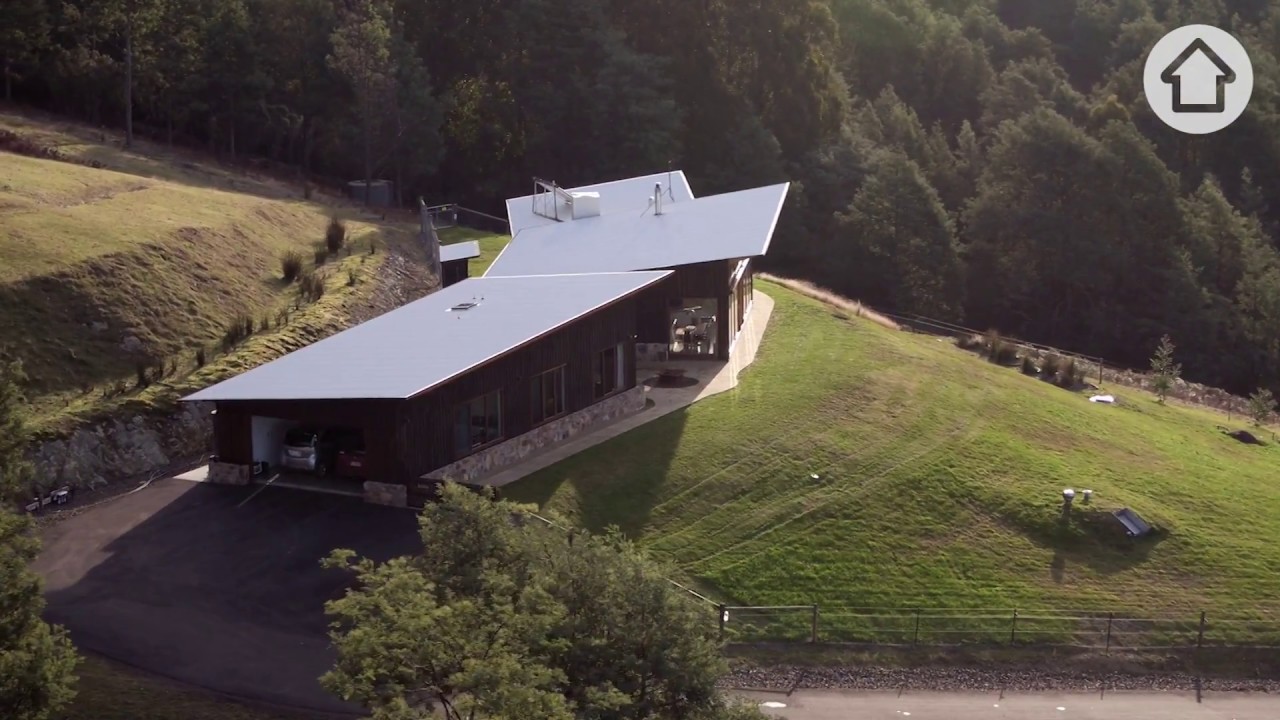
Peter and Robyn walked away from suburban Sydney and built a house that answers to nobody’s power grid.
When this couple bought 80 hectares of native forest in Tasmania to build their retirement home, they assumed they’d simply pay to hook up to the mains like everyone else. The property was too remote for that — no town power, no town water, no gas line anywhere near it. Instead of footing the bill for a connection that didn’t exist, they built a house designed to run on nothing but sun, rain and a creek.
- The retirement home sits on 80 hectares of native Tasmanian forest with no connection to municipal power, water or gas.
- Electricity comes from a solar panel array paired with a small hydro-generator running in a nearby creek that cuts through the property.
- Construction relied on materials sourced right off the land — local pine timber and granite-like stone — while the surrounding forest was set aside for wildlife conservation.
Leaving the Suburbs for an Unconnected Block
Peter and Robyn had spent their working lives in Sydney’s suburbs before setting their sights on Tasmania for retirement. They found their block, 80 hectares of untouched forest, and pictured a dream house on it. The complication only surfaced after purchase: the land sat far enough off the beaten track that connecting to the grid would have meant substantial infrastructure costs just to get power and water to the door.
Rather than pay to extend the mains out to a remote block, the couple flipped the problem into the whole design brief. If the utilities weren’t coming to them, they’d build a house that didn’t need them — for heating, for electricity, or for water.
Passive Solar Design Does the Heavy Lifting
The house is oriented and glazed specifically to trap and hold natural light, which keeps the interior warm through Tasmania’s cooler months without a furnace or air conditioner running in the background. It’s a passive solar approach: get the orientation and window placement right, and the sun does the work that a powered heating and cooling system would otherwise handle.
That single design choice removes one of the biggest energy draws in any home. It’s the same principle behind other self-built retreats featured in Australia’s off-grid bush homes, where builders lean on climate and geography instead of machinery to keep a house comfortable year-round.
Solar Panels and a Creek-Fed Hydro-Generator
For the electricity the sun’s warmth doesn’t cover, Peter and Robyn built an independent power system combining a solar array with a small-scale hydro-generator set up in the creek running through their forest. Between the two sources, the property generates its own power without ever touching a utility line.
The couple built a home that runs on sun and creek water — nothing municipal touches the property at all.
Built From the Land, Held Onto for Conservation
Most of the house’s structure came directly off the block itself: local pine timber for the frame and finishes, and granite-like stone pulled from the surrounding land. That low-impact approach meant the build barely needed to import materials from outside the property.
Peter and Robyn also dug a fire bunker into the hillside beside the house, giving them a way to defend the property if a bushfire ever came through — a real consideration for anyone living deep in Tasmanian forest. Beyond the house itself, they’ve committed the full 80 hectares to native forest and wildlife conservation, treating the land around them as part of the project, not just scenery around it. It’s the same instinct that runs through other self-built, off-grid projects like the self-built floating home and the quarter-acre permaculture setup — build small, build smart, and let the land do the rest.




WORLD CUP FINALS WINNING RACE RUN
TESTING The Weirdest Axe Ever Made
Living a Radically Simple Permaculture Life on 1/4 Acre
Shotgun Balloon Drop
ONE MORE TIME