

 InfoSearched
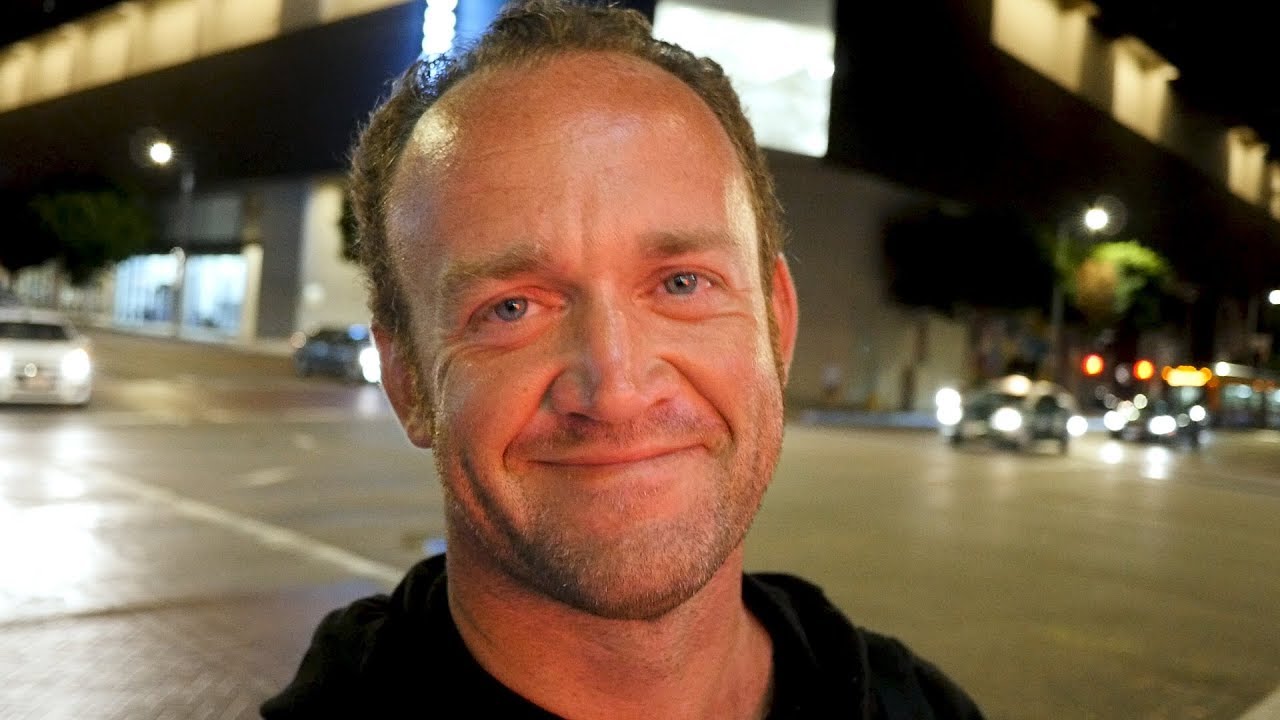
An actor who once made his living on television and film sets in New York City is now sleeping on the sidewalks of Los Angeles.
Dennis Kyle isn’t hiding behind anonymity. In an interview with Invisible People founder Mark Horvath, the working actor laid out exactly how he ended up homeless — no vague blame on “the industry,” just a specific chain of events he calls “an avalanche of unfortunate events.” His account cuts through the usual assumptions about who ends up on the street and why.
- Dennis Kyle built a career as a working actor before relocating to New York City, where he rented an apartment he couldn’t comfortably afford long-term.
- After three years in the city, a breakup and a bad divorce from his partner left him financially wiped out.
- Stripped of savings and unable to keep up with rising living costs, Kyle returned to Los Angeles with no resources left to secure housing.
An Avalanche, Not a Single Failure
Kyle’s story, told directly to Horvath’s camera for Invisible People, resists the tidy narrative of one bad decision leading to ruin. He describes it instead as a cascade — a rent he was stretching to cover, a relationship that ended badly, a divorce that drained what savings he had left. Each event on its own might have been survivable. Together, they weren’t.
An avalanche of unfortunate events.
That phrase, in his own words, is the closest thing to a thesis in the interview. It’s not a complaint about bad luck in general — it’s a specific sequence: apartment, breakup, divorce, no money, no home.
The Gig Economy Without a Safety Net
Acting work rarely comes with the guarantees of a salaried job — no continuous paycheck, no employer-sponsored health plan, no cushion when a relationship or a legal proceeding drains a bank account. Kyle’s situation illustrates how quickly that instability can turn catastrophic. Three years of paying New York rent on inconsistent income already left little margin; a divorce settlement removed what margin remained.
When he returned to Los Angeles, the city he’d built his career in originally, he had nothing left to put toward a deposit or first month’s rent. Los Angeles County has for years carried one of the highest costs of housing in the country, and for someone rebuilding from zero, that market offered no entry point.
Telling His Own Story on Camera
What separates Kyle’s interview from a lot of homelessness coverage is that he isn’t a statistic pulled from a shelter count — he’s a named, working professional describing his own downfall in his own voice, to a nonprofit built specifically to do that kind of direct, unfiltered storytelling. Invisible People and Horvath have made a practice of letting people identify themselves and narrate their own circumstances rather than being described from a distance.
That choice matters for how the story lands. Kyle isn’t asking for pity in the abstract; he’s laying out a timeline anyone could follow — apartment, breakup, divorce, no housing — that shows how thin the line can be between a working career and the street.
Kyle’s interview doesn’t end with a resolution or a job offer waiting in the wings — it ends where he is right now, on the streets of the city where he once had steady acting work. Invisible People has built its whole model around checking back in on the people it profiles, so if there’s a next chapter to Dennis Kyle’s story, it’s the kind of update Horvath’s channel is built to deliver.








Reventador volcanic activity in realtime
This woman lives every day like it’s 1958
Camping In The Multi-Purpose Tracked Crawler
Oscars 2020 Reaction | Shocking Truth Hollywood Babylon
Why Real Truffles Are So Expensive