

 InfoSearched
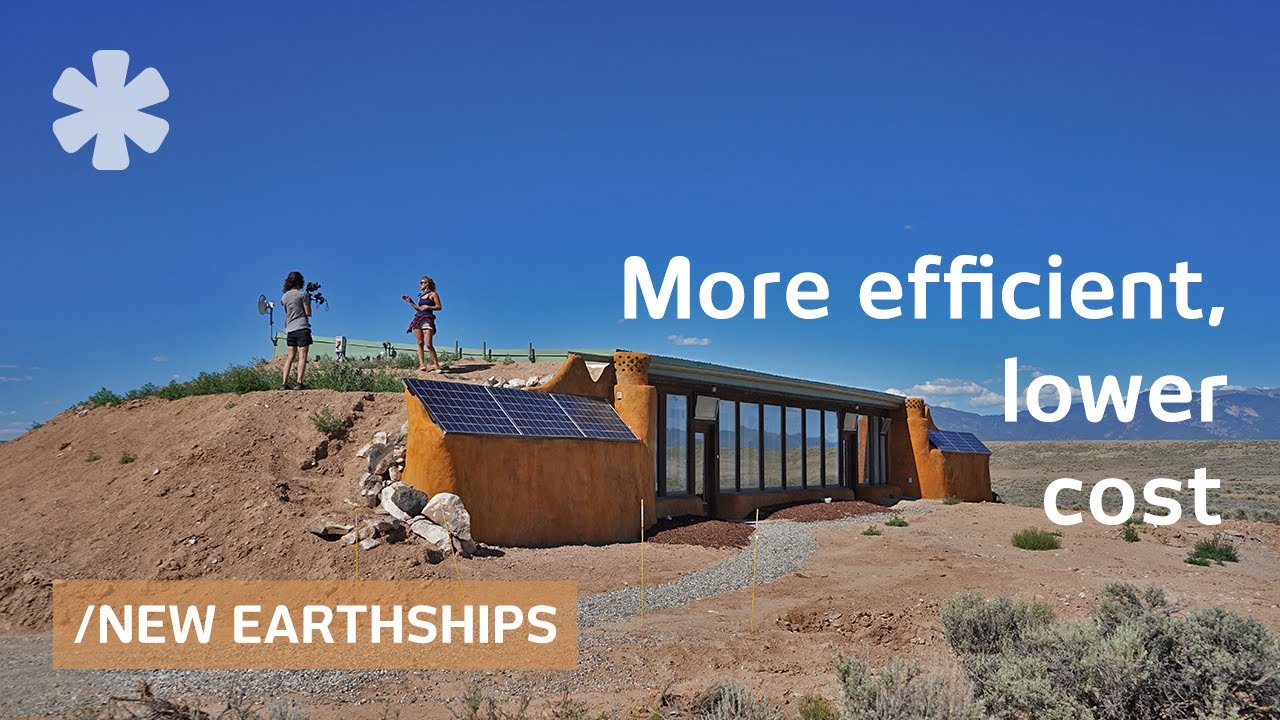
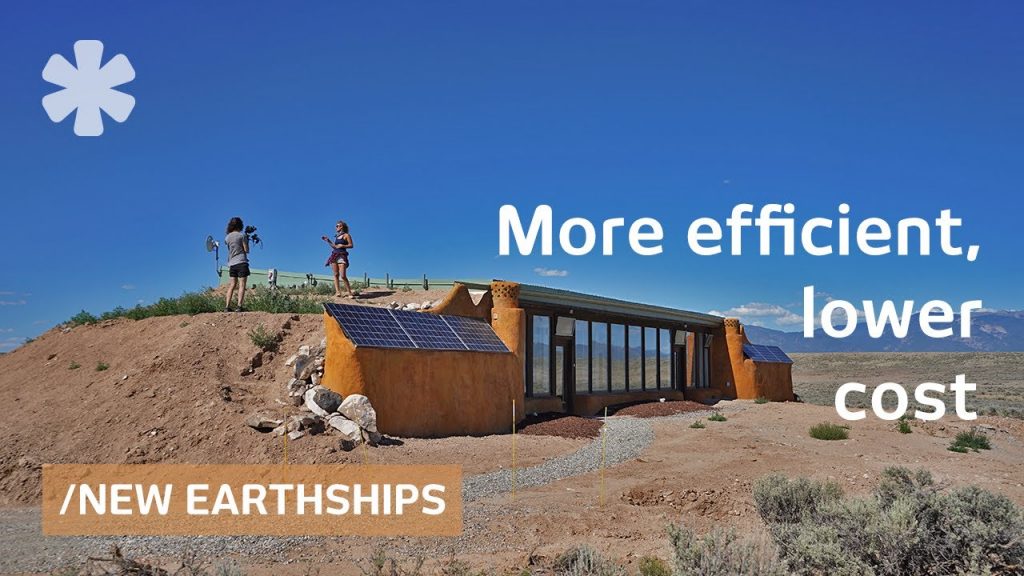
An off-grid house that costs a third less to build just went up in Taos, New Mexico.
Earthship Biotecture, the outfit architect Michael Reynolds founded decades ago to build homes out of rammed-earth tires, bottles and cans, has completed its first “Encounter” model — a design meant to close the gap between its bare-bones $100,000 Simple Survival units and its $1.5 million top-tier Global houses. In a July 2020 video report, Kirsten Dirksen of faircompanies toured the finished Encounter and the active build site of a second one, walking through exactly what got stripped down, what got kept, and why it still runs entirely off the grid.
- The Encounter is engineered to cut construction costs by roughly 30% compared to a standard Global model while retaining full off-grid power, water and sewage capability.
- Veteran builder Deborah Binder, who has spent eight years on Earthship projects including community builds in Malawi and Puerto Rico, guided the tour while living in a flagship Global home herself.
- At the Encounter Build #3 site, foreman Phil Basehart demonstrated the tire-pounding process and the specific design simplifications used to lower labor and material costs.
Closing the Gap Between Survival and Global
Reynolds built the original Earthship concept around radical self-sufficiency: rammed-earth tire walls for thermal mass, upcycled glass bottles and aluminum cans for interior detailing, photovoltaic arrays for power, and rainwater and dew harvesting for water. The problem, as Dirksen’s report lays out, is that the fullest expression of that system — the Global model — can run as high as $1.5 million, while the stripped-down Simple Survival version starts at $100,000 but skips much of the food and water infrastructure that makes an Earthship function as advertised.
The Encounter is Reynolds’ answer to that gap. It’s built to hold onto the core systems — thermal mass heating, underground geothermal cooling tubes, convection skylights, photovoltaics, and rainwater and dew capture routed through an interior Water Organization Module, or WOM — while trimming roughly 30% off the price tag of a Global build. Binder, who walked Dirksen through the finished unit, has spent eight years building Earthships both for herself and for community projects abroad, including work in Malawi and Puerto Rico, giving her a direct comparison point for what corners can be cut without losing off-grid autonomy.
Simplifications and Persistent Complexities
The tour of Build #3, still under construction, is where the cost-cutting gets concrete. Foreman Phil Basehart broke down the tire-pounding technique used to compact earth into the recycled tire walls — still the labor-intensive backbone of every Earthship — and showed the specific design simplifications built into the Encounter that reduce both labor hours and material counts compared to a Global spec, without dropping the self-contained power, water and sewage systems that define the brand.
Full off-grid autonomy, for about 30% less than a Global build.
That 30% figure is the whole pitch. Reynolds’ team designed the Encounter specifically to address housing affordability by keeping the off-grid promise intact — power, water, food, sewage — while making the entry price more realistic for buyers priced out of the Global tier but wanting more than a Simple Survival shell.
Greenhouse Growing and Greywater Doing Double Duty
One of the Encounter’s clearest upgrades over earlier Earthship generations is intensified greenhouse food production paired with indoor botanical greywater filtration. The plants inside the greenhouse aren’t just growing food — they’re actively filtering household greywater while helping regulate interior temperature, a dual function that pushes the home closer to full self-sufficiency without adding separate mechanical systems. It’s the same logic that runs through projects like the permaculture setups built on tiny plots, where every system is made to serve more than one purpose at once.
Combined with the WOM handling rainwater and dew capture, and the geothermal tubes and convection skylights handling climate control, the Encounter keeps the same layered self-sufficiency Reynolds has built into Earthships for years — just with fewer materials and hours going into the shell itself. For anyone comparing off-grid builds by the numbers, it sits alongside other self-built, off-grid housing projects chasing the same balance of autonomy and affordability.
Build #3 was still going up when Dirksen filmed it, with Basehart’s crew working through the tire-pounding stage — the slowest and most physical part of any Earthship build. Reynolds’ team has framed the Encounter as the model they expect to scale, so the next thing worth watching is how many of these actually get finished once the current build wraps.






Hunting For A Rare Congolese Weed Strain With “The Kings of Cannabis”
Cattail Down Jacket Solo Overnight
Return to the Ditch – Tandem Kayak
Pablo Escobar’s hippos keep multiplying and Colombia doesn’t know how to stop it
Herbert Nitsch, The Deepest Man On Earth