

 InfoSearched
One kitchen knife, a block of scrap wood, and a discarded soda bottle are all it takes to build survival-grade rope.
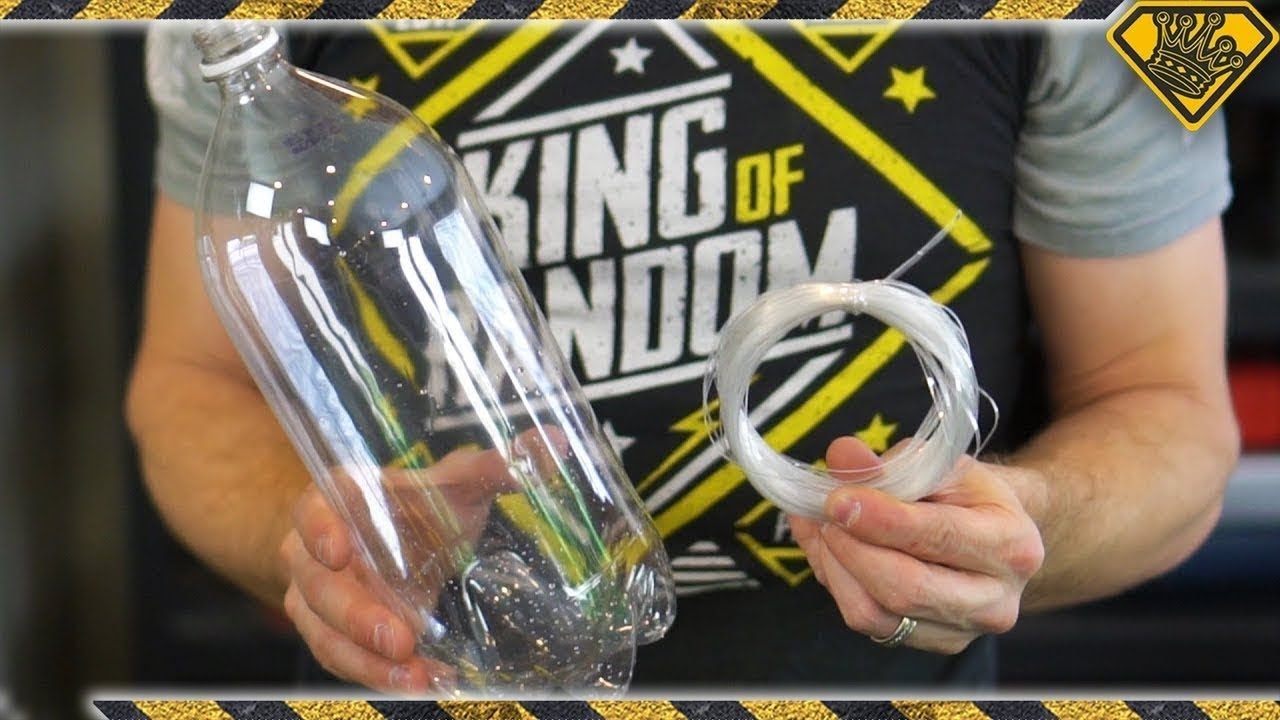
Grant Thompson of The King of Random built his reputation turning junk-drawer materials into working tools, and this build is one of the clearest examples: a two-liter soda bottle, headed for the recycling bin, becomes dozens of feet of strong, waterproof cordage in a matter of minutes. The trick isn’t a fancy machine — it’s a small handheld jig anyone can carve out of scrap wood and an old utility knife blade.
- Thompson builds the cutting jig from a 4-inch block cut off a 2×2, using a saw and chisel to notch it and a hammer to wedge in a utility knife blade with roughly a one-eighth-inch gap.
- The bottle’s uneven bottom is sliced off with a knife and trimmed square with scissors, then fed into the jig against the blade so pulling the first sliver sends the bottle spinning and peeling off a continuous ribbon.
- The finished plastic line is strong, waterproof, and heat-shrinkable, useful for lashing shelters, tying down gear, or braiding into thicker multi-strand rope.
Carving the Cutting Jig
The whole build starts with a block of 2×2 lumber cut down to about four inches. Thompson notches the wood and shapes a relief corner into it, then hammers a standard utility knife blade into the block until it sits fixed at a gap of roughly one-eighth of an inch. That narrow, locked-in gap is the entire mechanism — it’s what determines the width of the plastic ribbon that comes off the bottle, and getting it consistent is the difference between a clean strip and a jammed, torn mess.
There’s no motor, no bearings, nothing that needs batteries. It’s the same philosophy that runs through other scrap-material builds in the outdoors space, like the improvised shelter work in Amazing Bushcraft Tent made from Plastic Wrap, where the point is proving what’s possible with materials most people would throw away.
Turning a Bottle Into a Ribbon
Once the jig is ready, Thompson cuts the uneven bottom off a smooth, rigid soda bottle with a knife and cleans up the edge with scissors so he’s left with an even plastic cylinder. That cylinder gets slotted into the jig against the blade edge, and the process that follows is almost deceptively simple: pull the first inch or two of plastic by hand, and the bottle begins spinning on its own against the fixed blade, peeling off a single unbroken ribbon as it rotates.
A one-eighth-inch blade gap and one pull is all it takes to send a whole soda bottle spinning itself into dozens of feet of rope.
Because the bottle plastic is rigid and uniform, the ribbon that comes off is consistent in width from one end of the bottle to the other, which is what makes it usable as actual cordage rather than a novelty strip.
Applications of Finished Cordage
The payoff is a line that’s waterproof by nature, since it’s just soda-bottle plastic, and heat-shrinkable, meaning the ends can be sealed or tightened with a flame in the field. Thompson frames it as genuine survival gear: strong enough to lash together a shelter frame, secure a pack load, or hang gear off the ground, and thin enough that multiple strands can be braided together into a heavier-duty rope when more strength is needed. The same instinct for turning simple materials into functional camp gear shows up in builds like Solo Overnight Building a Sandbag Shelter In the Woods, where the emphasis is likewise on what a person can rig up with almost nothing.
By the end of the video, Thompson isn’t stopping at a single strand — he’s braiding several ribbons together to bulk the cordage up into rope-grade thickness, which is really the whole point of the jig: one bottle, one blade gap, and as much line as you’re willing to pull.








Colonial Army Rations: Beer Every Day! – Spruce Beer In Early America
Couple Builds Tiny House for Only $420!
how to put together an outfit 101
Harvesting Honey From A FLOW HIVE & Thoughts & Impressions of the Flow Hive
Epic Cloud Cave Wingsuit in Fusion Overcapture