

Bushcraft overnight – shelter building, fat wood, bacon, russian axe, repairing sweater
 InfoSearched
A Danish craftsman spends a night alone on Jutland’s west coast, building fire and shelter from what the forest gives him.
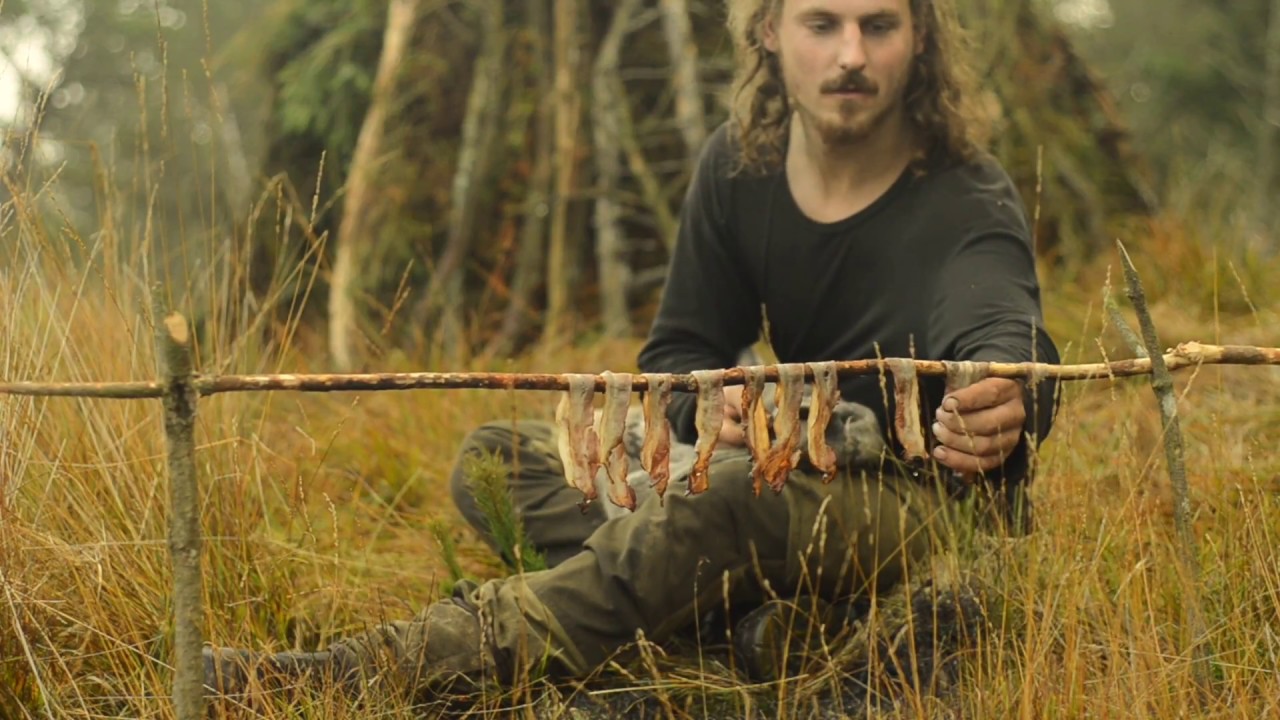
Bertram, the Danish outdoorsman behind the YouTube channel “Bertram – Craft and Wilderness,” heads into former Viking territory on Jutland’s west coast for a solo overnight built around one core problem: how to stay warm and dry with nothing but an axe, a knife, and the woods around him. The terrain mixes coastal sand dunes, open sea views, and stands of spruce and pine — remote by Danish standards, though Bertram is quick to note that Denmark’s density means true wilderness solitude only goes so far. What he builds instead is a compact demonstration of bushcraft fundamentals: shelter, fire, food, and repair, all done in real time on camera.
- Bertram constructs a semi-open survival shelter with a small indoor open hearth, addressing viewer concerns about fire safety by keeping flames low, small, and spark-free.
- He harvests fatwood for fire-starting and uses a Russian axe throughout for wood processing and shelter construction.
- Camp meals consist of pork and beef cooked over the fire with fresh water, and he uses downtime at camp to repair a wool sweater by hand.
Building the Shelter and Managing an Indoor Fire
The centerpiece of the overnight is a primitive shelter with an indoor hearth — a setup that draws frequent safety questions from viewers, which Bertram addresses directly. His answer is straightforward: keep the fire small and largely spark-free, and if conditions are dry, dampen the moss layers on and around the structure so a stray ember can’t take hold. Smoke isn’t the hazard people assume, he explains, because a low flame keeps the smoke layer above a seated camper’s head rather than filling the space where he’s breathing.
On weatherproofing, Bertram is candid about the shelter’s limits. The natural roofing materials will hold up against a short burst of heavy rain or intermittent showers spread over several days, but it isn’t built to be fully waterproof in a sustained downpour. That kind of honesty about a bushcraft build’s actual limitations — rather than overselling it — is the throughline of the video.
Keep the fire small and relatively spark-free — smoke isn’t the problem, just don’t stand up inside the shelter.
Fatwood, the Russian Axe, and Camp Craft
Fatwood — the resin-saturated heartwood found in pine and spruce — does the heavy lifting for ignition. Bertram processes it by hand before the fire is ever lit, splitting it down into shavings and slivers that catch fast and burn hot enough to get larger fuel going even in damp coastal air. It’s a technique that shows up across his channel’s other builds, alongside the kind of roof and structure work seen in projects like the Iron Age bushcraft roof build done in soaking rain.
The Russian axe handles everything else — splitting logs, shaping shelter poles, and general camp carpentry. Its long handle gives Bertram the leverage to process bigger rounds of wood than a hatchet could manage, which matters when the entire structure and firewood supply for the night depend on one tool doing multiple jobs well.
Food, Wildlife, and Quiet Repairs
Meals are basic and functional: pork and beef cooked over the open fire, washed down with fresh water carried in. There’s no foraging detour or elaborate camp kitchen here — the food serves the trip rather than the other way around. The surrounding woodland carries deer, birds, and the occasional wolf, but nothing that changes how Bertram plans the night; he notes there are no bears or larger predators to factor into shelter placement or fire discipline.
In the downtime between chores, Bertram repairs a hole in a wool sweater by hand, threading a needle and closing the tear with small, tight stitches — a reminder that bushcraft overnights are as much about maintaining gear as building it. It’s the same practical, no-frills sensibility that runs through solo builds like the sandbag shelter overnight in the woods and the cattail down jacket solo overnight, where the night’s success comes down to a handful of small, correctly executed tasks rather than any single dramatic moment.
By morning the fire’s out, the sweater’s mended, and the shelter’s still standing after a night of intermittent rain off the North Sea — which, for Bertram, counts as the whole point proven: a few hand tools and the right technique are enough to sleep dry in Viking country.








Negotiation Skills: The “60 Seconds Or She Dies” Challenge With FBI Negotiator Chris Voss
How to Make Hourglass Diorama | Resin Art
People Are Hiring Private Police Squads in Detroit
Dan Bilzerian’s NEW HOUSE
The Godmother Of Drumming Plays “Down With The Sickness”