

 InfoSearched
A crewed submersible just plunged deeper into Antarctic waters than anyone ever had, and the seafloor it found was anything but empty.
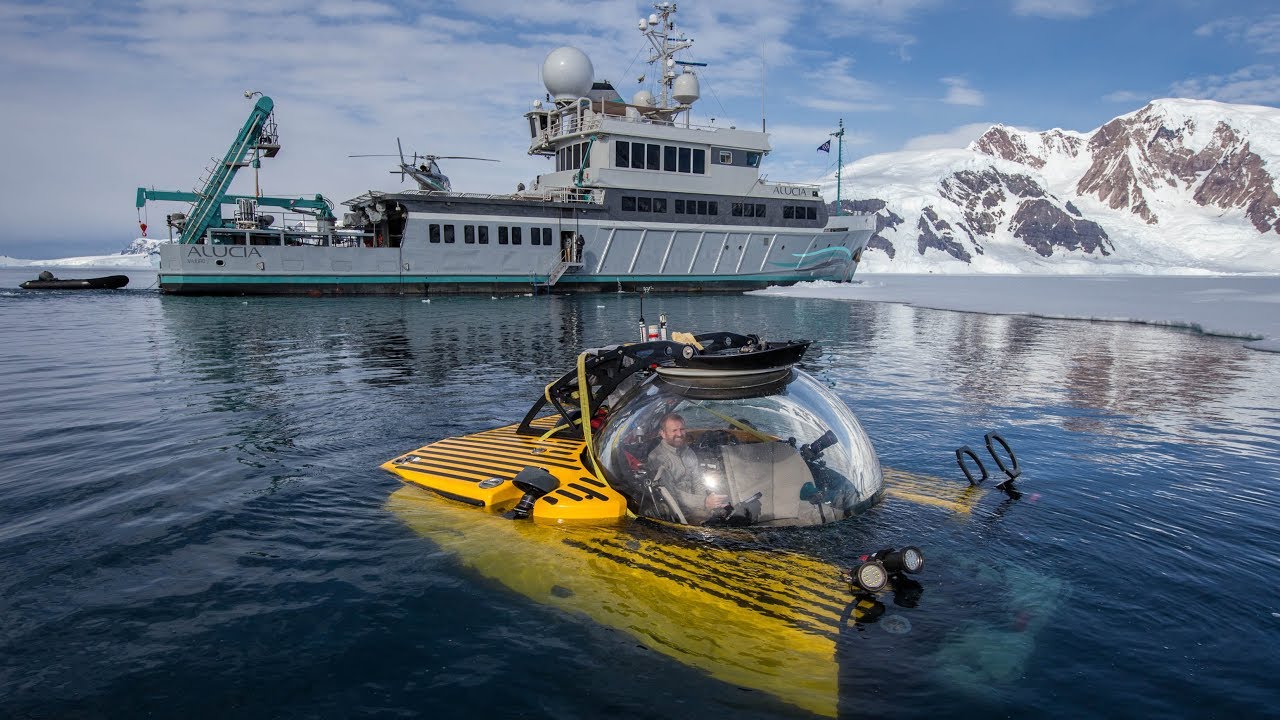
In March 2018, OceanX released footage titled “The Deepest Dive in Antarctica Reveals a Sea Floor Teeming With Life,” documenting the first-ever crewed submersible dive to roughly 1,000 meters (about 3,280 feet) on the Antarctic seafloor. The mission ran off OceanX’s exploration vessel Alucia, working alongside BBC Earth to capture footage for the landmark natural history series Blue Planet II, with deep-sea explorer and marine biologist Dr. Jon Copley aboard for the descent.
- The dive marked the world’s first crewed submersible descent to roughly 1,000 meters on the Antarctic seafloor, filmed for BBC Earth’s Blue Planet II.
- Pulling it off took six months of preparation and a team of more than 30 people, who wrapped external camera housings in electric blankets and picked grounded icebergs to dive under, avoiding ice shelves that could collapse overhead.
- The footage earned OceanX a 2019 Webby Award for Education & Discovery (Social Video).
The Mission Behind the Camera
Getting a manned sub to the Antarctic seafloor isn’t something crews attempt casually. OceanX built the dive around the Alucia, its exploration vessel already equipped for deep-sea work, and paired its own submersible pilots with Dr. Jon Copley, a marine biologist who has spent his career studying life at extreme depths. The partnership with BBC Earth meant the dive doubled as both a scientific expedition and a shoot for Blue Planet II, one of the most-watched natural history series ever produced.
None of it happened quickly. Six months of planning went into the logistics alone, and the operation on-site involved more than 30 crew members navigating conditions that make ordinary submersible work look routine. Cold-water diving is one thing; diving beneath moving polar ice is another problem entirely.
Engineering Around the Ice
The team’s biggest obstacles weren’t the depth or the darkness — they were the ice and the temperature. External camera housings had to be wrapped in electric blankets just to keep functioning in near-freezing water, a fix that sounds almost improvised for a mission this technically demanding. Choosing a dive site required just as much care: the crew specifically targeted grounded icebergs, avoiding spots where a floating ice shelf overhead could shift or collapse onto the sub below.
Those precautions turned out to matter as much as any piece of equipment on board. A single miscalculation about ice stability at 1,000 meters down isn’t the kind of mistake a crew gets to walk away from.
A Seafloor Teeming With Life
What the sub’s lights picked up wasn’t a barren, frozen wasteland — it was a dense, active ecosystem thriving in total darkness. Heavy “marine snow,” the organic debris that drifts down from surface waters, was falling steadily across the seafloor, the same material that fuels deep-sea food chains and helps circulate nutrients through the global ocean system.
The crew also documented widespread deep-sea gigantism, with oversized invertebrates, deep-sea corals, and sponges scattered across the bottom — a pattern scientists attribute to the extreme pressure and near-total absence of predators at that depth. One creature in particular stood out.
The team nicknamed it the Antarctic “death star” — an Antarctic sea star that trapped prey like honey to a fly.
Impacts on Global Ocean Circulation
OceanX creative director Mark Dalio framed the dive as more than a striking visual — he pointed to Antarctica’s deep seafloor as a previously unmapped piece of planetary health, tied directly into how the ocean circulates nutrients and regulates climate on a global scale. That’s the pitch behind pairing scientists like Copley with filmmakers: the footage that plays as spectacle on screen is also raw data for understanding a system nobody had fully seen before.
It’s the kind of expedition that sits alongside other deep-dive and extreme-environment stories worth tracking, from world-class sinkholes drawing divers to South Australian farms to the sea life documented in DAY 85: Sharks Really Wanted This Fish! — each one built on the same idea that the ocean’s most extreme corners still have plenty left to reveal.
OceanX picked up the 2019 Webby for Education & Discovery on the strength of this footage, and it’s easy to see why the judges went for it — a “death star” sea star and a seafloor nobody had laid eyes on before make for a hard combination to beat.




Billionaire in ‘World’s Toughest’ Prison Accused of Cop’s Death
Stunning Modern, Minimalist Tiny House
Florida Man Runs to Bermuda in a Giant Bubble
A Dating Coach Guesses Who’s Slept With Whom | Lineup | Cut
This Is The City Where Only Millionaires Live