

 InfoSearched
Your kitchen scraps are more valuable than the trash can knows.
BuzzFeed’s Nifty channel, working with Tasty Home, put out a straightforward instructional video called “How To Regrow Everything” that walks home cooks through turning the ends of vegetables and herbs they’d normally toss into fresh, edible plants. No garden plot, no grow lights, no specialty equipment — just a jar, some water, a sunny windowsill, and the parts of produce most people scrape into the compost bin. The timing lines up with a moment when households everywhere were stretching grocery budgets and rethinking what “leftover” even means.
- Scallions regrow new green shoots in as little as 3 to 7 days when the root end is left about 1 to 2 inches long and stood upright in a glass of water.
- Celery and romaine lettuce sprout fresh leafy centers from a roughly 2-inch base kept in a shallow water dish under direct sunlight, then get transplanted into potting soil for continued growth.
- Sprouted garlic cloves and potato or onion scraps can be rooted for edible garlic chives and new tuber growth, extending the same water-to-soil method across root vegetables.
The Water-Glass Method for Alliums
The video’s simplest technique targets scallions, also called green onions. Instead of buying a fresh bunch every week, the method calls for slicing the white root end down to 1 to 2 inches and standing it upright in a glass with just enough water to cover the roots. Left on a sunny counter, the cut end pushes out new green shoots within a week, and the same root base can be harvested repeatedly before it’s spent.
Regenerating Celery and Romaine From the Core
Celery and romaine lettuce use a near-identical trick, scaled up slightly. The tutorial has viewers cut the stalks down to a 2-inch base or core, then set that base upright in a shallow dish of water in direct sunlight. Within days, a new leafy center starts pushing up from the middle of the stump. Once that new growth is established, the guide recommends transferring the base into potting soil, where it can keep producing rather than stalling out in a water dish indefinitely.
Change the water every few days — skip that step and you get stagnation and mold instead of a second head of lettuce.
Herbs, Garlic Chives, and Root Scraps
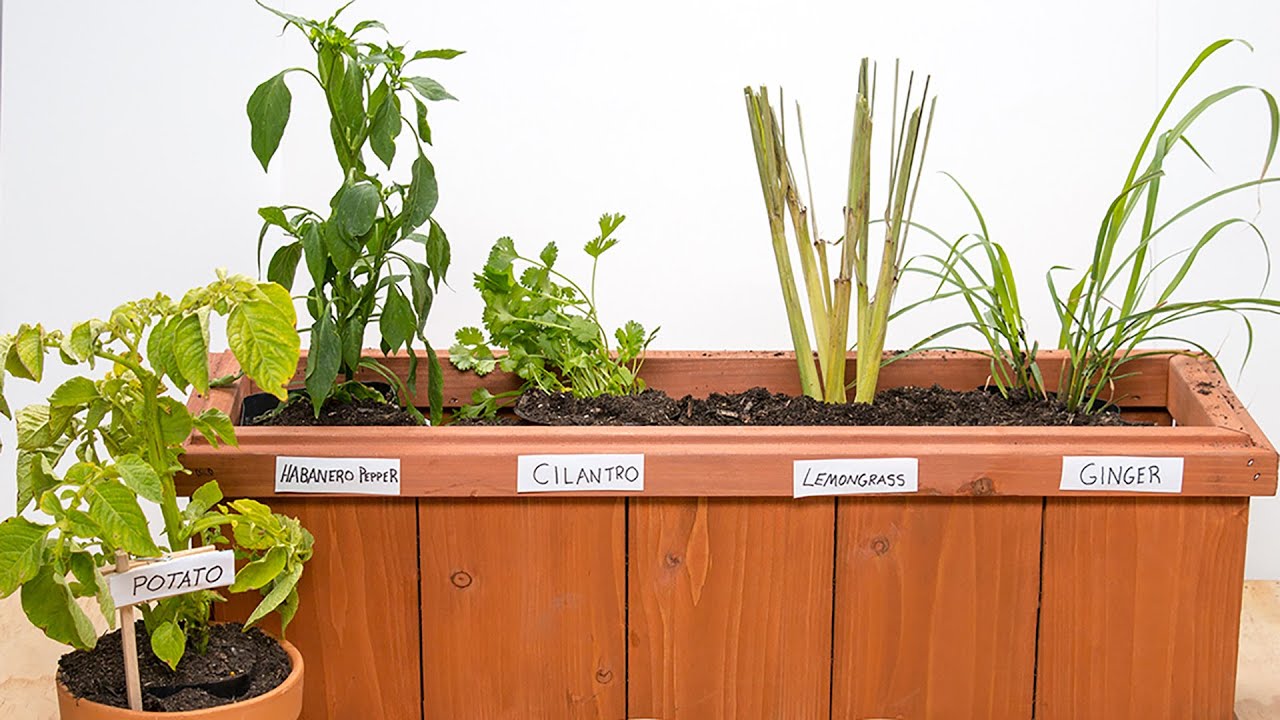
Basil and cilantro get the cutting treatment: stems stripped of their lower leaves go straight into a glass of water until roots form, at which point they’re potted in soil for ongoing harvest rather than a one-time regrowth. The video also covers sprouted garlic cloves, which push up edible garlic chive greens, and shows how potato or onion scrap pieces can be rooted to keep generating new growth from what would otherwise be kitchen waste.
Method Effectiveness for Small Spaces
None of this requires a backyard or raised beds — the entire setup is a shallow bowl or jar, tap water, and a windowsill that gets consistent light. That makes it a natural fit for apartment kitchens and anyone without outdoor growing space, and it dovetails with the same scrap-conscious mindset behind guides on turning a lawn into a vegetable garden or growing berries in containers on a patio, as covered in the breakdown on growing raspberries, blueberries, and blackberries in containers. The pitch is the same across all of them: you don’t need acreage to grow something you’ll actually eat.
The whole guide runs on three ingredients most kitchens already have — a scrap that was headed for the trash, a container of water, and a spot in the sun. Swap the water every few days, watch for new growth at the cut end, and move it to soil once roots take hold. That’s the entire system, and it’s why the video keeps circulating as a go-to for anyone trying to stretch a produce drawer further than the receipt suggests it should go.








The secret US prisons you’ve never heard of before | Will Potter
Flat Earthers vs Scientists: Can We Trust Science?
The Man Living in Complete Isolation for 40 Years (Part 4/4) | Far Out
How To Turn Salt Water Into Fresh Water
How to Make a Concrete Curb for a Fence