

 InfoSearched
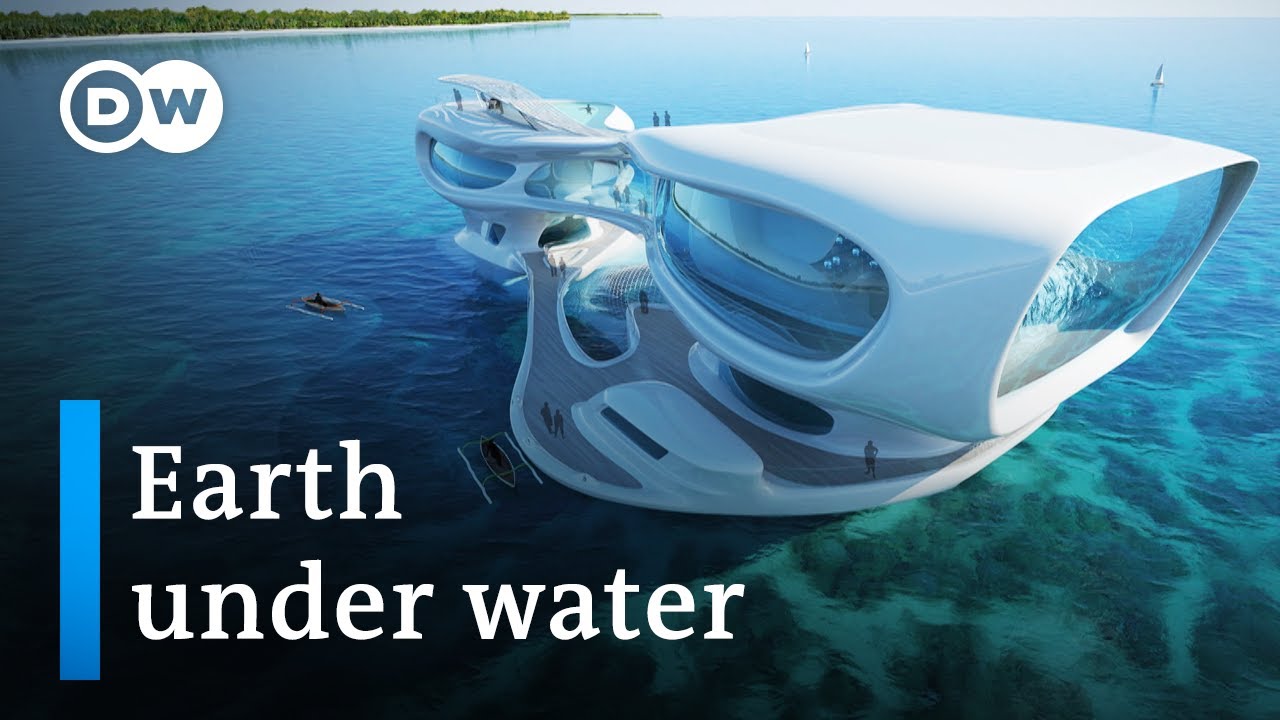
By 2100, rising seas could push 40 percent of the world’s population out of their homes — and engineers are already building the alternative on the water itself.
This DW documentary tracks the architects, marine engineers and researchers racing to design cities that float rather than flood. From student housing bobbing in Copenhagen’s harbor to artificial islands off Seoul, the film argues that the next housing boom may not happen on land at all. It’s a tour of prototypes that already exist, not just renderings on a drawing board.
- Forecasts cited in the documentary put sea levels roughly two meters higher than today’s by 2100, a rise severe enough to threaten evacuation of parts of Mumbai, Tokyo, Guangzhou, Miami, New Orleans and New York.
- Copenhagen already has floating student dormitories and modular residential units in operation, while Seoul has built artificial smart islands as a working template for floating urban districts.
- In the Maldives and French Polynesia’s Tahiti, teams including the Seasteading Institute are testing modular floating platforms designed to function as self-sustaining neighborhoods at sea.
The Numbers Driving the Panic
The documentary opens with a blunt statistic: roughly 700 million people currently live along the world’s coastlines, and rising water threatens to displace a huge share of them within this century. Miami, New Orleans and New York all show up on the film’s list of American cities that could face partial evacuation, alongside Mumbai, Tokyo, Guangzhou and low-lying Bangladesh. That is the pressure pushing planners past seawalls and levees toward a different question entirely — what happens when you stop fighting the water and build on top of it instead.
Copenhagen and Seoul: The Prototypes Already Floating
Rather than treat floating housing as a far-off concept, the film shows it operating today. Copenhagen has student dormitories and modular residential units riding at anchor in its harbor, built to handle fluctuating water levels without special evacuation plans. Seoul’s artificial smart islands take the concept further, functioning as engineered platforms meant to demonstrate that floating districts can scale beyond a single building. Anyone who’s followed the growth of off-grid, water-based living on a smaller scale — the kind covered in this self-built floating home or the off-the-grid houseboat in Coron, Philippines — will recognize the same core engineering problem these cities are now solving at municipal scale: how to keep a structure stable, powered and livable while it moves with the tide instead of against it.
Underwater Suites and Offshore Food Production
The luxury end of the trend gets its own segment: resort operators building underwater greenhouses and guest suites, with marine restaurants that put diners face-to-face with the fish on the menu. It’s presented less as a novelty and more as a testbed — the same submersion and pressure-sealing techniques used for an underwater hotel suite feed directly into research on offshore food production and closed-loop water and energy systems that floating neighborhoods would eventually need to run independently of land-based utilities.
Experts forecast that by 2100, sea levels will be two meters higher than today — a shift that could force 40 percent of the world’s population out of their homes.
Tahiti, the Maldives and the Seasteading Question
The film’s most ambitious material comes from island nations with the least room to retreat. In the Maldives and in French Polynesia’s Tahiti, researchers and groups including the Seasteading Institute are testing modular floating platforms meant to link together into full aquatic neighborhoods — engineered to absorb wave action and reduce tsunami risk rather than simply ride out a swell. These aren’t hypothetical renderings; they’re pilot structures being evaluated for how they hold up in open water, and for whether they can be produced at a cost that works for a nation rather than a single resort.
None of it moves forward without answering harder questions than engineering, though. The documentary spends real time on marine environmental protection, the jurisdictional gray zones of building permanent structures beyond a coastline, and who actually governs a neighborhood that isn’t attached to any country’s soil. Jacques Rougerie’s “SeaOrbiter” research station and floating boulevards through seaports are held up as the long-range versions of the same argument — that living with the water, not behind a wall against it, may be the only version of coastal life that survives the next eighty years.
Seoul’s smart islands and Copenhagen’s floating dorms are already occupied, which is the detail that separates this from science fiction — the hardest parts of the pitch, keeping a structure watertight, powered and stable through a storm, are being tested right now, not in a model.






The surprising way this Mexican state is fighting the cartels | The Americas with Simon Reeve
MALE MODEL RUNWAY WALK TUTORIAL: Walking tips at fashion week
The Mars Homes That NASA Awarded $500k
I Built My House By Myself – 3 Year Timelapse – Off Grid – Debt Free
ARIA: 80 Sunreef Power Catamaran [Walkthrough]