

 InfoSearched
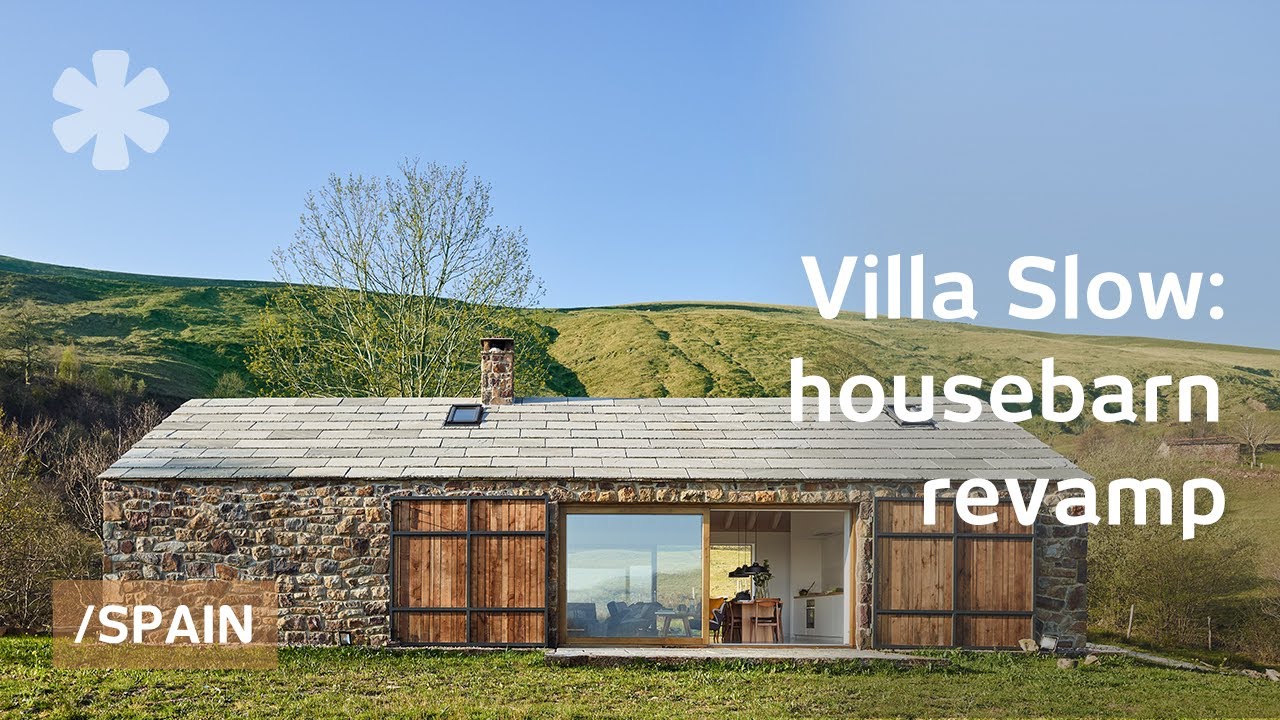
A crumbling stone cattle barn tucked into Spain’s Cantabrian Mountains just became one of the more unlikely home-office success stories to come out of the pandemic.
Videographer Kirsten Dirksen’s latest tour follows architect Laura Álvarez and her partner Lewis into a ruin they rebuilt into Villa Slow, a minimalist retreat perched in the Valles Pasiegos region of Northern Spain. Álvarez grew up visiting the area, and when the abandoned stone structure came up, she saw a chance to rework a vanishing rural building type without erasing what made it worth saving. What started as a holiday rental turned into something more permanent once the couple spent two months of COVID-19 lockdown living inside it.
- Álvarez, founder of Amsterdam-based Laura Alvarez Architecture, redesigned a derelict “cabaña pasiega” sitting on 2.5 hectares (25,000 square meters) of land with two small rivers, a natural spring, and a waterfall.
- Two large panoramic sliding glass doors on opposing facades of the central living area frame the valley and mountains — Álvarez calls them “living paintings.”
- After riding out a two-month quarantine there in early 2020 — chopping wood, hiking, cooking outdoors and working remotely — the couple began planning a permanent move into the property.
From Cattle Shelter to Design Statement
The cabaña pasiega is a specific vernacular typology: rustic stone-walled, slate-roofed shelters built by transhumant farmers who grazed cattle on the mountain pastures of Cantabria. As Spanish agriculture industrialized and herding on foot gave way to mechanized operations, thousands of these structures were simply left to fall apart across the region. Álvarez’s building was one of them — a stone shell with no roof to speak of and no real prospect of a buyer who wanted to do anything but knock it down.
Instead, she treated the ruin as a set of constraints to design around rather than a problem to demolish. That approach echoes what’s driving a broader wave of interest in reviving old rural building stock elsewhere in Europe, the kind of thinking behind pushes like Italy’s $1 homes initiative, where local governments are betting that abandoned housing stock is worth saving instead of scrapping.
Building Inside the Old Walls
Álvarez kept the original stone walls and paired them with concrete and exposed masonry inside, holding onto the passive solar orientation and the compact, few-windows logic of the original cabaña while opening the plan up where it mattered. Lewis built much of the custom furniture by hand using wood sourced locally, giving the interior a handmade, unfussy character that matches the setting rather than fighting it. It’s a similar instinct to builders working through off-grid woodworking projects in the forest, where the material on hand dictates the furniture rather than a catalog.
Living Paintings
The signature move is the pair of panoramic sliding glass doors cut into opposite facades of the central living space, lining up the valley on one side and the mountains and a waterfall on the other. Álvarez designed them specifically to catch the region’s fast-changing weather as it moves through the frame.
Álvarez describes the two glass walls as “living paintings” — the view changes with the weather, so the room never looks the same twice.
A Quarantine That Changed the Plan
Villa Slow started as a seasonal holiday rental, the kind of secluded retreat guests book for a week at a time. That changed when Álvarez and Lewis spent two straight months there during Spain’s early-2020 COVID-19 lockdown, splitting wood, cooking outside, hiking the property’s own rivers and waterfall, and running their work remotely from the same rooms guests usually pass through. The stretch was long enough to convince them the arrangement could be permanent rather than a rental with occasional personal use.
That’s the open question now — whether Villa Slow keeps operating as a booked retreat between the couple’s own stays, or whether Álvarez and Lewis fully convert it into their year-round base and home-office in the Cantabrian Mountains.






Oscars 2020 Reaction | Shocking Truth Hollywood Babylon
Great Smoky Mountains Travel Guide: 2 Days Exploring the National Park
Family of 4 Travel Full Time in 4 Years | Lifestyle Changes are Hard – How You Do It Anyway
How Waste Is Dealt With On The World’s Largest Cruise Ship
We Spent A Day In The Largest Slum In India | ASIAN BOSS